
Why Peeling Tape Makes a Noise: The Science Uncovered
There are several phenomena in life that we might not ponder about. For instance, water makes things wet, gravity pulls everything down, and peeling tape makes a peculiar sound.
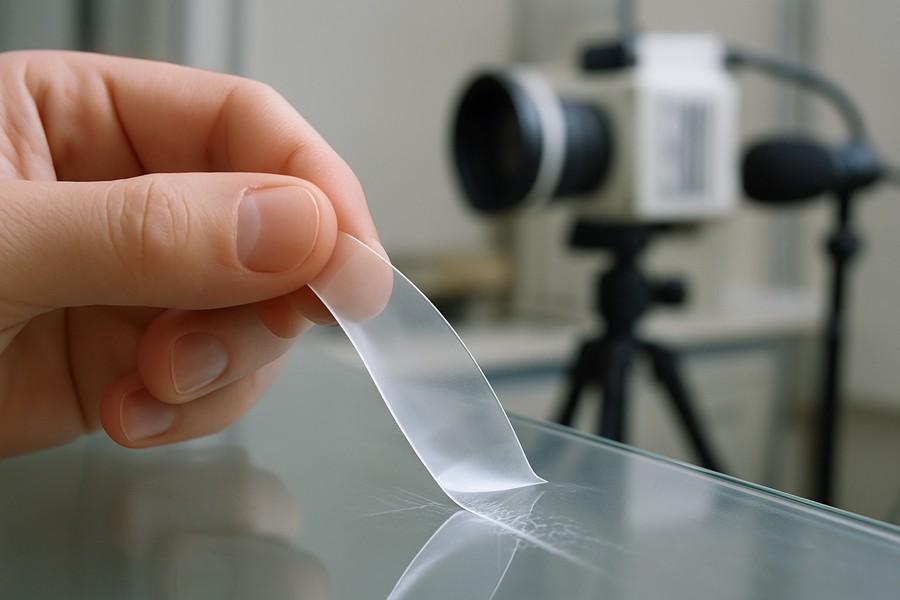
However, the secret behind the noise produced by peeling tape is no longer a mystery. A group of dedicated physicists, led by a Chinese scientist, applied ultra-modern technology, including high-speed cameras and sensitive microphones, to find out what really happens when we peel transparent sticky tape off glass.
The Mystery of the Squeaky Tape
The team found that the noise, or 'screech', was not as simple as it seemed. It's not just friction or the tape reluctantly giving way. Instead, it's a series of minute shockwaves. These shockwaves are produced when tiny fractures traveling at supersonic speeds reach the edges of the tape's adhesive layer. So, in essence, when you yank on tape, you're causing tiny sonic 'booms'.
The sound produced by adhesive tape has intrigued scientists for many years. Back in 2010, a group of physicists noticed elastic waves traveling up the detached part of the tape. They proposed that these waves might be the source of the sound. A subsequent study in 2014 connected the noise to fractures within the tape but couldn't pinpoint the exact process.
Unraveling the Puzzle
The Chinese team decided to delve deeper into this phenomenon. They designed an experiment to closely observe what happens when a 3/4 inch wide strip of sticky tape is peeled from a glass surface.
When you peel a piece of tape, it doesn't come off in one smooth sweep. Instead, it follows a random, jerky pattern known as "stick-slip", a behavior that has been a subject of study for a long time.
As you peel, the adhesive insists on sticking to the surface for a brief moment. That's the 'stick' part. When the force finally overpowers the adhesive bond, the tape suddenly gives way. That's the 'slip'. This process repeats continuously as you unpeel the tape.
Microscopic Drama
But during each slip phase, there's a lot happening at a microscopic level. The adhesive doesn't peel off evenly all at once; rather, it shreds in narrow bands that race across the tape, from one edge to the other.
These are known as transverse fractures, and the team discovered they're the key to understanding why tape makes a noise when peeled.
The team used two microphones and two high-speed cameras to record the peeling tape. One camera was aimed at the underside of the tape from below the glass, and another was positioned above the experiment to capture any disturbances in the air.
The Speed of Sound and Tape
They found out that what makes these fractures special is their speed. They recorded fracture speeds ranging from about 560 to 1,340 miles per hour. For comparison, the speed of sound in air at room temperature is about 767 miles per hour. This means that some of the fractures are moving across the adhesive layer at almost twice the speed of sound.
Due to the rapid speed of these fractures, they leave a minuscule gap between the tape and the glass, a brief pocket of partial vacuum. The air isn't able to fill this pocket quickly enough as it forms. The pocket travels with the crack until it reaches the edge of the tape, where air rushes in, and the pocket suddenly collapses.
The Sonic Whisper
The sudden collapse of the pocket is what sends a weak shockwave into the air. These isolated shocks move at slightly more than the speed of sound, more of a sonic whisper than a boom, but driven by similar supersonic mechanisms.
By comparing the arrival time of the sound at two microphones placed on opposite sides of the tape, the researchers confirmed that each shock originates at the edge rather than along the length of the crack.
While the elastic waves traveling in the detached tape could also produce some sound, the imaging results showed clearly that the series of weak shocks overpower any such contributions.
Breaking the Sound Barrier with Tape
So, it turns out, you don't have to be a fighter pilot to break the sound barrier. Just grab a roll of tape and start peeling!
