
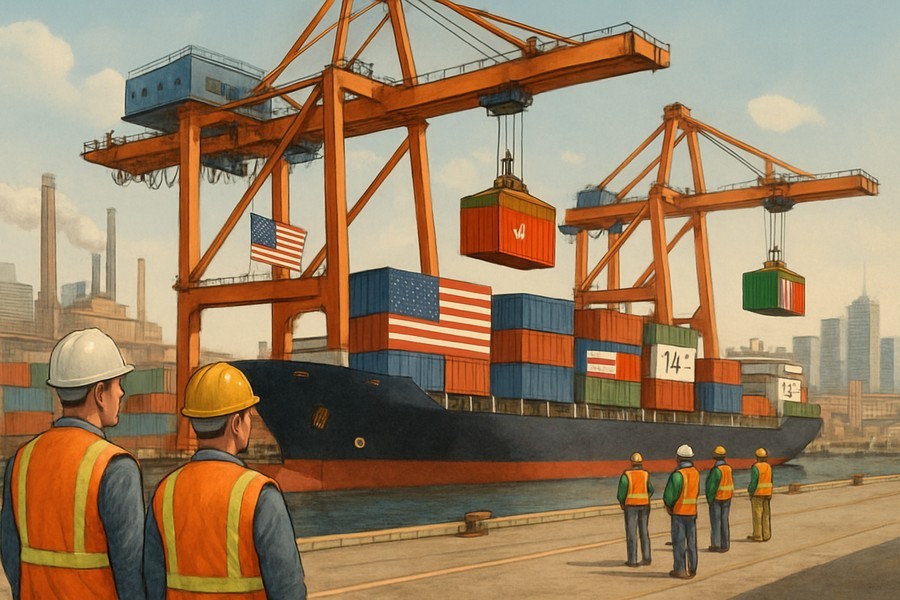
Unpacking the Unexpected Impact of Tariffs on the US Economy
When the US administration decided to ramp up tariffs, economic experts braced for a major hit to the economy. They anticipated that increased prices of goods and services, both for households and companies, would trigger soaring inflation and a drop in real incomes. However, the actual result has been a surprise.
The predicted tariffs did take effect, causing a stir on the global stage and sparking debates about free trade. These tariffs were not just a minor bump in the road, they were a significant jolt, surpassing even historical measures such as the notorious 1930s Act. The average tariff on imported goods jumped from a mere 2% to a whopping 18%, the highest since the Great Depression era. Unpredictable policy shifts added to the anxiety, with experts predicting inevitable negative impacts on inflation, employment, and real incomes.
The Unexpected Outcome
Despite all the forecasts, the expected economic storm didn't arrive. It seems that consumer price inflation may have remained steady. The latest data suggests a 2.7% rate, which matches figures from the previous year. Unemployment rates have seen a slight increase, but nothing catastrophic. The year's end did see a slowdown in economic growth, but the real picture is still unclear due to a government shutdown that caused delays in data collection.
In other words, the economic damage inflicted in the wake of these tariff hikes hasn’t been as devastating as predicted. There are four main reasons for this unexpected outcome.
Why the Forecast Failed
The first reason is a practical one - problems with data collection, due to a government shutdown. Some consumer price index (CPI) data is missing, especially for the month of October. Even November's figures are questionable, particularly regarding housing cost inflation. Delays in releasing GDP data have also muddled the picture.
Secondly, not all of the announced tariffs are fully operational. Some have been repeatedly pushed back, while others were rolled back because they were causing a surge in grocery prices. Additionally, certain countries have been granted tariff exemptions, preventing a potential disaster for industries like North American auto manufacturing.
Furthermore, it was always unlikely that the most extreme tariffs would be fully implemented. The backlash from US businesses would have been enormous. It's a common pattern for extreme negotiating positions to be softened when the pressure mounts. However, despite these adjustments, the tariffs that have been implemented are still quite high.
The Delayed Impact
Just because the immediate fallout isn't as bad as predicted, doesn't mean the economists got it all wrong. It's more likely that the effects have been delayed, rather than avoided. In fact, there is an expectation that these impacts will start to reveal themselves in the coming year.
This brings us to the third reason - as soon as the tariff hikes were announced, companies began to stockpile goods, particularly items like gold and weight-loss drugs. This strategy saved importers a significant amount of money. Even after the tariffs took effect, many retailers did not raise their prices, as they still had a stock of pre-tariff goods. This is a common practice among retailers, even though it doesn't align with the principle of maximizing profits. Many importers have not yet transferred the added costs to their customers.
Who's Absorbing the Cost?
The final and perhaps most important point is that importers are still bearing much of the cost increase, even after their pre-tariff stocks have run out. Data from large retailers shows that prices of goods subject to the new tariffs have been rising, causing a 0.7 percentage point increase in the overall CPI basket. But this rise is just a fraction of the potential costs that could be passed on at current tariff levels.
It's important to debunk the myth that foreign exporters are absorbing the cost of the duties by lowering their prices. In reality, US companies are the ones shouldering these costs. This is partly due to the uncertainty surrounding the duration of these tariffs. There's a chance they could be removed or perhaps struck down by the law. This uncertainty also explains why many companies have refrained from laying off workers so far.
However, businesses can't indefinitely accept these costs without impacting their profit margins. If the tariffs continue, the US should brace for further price hikes and a squeeze on real incomes in the coming year.