
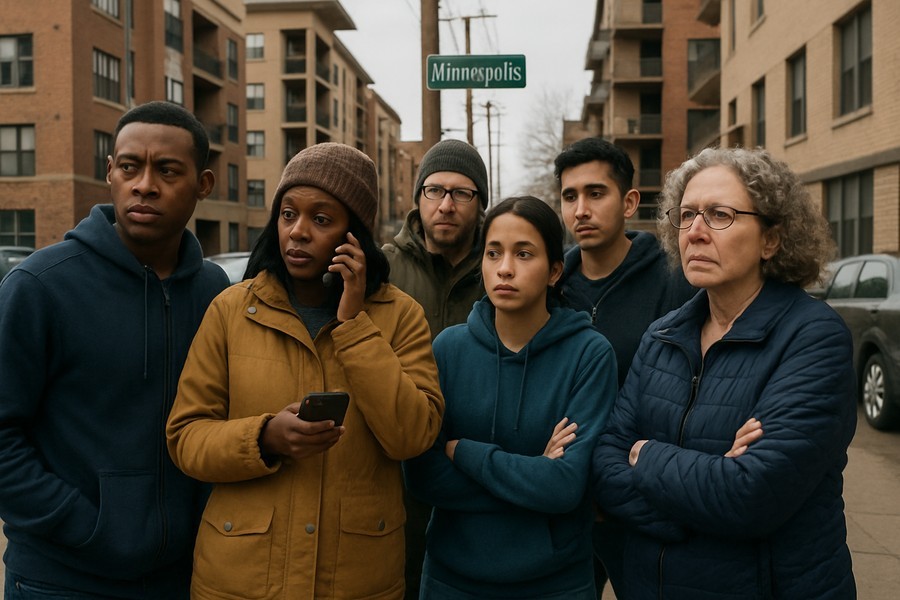
Stealthy Network in Minneapolis Stands up Against Immigration Enforcement
In recent times, the sounds of blaring horns and piercing whistles have become a common soundtrack in Minneapolis. This noise emanates from a group of people tirelessly tracking the movements of immigration enforcement agents throughout the city.
This group, which remains mostly under the radar, accompanies the ongoing Operation Metro Surge put in place by the government. The members of this group come from all walks of life, including educators, scientists, entrepreneurs, and homemakers. They are unified by their common goal of safeguarding immigrants, keeping them informed of approaching officials, and documenting the unfolding events.
The Unrelenting Effort Continues
Despite a shift in the government's tone following the unfortunate demise of Alex Pretti over the weekend, and the reassignment of Gregory Bovino, the high-ranking official who was the face of the immigration crackdown, this group remains steadfast. They continue to operate, knowing that the risk to the immigrant community remains regardless of who is in charge locally.
Sudden Surge
The situation escalated in the early part of the year when the biggest immigration operation was announced. The presence of heavily armed agents, hiding behind masks and traveling in unmarked vehicles, became a common sight in certain neighborhoods. To date, over 3,400 people have been apprehended by Immigration and Customs Enforcement. The operation included more than 2,000 ICE officers and 1,000 Border Patrol officers.
While officials claim that they are primarily targeting illegal criminals, the actions on the ground tell a different story. There have been numerous incidents of agents stopping people at random to demand citizenship papers, even off-duty Latino and Black police officers and city workers. They showed no restraint, even when it came to arresting children alongside their parents and deploying tear gas near a school to disperse protestors.
Quick Response
Activist groups in Minneapolis-St. Paul and its suburbs were quick to mobilize in response. Volunteers offering help in various ways, from delivering food to immigrants too scared to leave their homes to driving them to work and keeping watch outside schools. They also established an intricate network of rapid response teams that tracked immigration agents' movements using encrypted apps.
Protesters often formed caravans behind these agents, creating moving protests that echoed throughout the city streets. When agents stopped to arrest or question someone, these networks would alert more people who would then arrive at the scene to document the proceedings and offer legal advice to those being detained.
Expecting Trouble
These confrontations often escalated into physical altercations, with protesters shouting at the immigration agents. The agents often retaliated with force, including punches, pepper spray, tear gas, and even arrests. Such confrontations have raised concerns among activists.
The story of a woman, known only as Sunshine, illustrates the resilience of these activists. Sunshine, a healthcare worker, has spent countless hours patrolling immigrant neighborhoods for signs of federal agents. She does this out of a deep sense of duty, despite her fears of a civil war being instigated by the government's actions.
However, not everyone supports this approach. Some activist groups have expressed reservations about protest strategies that could escalate tensions. They argue that loud and aggressive tactics can provoke already volatile immigration agents and increase the chances of aggression towards bystanders or the person being detained.