
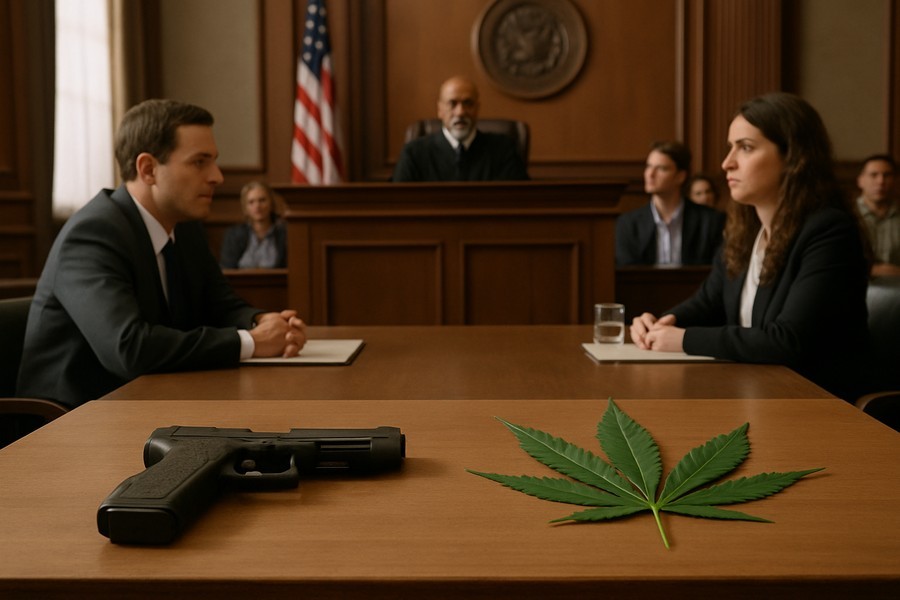
Gun Ownership Rights and Marijuana Users: A Controversial Supreme Court Case
A significant case is about to hit the Supreme Court, merging the unlikely topics of gun ownership rights and marijuana use. These two subjects, typically seen at opposite ends of the political debate, have both caused substantial shifts in American society over the years. Now, they find themselves intertwined in a fascinating legal battle.
The conservative administration will be advocating for a specific firearm restriction backed by groups usually associated with the Democratic party. In contrast, the opposition comprises organizations dedicated to gun rights and civil liberties.
The Core Issue: A Federal Law
The case's focus is a federal law prohibiting regular marijuana users from legally owning guns. This law has sparked controversy and division among lower courts since an influential 2022 Supreme Court ruling extended gun rights.
The opposition believes the law infringes on Second Amendment rights and is unconstitutionally vague about the definition of a drug user. They argue that the law provides prosecutors with too much power and creates uncertainty for the millions of Americans who use marijuana but also own a firearm.
Although most states permit medical marijuana use, and about half allow its recreational use, it remains illegal at a federal level. The law also includes illegal substances more broadly, implying that the case could potentially grant other drug users wider legal gun use.
A Historical Perspective
Supporters of the law argue that it aligns with the Supreme Court's requirement for gun laws to be rooted in the nation's history and tradition. They claim that firearm restrictions for illegal drug users date back as far as the legislative acknowledgment of drug-related issues.
Despite marijuana's current federal status, an order has been signed to expedite its reclassification as a less dangerous drug. The case in question revolves around a man from Texas who was charged with a felony due to owning a gun and admitting to bi-daily marijuana use. A small quantity of cocaine was also found during a search of his home.
The Court’s Decision and Its Implications
The case was initially dismissed by a conservative-leaning appeals court that ruled only individuals under the influence of drugs while armed can be charged. The administration has generally supported gun rights, but in this case, they argue that this law is a reasonable restriction.
Government lawyers claim that habitual drug users owning firearms pose unique threats to society, particularly the risk of hostile, armed encounters with law enforcement while under the influence. This argument is based on historical restrictions placed on individuals who were frequently inebriated.
While the Supreme Court has expanded gun rights, it has simultaneously upheld a federal law disarming individuals subject to domestic violence restraining orders. The argument is that drug users present similar risks.
Interestingly, gun rights organizations, traditionally aligned with the conservative party, are opposing the administration in this case. They argue that Americans have traditionally decided which substances can be responsibly used recreationally, and the right to bear arms was never denied to individuals who occasionally used such drugs, unless they were armed while intoxicated.
The Cannabis Community Responds
Proponents of cannabis legalization agree, highlighting that one of the fastest-growing groups of users are older adults seeking relief from ailments like arthritis and sleep disorders. They argue that prohibiting cannabis users from owning firearms will not solve the issue of gun violence.