
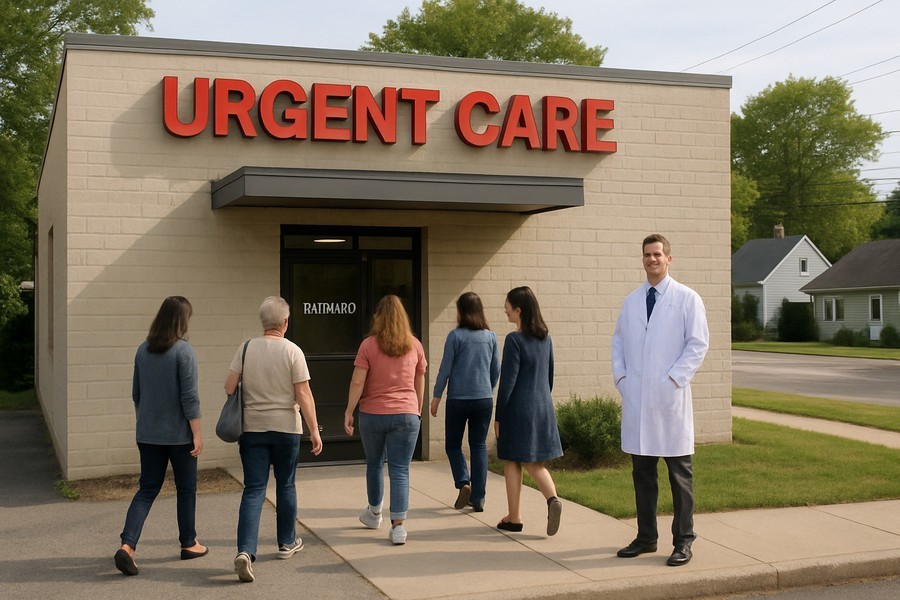
Emergency Clinics: The New Hope for Abortion Services?
When Dr. Shawn Brown opened her emergency care clinic in a small town in Michigan, she never imagined she would be providing abortion services. However, when the local Planned Parenthood was forced to close its doors, Dr. Brown felt the need to step in to ensure women in her community still had access to such a crucial service. With no other facilities providing in-person abortions, women were left with a 500-mile gap in services.
Filling the void in abortion services
Despite being a self-proclaimed pro-lifer, Dr. Brown made the decision to add medication abortions to her clinic's spectrum of services. This allowed women in the area to continue receiving necessary treatment alongside other health services such as flu treatments, migraines, and skiing injuries. This change came as abortion clinics across the states started closing down, leaving thousands of women without access to these services.
The closures were not limited to regions that have restrictive abortion laws. Even states that have passed constitutional amendments protecting abortion rights, like Michigan, were not immune to clinic closures. This has led to gaps in pregnancy care services, particularly in rural areas where hospitals have also closed their labor and delivery units. Dr. Brown's clinic has emerged as a beacon of hope in these circumstances.
Urgent Care Clinics: A Potential Solution?
The idea of urgent care clinics serving as abortion providers has been hailed as a promising solution to the nationwide abortion clinic closures. One woman, identified as A, recently sought abortion services at Dr. Brown's clinic. She had to drive for over an hour through snowy roads to get to her appointment. A was pregnant again shortly after giving birth to her youngest child, and felt that she couldn’t handle another baby at the time, due to various factors including financial strain and housing issues. She chose to seek care in-person because she felt it was more secure than dealing with unknown individuals or receiving medication by mail.
The Human Touch in Medical Care
At Dr. Brown's clinic, patients are treated with utmost care. Dr. Viktoria Koskenoja, an emergency medicine physician at the clinic, ensures that each patient is confident in their decision. Dr. Koskenoja previously worked at Planned Parenthood, and when the local branch closed, she was distraught. Immediately, she began reaching out to her contacts in the healthcare industry to brainstorm solutions. One of her first calls was to Dr. Brown, and together, they started providing medication abortions at the clinic.
The Challenges of Offering Abortion Services in Urgent Care Clinics
Though the idea of offering abortion services in urgent care clinics seems promising, it’s not without its challenges. One hurdle was the cost of medical malpractice insurance, which initially quoted at $60,000 annually for offering medication abortions. However, after presenting data that showed that medication abortions did not add significant liability, the insurance company agreed to an additional premium of about $6,000 per year.
Despite these obstacles, the community rallied behind Dr. Brown’s clinic. A local donor provided an ultrasound machine and a nonprofit was started to help cover the costs of medication and additional staffing. This drastically reduced the cost for the patients, making the service more accessible to those in need.
Expanding the Model
Since the clinic started offering abortion services, its reputation has grown, with patients coming from as far as Louisiana. Other medical centers are now considering implementing a similar model. However, any urgent care clinic considering offering abortion services needs to be aware of the legal and regulatory challenges. They must comply with state-specific laws, as well as federal regulations, including the requirement for mifepristone prescribers to be certified by the drug's distributors and to obtain signed patient agreements.
A Sensitive Conversation
Back in the clinic, Dr. Koskenoja handled her conversation with A with sensitivity, ensuring she was comfortable with the decision. After a long discussion about the mental load of parenting and various birth control options, A confirmed her decision to go ahead with the abortion. As she left the clinic, Dr. Koskenoja handed her a small, handsewn "comfort bag" filled with the pills, reminders about when to take them, a handwritten note of support from local community members, pain meds, comfortable socks, and a heating pad. A was reassured that she could call the clinic if she had any questions or concerns.
As A walked out of the clinic to her car, plans for the future in her mind, the waiting room continued to buzz with other patients, emphasizing the critical role of these clinics in meeting a wide range of health care needs.