
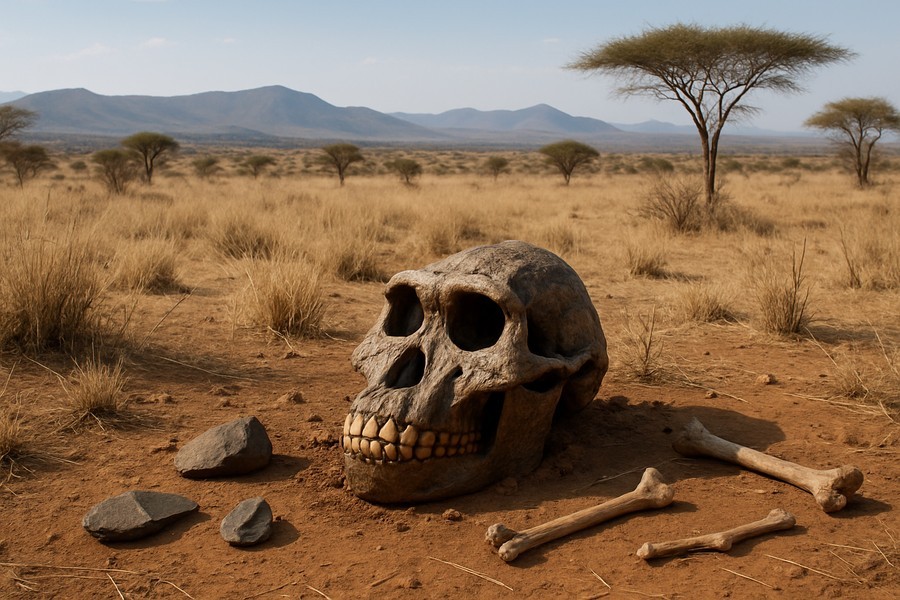
Unveiling the Broad Spread and Adaptability of Paranthropus Through Afar Fossils
Discoveries from the Afar region have shed light on the wide-ranging spread and surprising versatility of an early hominin group, Paranthropus. This group of early human relatives is known for their unique adaptations, including heavier jaws and larger molars.
Paranthropus is believed to have thrived in Eastern Africa during the Middle Pliocene era, a time of significant evolution and diversification among hominins - the group that includes modern humans and our closest extinct relatives.
Patterns of Resource Use
Studies focusing on the early Homo and Paranthropus suggest that these early ancestors had distinctive patterns of resource use. While the direct ancestors of humans were developing tools and expanding their diets, Paranthropus was specializing in a more limited diet that required heavy chewing.
Insights from Teeth
Many of the insights into Paranthropus come from dental fossils. For instance, Late Miocene teeth discovered in the middle Awash region of Ethiopia have provided valuable information about early hominid dental evolution. These teeth help researchers to understand the diet and lifestyle of our early ancestors.
Environmental Changes and Hominid Origins
Another fascinating discovery comes from the Mille-Logya site in the Afar region. Here, fossil findings have helped to establish a link between Pliocene environmental changes and the origins of the genus Homo, which includes modern humans.
These findings underscore the importance of environmental shifts in shaping the course of human evolution. Changes in climate and habitat likely played a crucial role in the emergence of new hominin species and the extinction of others.
Expanded Geographic Distribution
Paranthropus was not only versatile but also widely spread. Recent findings have expanded our understanding of the geographic distribution of this remarkable group. It appears that these early hominins inhabited a wide range of environments across Eastern Africa.
This expanded distribution suggests a greater level of adaptability than previously assumed. Paranthropus was able to thrive in a variety of habitats, demonstrating a remarkable ability to adjust to different environmental conditions.
Adapting to a Changing World
Despite their adaptability, Paranthropus ultimately became extinct, while our direct ancestors, the genus Homo, continued to evolve. This divergence in fortunes may be due in part to different responses to a changing world.
While Paranthropus specialized in a narrow diet, early Homo species were becoming increasingly versatile, developing tools to exploit a wider range of resources. As environmental conditions changed, this flexibility may have given Homo an advantage, enabling them to survive while Paranthropus died out.
In the end, the story of Paranthropus is a reminder of the complex forces at work in human evolution. It’s a tale of adaptation, resilience, and ultimately, extinction. And it’s a story that continues to unfold as researchers uncover new fossils and extract new insights from the ancient past.