
Deciphering the Lineage of Ancient Neanderthals from a Siberian Cave
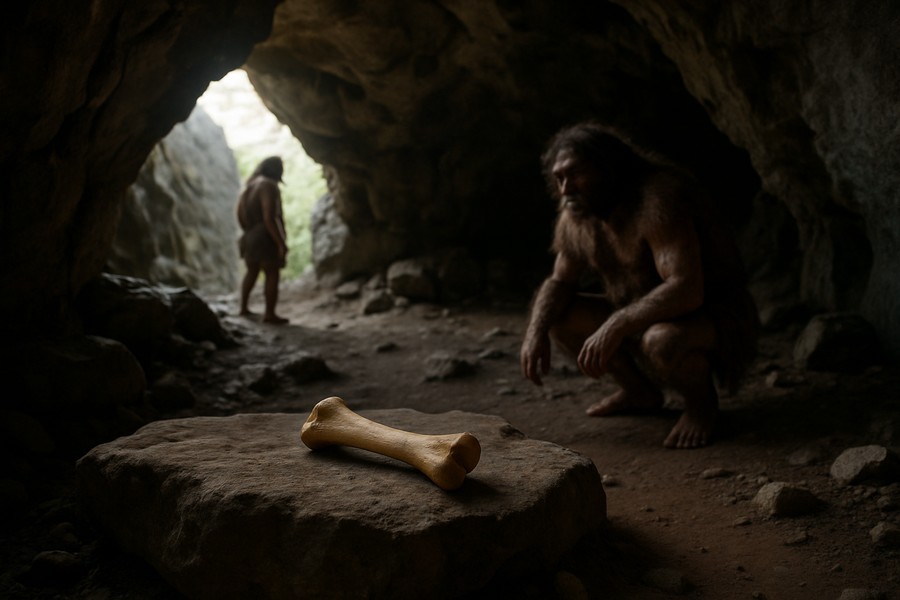
A minuscule bone fragment, aged at approximately 110,000 years, has made a remarkable revelation. It showed that two Neanderthals who lived in the same Siberian cave, but were separated by about 10,000 years, were actually distant relatives. This old bone has also offered the fourth complete Neanderthal genome, giving us an insight into the size and isolation of the Neanderthal population long before their extinction around 34,000 years ago.
Discovering the Ancient Relatives
The bone fragment was discovered in the Denisova Cave, which was intermittently inhabited by both Neanderthals and Denisovans for nearly 300,000 years. In a recently published study, the researchers compared the genome of this 110,000-year-old Neanderthal male, referred to as D17, with three other complete Neanderthal genomes to get a better understanding of their population structure.
A comparison was made between the genome of D17 and that of a female Neanderthal, dubbed D5, from the same cave, who lived around 120,000 years ago. Despite D5 not being the direct ancestor of D17, they both belonged to closely related lineages, sharing a common ancestor. This distant biological relationship suggests a stable Neanderthal presence in the Altai region for a long period.
Unveiling the Neanderthal Lifestyle
However, it is probable that the Denisova Cave was merely a part of a larger landscape which these Neanderthal populations frequented over time, rather than the home of a single, continuous group.
The study also revealed that Neanderthals in the Altai region lived in extremely small and isolated populations, with numbers as low as 50 or fewer. This was determined by the presence of strong genetic markers of inbreeding. The Neanderthals analyzed had large sections of identical DNA, suggesting a high level of inbreeding - their parents could have been as closely related as first cousins.
Isolation and Survival of Neanderthals
This research aligns with previous studies that indicated Neanderthals tended to live in smaller and more isolated groups compared to our own species. It was found that one Neanderthal community in the Altai region consisted of around 20 individuals, while another was isolated for roughly 50,000 years. Many believe that inbreeding and isolation contributed to the Neanderthals' extinction around 34,000 years ago. However, the latest findings suggest that Neanderthals survived for extended periods under extreme conditions of isolation and small population size.
Differentiating between Neanderthal Populations
Subsequent discoveries showed that Neanderthals from the Altai region were quite different from their later European counterparts. Genetic analysis revealed that the Altai Neanderthal D17 was more closely related to D5 than either of them was to Neanderthals in Europe or to later populations in the Altai region. This indicates a rapid genetic differentiation between Neanderthal populations from eastern and western Eurasia within a relatively short time frame and a fairly small geographic area.
This rapid genetic differentiation among Neanderthal populations could have been because of the process known as genetic drift, which causes random genetic changes to become more common over time in small, isolated groups. This high degree of genetic separation and differences between groups may have limited the Neanderthals' ability to adapt to environmental changes.
Concluding Remarks
This study has provided new details about how Neanderthal populations were structured. Having two sequenced Neanderthals from such a close geographic place brings a new and more detailed insight into their population structure. The more data we have, the better our understanding of these ancient populations becomes.