
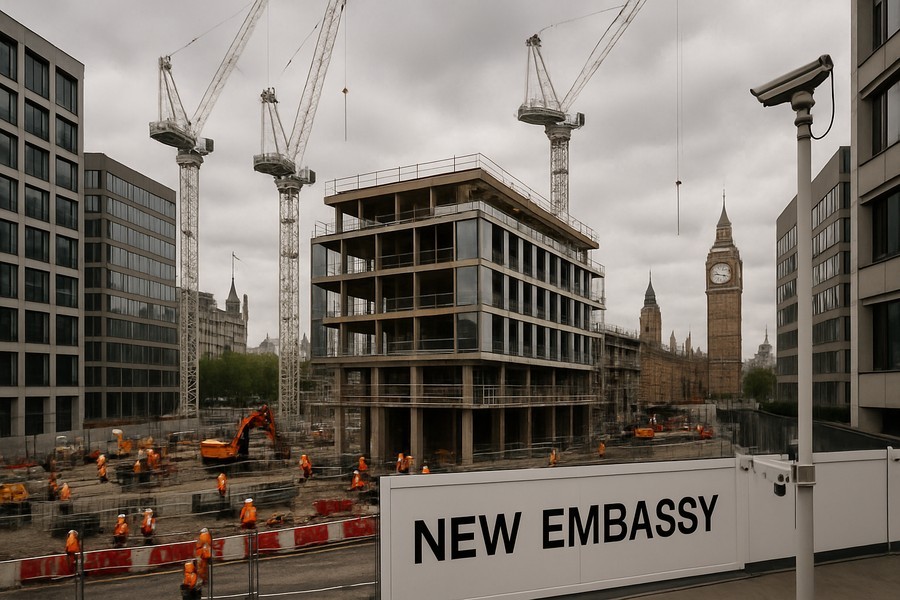
UK Green Lights Massive Chinese Embassy in London Amid Security Concerns
The government of the United Kingdom has given the thumbs up to China's plans to construct an enormous embassy in the vicinity of London's financial district. This comes in spite of apprehensions raised by lawmakers, locals, and Chinese expatriates about potential security threats linked with the expansive facility.
The piece of land where the proposed embassy is to be built was previously occupied by Royal Mint Court, which was where the UK used to mint coins. This plot was purchased by China for a whopping $312 million back in 2018. However, it took three postponements before the government finally gave its consent to the construction of the 20,000 square-meter (215,000 square-foot) embassy. Once completed, it will be China's biggest diplomatic station in Europe.
UK's Balancing Act with China
The numerous delays in granting approval underscore the UK government's dilemma when dealing with China. On one hand, the UK wishes to continue benefiting from China's economic influence and diplomatic goodwill. On the other hand, it is cautious about allowing Beijing to establish an embassy close to the critical fiber-optic cables transmitting confidential data for financial firms. The location of the planned embassy has also raised concerns about potential surveillance of Chinese nationals residing in London.
After careful evaluation, the 240-page planning decision document concluded that the proposed project complies with the overall development plan. Therefore, it stated that planning permission and listed building consent should be granted.
Underground Complex Raises Eyebrows
Just days prior to the government's approval, leaked plans surfaced revealing China's intention to construct a 208-room complex beneath the embassy. One of these rooms, alarmingly, is planned to be positioned just a few feet away from fiber-optic cables carrying the email and financial data of millions of Britons.
A key opposition figure voiced her concerns last week, warning that the completion of these plans would provide the Chinese Communist Party with a platform for economic warfare against the UK. She also expressed her belief that it would create ongoing challenges for the country's security services.
Despite these concerns, the UK's domestic spy service did not formally object to the embassy plans. However, the agency has previously voiced concerns about broader threats from China. The spy agency also issued a rare warning last year, alerting lawmakers of China's intelligence services using professional networking platforms to pose as recruiters and target people working in Parliament. The Chinese embassy in London dismissed these allegations as unfounded and malicious.
Complications Within Diplomatic Negotiations
Interestingly, the UK's decision to permit China to build its new embassy might have been influenced by its own need for China's approval to remodel its embassy in Beijing. It has been suggested that China has been delaying the UK's plans while waiting for approval for its own embassy in London.
Furthermore, the UK has been grappling with the fear that refusing China's request could negatively impact the trade relationship between the two nations. The UK's prime minister, who is the first in six years to have a meeting with China's leader, has called for a consistent, respectful, and long-term relationship with China, with an emphasis on increased business cooperation.
However, the economic history between the two nations is somewhat ambiguous. While China was the UK's fourth largest trading partner for the year ending Q2 2025, British exports to China decreased by 23% in the same period. This decline was highlighted by a key opposition figure who criticized the UK government for sacrificing security for trade with China, especially given the fall in exports.
Concerns Among Chinese Nationals
The plans for the new embassy have also stirred worries among Chinese nationals, including those from Hong Kong and pro-democracy campaigners residing in London. One such activist from the Hong Kong Democracy Council who sought refuge in London expressed her fear that the embassy could be used to spy on and intimidate opponents of China's government living in exile.
After repeated delays, the decision to approve the new embassy was met with criticism from the Chinese embassy. They expressed disappointment and accused the UK of lacking in the spirit of contract.