
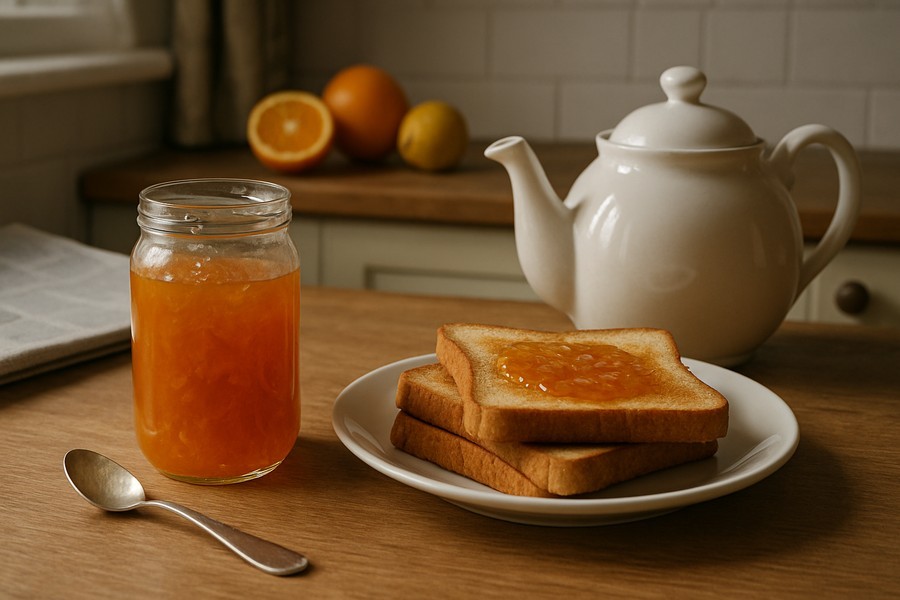
The Stir Over the British Marmalade Name Change
Marmalade, the citrus-based spread, has been a beloved component of British breakfast since the 1700s. This traditional preserve, once enjoyed by Queen Victoria and the fictional Paddington Bear, is now in the center of a naming dispute that has left fans unsettled.
The Marmalade Name Change: A Rebrand or an Identity Crisis?
While the term 'marmalade rebranding' is making the rounds, it doesn't quite capture the essence of the situation. It's not about rebranding one particular product, but rather a shift in how this iconic spread is recognized. The issue affects all marmalade manufacturers and is more akin to an identity shift.
The controversy isn't new, but it's currently intensifying due to political changes. The crux of the matter is that marmalade makers might soon need to specify that their product is 'citrus marmalade' or 'orange marmalade', a result of Britain's exit from the European Union.
The History of the Marmalade Naming Dispute
The marmalade naming dispute traces back to a linguistic deviation. The term 'marmalade' is derived from the Portuguese 'marmelada', referring to a thick quince paste served with jam. British manufacturers, for unclear reasons, decided to repurpose the term to define a more fluid jam made with Seville oranges from Spain.
Adding to the confusion, other European countries adopted similar words in their languages, such as 'mermelada' in Spanish, 'marmellata' in Italian, and 'Marmelade' in German, to describe all types of jams, not just citrus-based ones.
While part of the European Union, Britain was able to sway decisions in Brussels. During the 1970s, it successfully secured a unique commercial status for marmalade made from Seville oranges. However, this victory left a sour taste in the mouths of other EU nations.
Post-Brexit Changes Triggering the Marmalade Name Change
With Britain's departure from the EU, European producers have seized the opportunity to redefine the legal meaning of marmalade. This change allows them to utilize the term 'marmalade' for any jam flavor starting from June. Consequently, traditional British-style marmalade will now need to label itself as 'citrus' or 'orange' marmalade to distinguish itself.
The exit from the EU was supposed to shield Britain from cultural domination. The high economic cost was considered a reasonable trade-off for the freedom to uphold its traditions. However, to maintain trade with the EU, Britain must abide by its rules. This new marmalade naming norm is due to come into effect in Northern Ireland by this summer, and will also apply in England, Wales, and Scotland if a broader food agreement is settled, expected around the middle of the 2020s.
Impact on Marmalade Producers and Enthusiasts
This week, the coordinators of the Dalemain World Marmalade Awards expressed their concerns on social media. They are worried about the potential costs for artisanal producers who may need to alter their label designs. However, they also see a silver lining in the rule change.
They acknowledge that marmalade is interpreted differently worldwide. For instance, American marmalades are typically runnier, while Canadian marmalade is more similar to the firm gel set found in the UK. European versions of marmalades, though delicious, often resemble compotes more than marmalade. They believe the name change might clarify what they are looking for in their British standard competition.