
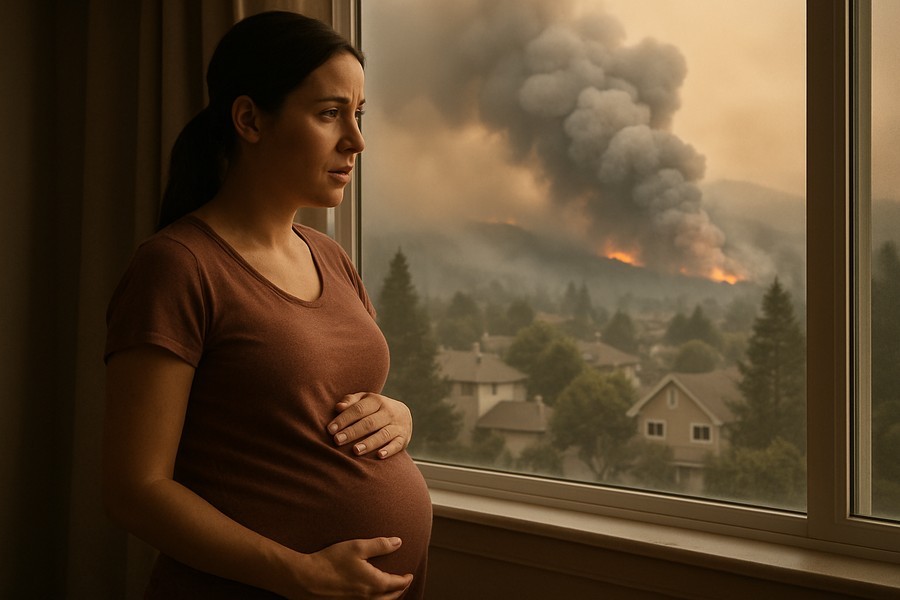
Autism Risk in Children Potentially Increased by Smoke from Wildfires During Pregnancy
Recent research has indicated that expectant mothers exposed to smoke from wildfires, especially during their third trimester, could be increasing their unborn child's risk of developing autism. This study, conducted in Southern California, analyzed hundreds of thousands of births looking for connections between prenatal exposure to wildfire smoke and autism.
First of its Kind Study
Although previous studies have hinted at a possible link between pollution in general and autism, this is the first study to specifically look at the effects of wildfire smoke. The study focused on PM 2.5, incredibly small particles found in wildfire smoke that can deeply penetrate the lungs and eventually make their way into the bloodstream, causing significant health worries.
A model was used to estimate PM 2.5 levels at the home addresses of the participants during their pregnancies. The research lends further credibility to the existing body of scientific literature linking air pollution, specifically PM 2.5, to autism. It's noteworthy that the risk, while not massive, is consistent.
Wildfires and Autism: An Emerging Research Area
With both autism and wildfires seeing an increase in recent years, researchers are keen to explore any potential connections between the two. For this study, researchers reviewed health records from over 200,000 births in Southern California between 2006 and 2014. They found that California leads the nation in both annual acres burned by wildfires and rates of childhood autism diagnoses.
Assessing the Risk
The study found that the risk of an autism diagnosis was significantly stronger when mothers were exposed to wildfire smoke during their third trimester, particularly during periods of multiple smoky days. The risk of autism diagnosis was about 10% higher for children whose mothers endured 1 to 5 smoky days during the third trimester, 12% higher with 6 to 10 days, and 23% higher with more than 10 days.
Interestingly, the risk was most pronounced among women who remained in one location during their pregnancy. This suggests that sustained exposure to smoke in a single location, rather than occasional smoke exposure, could play a crucial role.
Exploring the Causes
The study does not provide a conclusive explanation as to why smoke from wildfires may increase the risk of autism. However, it’s crucial to note that wildfire smoke is chemically different from other pollutants, such as car emissions, that we are exposed to on a day-to-day basis. Wildfire smoke has a unique chemical composition, including higher levels of carbon compounds and metals, and toxic byproducts. It also tends to occur in intense, short-term spikes.
The third trimester is a critical period in a fetus's development, especially for the brain. This is when the brain undergoes significant growth and the development of its main centers. The findings of this study should not be a cause for alarm, as autism is influenced by a myriad of factors, including a strong genetic component.
The Bigger Picture
Exposure to high levels of PM 2.5 has already been linked to lower birthweight, higher levels of preterm births, asthma, and obesity. Hence, monitoring and mitigating air pollution should be a top priority for regulatory agencies.
Autism spectrum disorder, characterized by challenges with social and communication skills and repetitive behaviors, affects 1 in 31 school-aged children in the United States. The disorder is believed to be multifactorial, with several environmental factors potentially playing a role, especially if these exposures occur during early life. More research is needed to understand the condition’s root causes, including potential environmental causes like air pollution, chemicals, and medicine.
Need for Further Research
Despite the promising findings, more research is needed. For instance, exposure estimates were based on outdoor air, but researchers don’t know how much smoke people were exposed to indoors, or whether they used air filters, wore masks or altered their behavior during a wildfire event. The study also highlights the importance of minimizing smoke exposure during a wildfire event, when possible, and following public health guidance.
While the findings are thought-provoking, caution should be exercised when interpreting them. The observed effects were small, and the group with the highest exposure did not show a clear increase in risk. This lack of a dose response raises questions about the findings, and replication is necessary before these results can be fully trusted.
This study serves as a reminder of the importance of reducing pollution and helping families cope, and raises the question whether preventative measures such as masks or air purifiers could reduce the risk seen in the study. After all, wildfire smoke is a potentially preventable environmental exposure.