
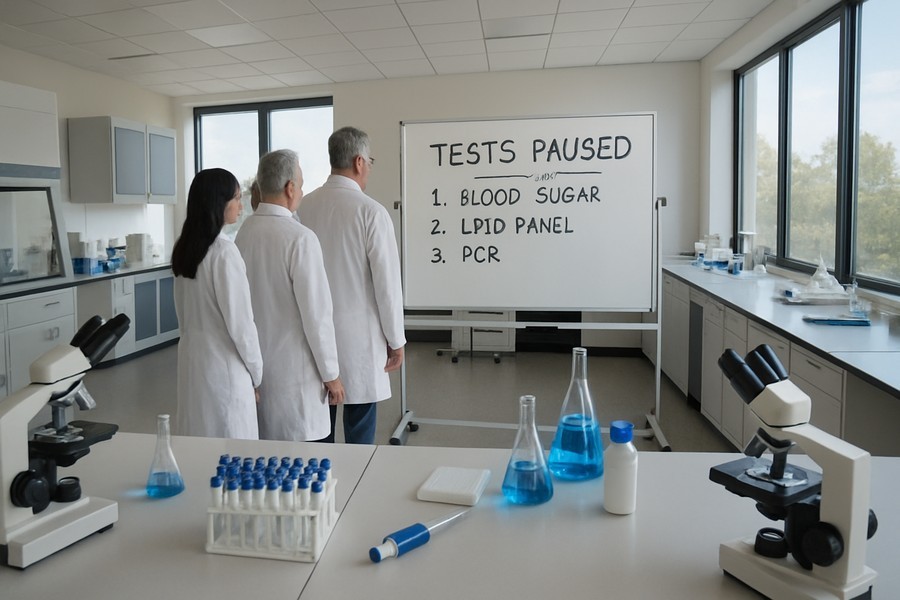
Government Health Agency Temporarily Halts Various Lab Tests Amidst Operational Review
There's a temporary halt in diagnostic testing for numerous infectious diseases, including rabies and monkeypox, by the country's primary health agency responsible for tracking diseases. More than two dozen types of tests have been put on hold, as announced this week.
It's not the first time this agency has put a stop to some of its lab testing, but the number of tests currently paused is unprecedented. The reasons behind this move aren't entirely clear.
The Temporary Pause Explained
A representative from the government clarified this pause as temporary and part of a "routine review to maintain our commitment to high-standard laboratory testing." The representative also mentioned that they expect some of these tests to be available again through the agency's labs in the coming weeks.
During the pause, the agency continues to support state and local partners, ensuring they have access to the public health testing they need. This comes as a response to the concern raised about the pause in lab tests.
Looking at the Bigger Picture
During the recent global health crisis, the agency's laboratory operations faced criticism, culminating in a review by a work group. This has led to an ongoing evaluation of their testing procedures since 2024.
However, it's noted that there could be other factors leading to the temporary discontinuation of tests, including staffing issues.
Staffing Challenges Amidst Downsizing
The temporary halt in lab testing comes on the heels of a significant reduction in the agency's size over the past year due to layoffs, retirements, resignations, and nonrenewal of temporary appointments. The agency has seen a staffing decline of between 20% and 25% by various estimates, with effects felt across the board, including in the laboratories.
The labs dedicated to poxvirus and rabies testing lost about half their former staff, while the branch dealing with malaria saw even more severe cuts. This information comes from a coalition of former and current employees from the agency, which was formed in response to the downsizing.
Impact on Various Tests
Some of the currently unavailable tests focus on common infections for which commercial testing is available, such as the Epstein-Barr virus and the varicella zoster virus which causes chickenpox and shingles. However, the list also includes testing for less common agents, like parasitic worms causing "snail fever" and the virus that leads to "sloth fever."
Fortunately, specialized state labs in some areas have the capacity to take over while the agency's tests are paused. The concern lies in whether this pause becomes permanent.