
The Ongoing Reign of Power-Player Cabello in Venezuela
The fall of Venezuelan President Nicolás Maduro to U.S. forces sparked hope for a shift towards democracy in the South American nation. However, the anticipated "Venezuelan Spring" remains a distant dream.
The reason behind this lies in the continued influence of Diosdado Cabello, Maduro's chief enforcer and the current Interior Minister. Cabello stepped up his role in the government after Maduro's capture and the subsequent appointment of Delcy Rodríguez as interim President.
Cabello's Response to Maduro's Arrest
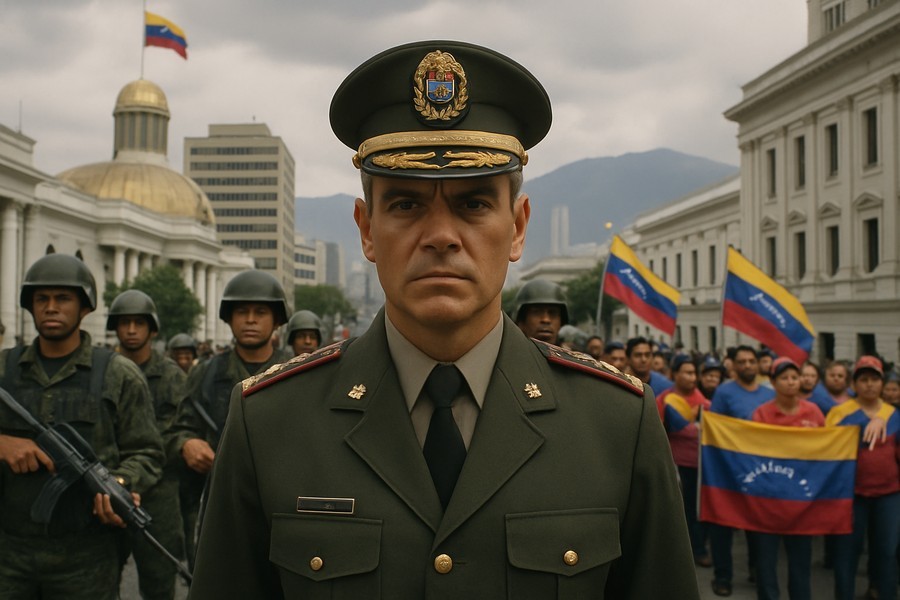
Following the U.S. operation, Cabello made a public appearance in Caracas donned in military gear. He lambasted the U.S. mission as a "cowardly attack" and urged his fellow citizens not to aid the "terrorist enemy." Backed by armed troops, he rallied supporters to protect Venezuela's autonomy and warned dissenters of dire consequences for betraying the Bolivarian revolution.
Cabello, like Maduro, is a wanted man in the United States, charged with drug trafficking and narco-terrorism. Additionally, he's part of a network of Venezuelan officials accused of facilitating cocaine shipments to the U.S., known as the Cartel of the Sun. Despite these charges and a hefty reward offered for his capture, Cabello denies all allegations and continues to hold significant power in his homeland.
Cabello's Infamous Reputation
In Venezuela, Cabello is a well-known figure. A burly man with a crew cut, the 62-year-old has been a key player in the country's political landscape for decades. He was a close ally of Hugo Chávez, the founder of Venezuela's socialist revolution. Both were young army officers who participated in a 1992 military coup, with Cabello leading a fleet of tanks meant to seize the presidential palace.
Although the coup was unsuccessful, Chávez eventually won the presidency in 1998 with Cabello as a trusted advisor. Cabello held various roles, including head of the telecommunications regulator where he played a crucial role in shutting down media outlets critical of the government. He also briefly served as interim president in 2002 during a short-lived coup against Chávez.
Cabello's Role in the Maduro Era
Despite being viewed as the natural successor to Chávez, Maduro was eventually chosen as the next President, thanks in part to his close ties with Cuban officials. Cabello, however, remained a key player, leading Venezuela's National Assembly and the ruling Socialist Party.
He was kept out of Maduro's cabinet due to their rivalry until 2024, when protests broke out over strong suspicions of a fraudulent presidential election. As interior minister, Cabello led a harsh crackdown, resulting in the death of 24 people and the arrest of over 2,000, according to Human Rights Watch. He continues to control Venezuela's police force and pro-government gangs known as colectivos.
Implications for the Future
The presence of Cabello in the government signals instability for any potential business relationships, particularly those related to Venezuelan oil. Human rights activists also point out that Cabello's presence is a significant barrier to the release of political prisoners, a policy intended to foster national unity.
Opposition figures who have left the country view a return as risky while individuals like Cabello and Defense Minister Vladimir Padrino López, who controls the military, remain in power. This situation could potentially delay a democratic transition that many are seeking.
Cabello's next moves remain uncertain. He could opt for a deal and seek exile, lay low and cooperate with the interim government in an attempt to outlast international pressure, or continue to assert his power. Regardless of his decision, his long-term ambitions are unlikely to fade.