
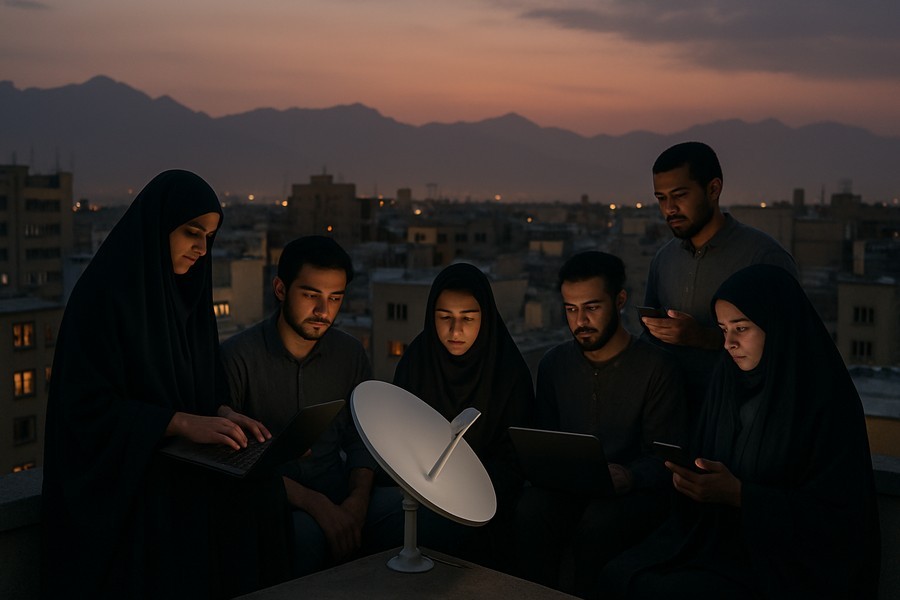
Free Satellite Internet Access Granted in Iran Amid Protests
The controversial tech company headed by a famous billionaire has started offering complimentary satellite internet services in Iran. This move comes at a time when the Iranian government continues its harsh response to anti-government rallies. The information about the free internet was revealed by a tech guru who has been in contact with Iranian users of this satellite service.
The accounts in Iran, which were not active before, are now connected and their subscription fees have been waived. The tech company's executive explained, "It's straightforward to use - all you need is a clear view of the sky, and you're all set."
This update comes after a recent conversation between the US President and the tech billionaire, where they talked about access to the satellite internet service in Iran. However, the tech company and the White House did not respond to requests for comments.
Internet Blackout Amid Protests
For several days, the Iranian authorities have cut off internet access while reportedly killing over 1,800 protesters. This event is being described as one of the largest digital blackouts ever enforced by the regime. Human rights groups suggest that the actual death toll might be higher due to the difficulties in counting caused by the communication shutdown.
Providing free access to the internet is a positive move for activists, but it is expected to only benefit a small percentage of Iran's 92 million population. The regime has the capability to jam the satellite service, experts warn.
Overcoming the Information Blackout
The extent of the information blackout has resulted in the satellite service being the only means of relaying to the outside world the details of the protesters being killed. With thousands of low-orbit satellites worldwide communicating with ground equipment, the satellite service has become an essential part of US soft power in closed societies or conflict areas.
The US President has encouraged the protesters to continue resisting the Iranian regime, stating all options for US support, including military action, are being considered.
Internet Access Challenges in Iran
Iran's rulers have "created their own Great Firewall that only allows approved traffic," as explained by a network monitoring expert. He added that blocking internet access is relatively easy for the regime since only two companies connect Iran to the internet.
The Iranian government has decades of experience in monitoring its citizens and exporting that surveillance to other countries, like Syria, experts suggest. Currently, Iranian authorities are using various tactics to jam or degrade the satellite signals within Iran.
Increasing Access Despite Risks
Despite the risk of being killed for using the satellite terminals, there has been a significant increase in demand for the equipment inside Iran following a recent conflict with Israel. Digital rights activists are calling for more access to the satellite service for Iranians, even though it's not officially licensed to operate in the country. The tech billionaire had previously stated that the service is active and available in the country.
Window into the Crisis Through Satellite Connections
The satellite connections have provided a small glimpse into the brutal crackdown in Iran, according to a technology specialist at a human rights organization. "Estimates suggest there are around 50,000 satellite receivers in Iran. If we could expand this window, it could deter the regime from committing what is likely going to be labeled an atrocity under a blackout," she stated.
Aside from the satellite service, the US government has funded virtual private networks (VPNs) and other software tools to help Iranians evade censorship. However, funding for these efforts was cut last year amid a broader reduction in US foreign assistance.
One organization that was providing the satellite terminals to the Iranian people lost US funding. Some groups still have their US support intact, but they are reluctant to discuss details publicly to avoid risking their funding. There was widespread frustration among officials at the State Department at the time of the Iran-related funding cuts.