
Feast Your Eyes on February's Full 'Snow Moon' This Weekend
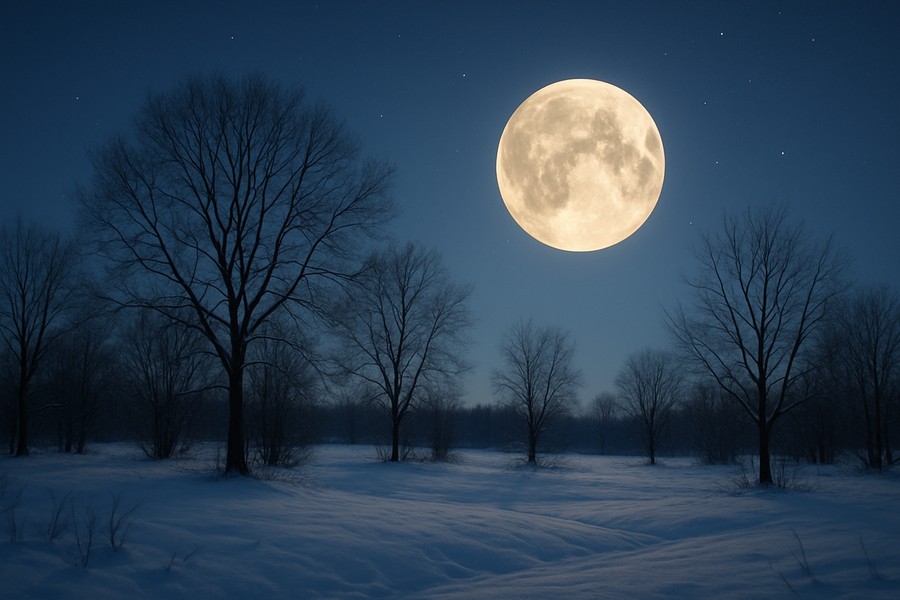
Get ready for a celestial delight this weekend as February's full moon, also known as the 'snow moon', takes center stage in the night sky. This is an opportunity not to be missed, especially when you consider the upcoming historic event where four astronauts will be voyaging around the lunar spectacle.
The full moon will be at its peak on Sunday, with the most noticeable illumination occurring near sunset, low in the eastern sky. But don't fret if you miss Sunday's spectacle; the moon will still look full on both Saturday and Monday, providing ample opportunities to witness its beauty.
The Snow Moon and Its Many Names
Why is it called the 'snow moon', you ask? Well, it's got something to do with the weather. In North America, heavy snow usually falls around this time of the year, hence the name. But that's not the only label this moon has earned. Various indigenous tribes have their own names for it, such as the 'sleet moon' named by the Comanche people, the 'wind moon' by the Creek tribe, and the Shawnee's 'crow moon'.
A Perfect Time for Moon Gazing
With the proposed launch of the Artemis II mission, a significant lunar exploration project, it's an exciting time for those interested in our celestial neighbor. What better way to celebrate this era of lunar exploration than by observing the moon in its full glory?
Whether it's full or partially lit, the moon offers a fascinating sight. By observing it, you can learn about its geography and various features. You can even see light and dark areas on the lunar surface with the naked eye, but using a telescope can help you spot craters and other interesting formations.
Supermoons and Full Moons: A Sky Watcher's Delight
There's more to look forward to! November and December will feature supermoons, a phenomenon where the moon appears brighter and fuller than usual because it's closest to Earth in its orbit. On average, the moon is about 238,900 miles from Earth, but December's supermoon will be the closest of the year at 221,667 miles away.
Lunar Eclipses: A Different Perspective
If you're intrigued by unusual lunar phenomena, mark March 3 on your calendar. On this day, a total lunar eclipse will occur, visible from Asia, Australia, the Pacific Islands, and the Americas. A total lunar eclipse happens during a full moon when the sun, Earth, and moon align, and the moon passes into Earth's shadow, causing it to darken but not disappear.
This event is often referred to as a "blood moon" due to the reddish hue the moon takes on. This color change happens because blue light undergoes stronger atmospheric scattering than red light, making red the most dominant color as sunlight passes through our atmosphere and reaches the moon. Depending on the weather conditions in your area, the moon may appear rusty or brick-colored red.
Later in the year, from August 27 to 28, a partial lunar eclipse will be visible for those in the Americas, Europe, Africa, and Western Asia. Partial eclipses occur when the sun, Earth, and moon don’t completely align, so only part of the moon passes into shadow.
So, gear up for a year filled with lunar delight and make sure to mark your calendars for these celestial events!