
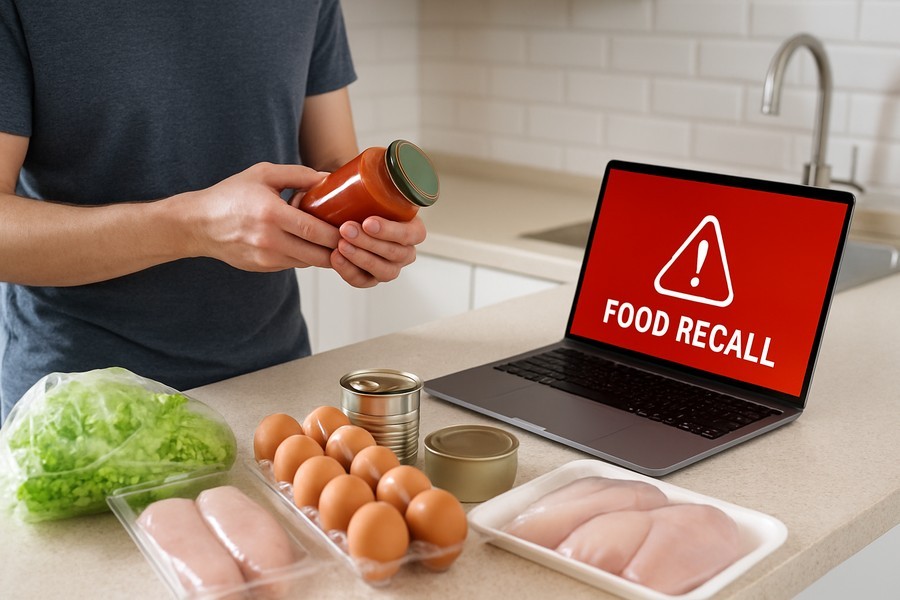
Understanding Food Recalls and How to Stay Safe
It's a fact that food safety isn't always a sure thing. In the last half-decade, there have been at least 500 instances of food recalls each year. In one year alone, there were 613 recalls, with the most harmful type - known as Class I recalls - increasing by 36.4%.
Why Food Recalls Matter
Understanding food recalls is crucial because they often involve severe health risks. These can be caused by allergens or bacterial contamination. The central responsibility for food safety in the country is shared by two major federal agencies. One regulates all food products except for agricultural goods like meat, poultry, and most eggs. The responsibility for these items falls under the other agency, and sometimes their responsibilities overlap.
According to these agencies, it's vital for consumers to be aware of food recalls. Recalled foods can cause injury or illness, especially for people who are pregnant or have weakened immune systems due to chronic illness or medical treatment. A food product may be recalled due to contamination with disease-causing microorganisms, the presence of foreign objects, or failure to list a major allergen on the product label.
The Ups and Downs of Food Recalls
The recent increase in food recalls is partly due to the rise in consumption of processed and packaged foods. They are popular because of their affordability, convenience, and extended shelf life. However, because modern supply chains are so interconnected, a single contamination issue can quickly affect a broader range of products, leading to much larger recalls than in the past.
But that's not all bad news. Even with this ripple effect, a higher number of recalls doesn't automatically mean our food system is less safe. Thanks to advances in traceability and oversight, consumers and companies can identify food safety hazards earlier and more often, resulting in faster response times.
However, the wide sourcing and distribution of food mean that most states have experienced hundreds of recalls. Faulty food products may reach entire regions or even the entire country. For example, one state has seen 556 food recalls recently.
The Impact of Recalls
Quantifying the number of people who fall ill because of food is difficult. While many become ill from food, only a subset can be linked to specific recalls or foods. Often, the illness comes from improper food preparation.
Furthermore, illness outbreaks and recalls are tracked separately. Many outbreaks don't result in recalls, and some recalls don't result in reported illnesses.
Understanding the Nature of a Recall
Food recalls can be triggered by a wide range of issues. These include everything from allergens to bacterial contamination, foreign objects to spoilage. Sometimes, the problem is a packaging defect, but more often, the issue is more direct and potentially harmful.
Common causes of recalls include allergens (45.2%), such as when a product is cross-contaminated with something that can cause harm to some consumers. Common allergens include wheat, dairy, and nuts. Bacterial contamination accounts for 22.6% of recalls and often involves pathogens like salmonella, E. coli, and listeria. Recalls due to foreign objects make up 10.8% of the total. These objects can include rocks, insects, plastic, and metal. Lead contamination accounts for less than 0.1% of recalls but is particularly concerning in products for young children.
Recalls are given a severity ranking, with Class I recalls being the most severe. The growth in the number of recalls over the past five years is primarily due to an increase in Class I recalls.
How to Handle a Recall
When a recall is issued, retailers and distributors typically act quickly to remove the items from circulation. However, a recall won't do much good if consumers aren't aware of it or don't know how to respond.
Consumers are routinely reminded to check their cupboards, fridges, and freezers to ensure the products aren't used. Recall notices usually have instructions for product disposal, including whether it can be returned for a refund. If not, they should be securely wrapped and thrown away. Under no circumstances should a recalled product be consumed, given to a food bank, or fed to a pet.
Further advice includes not opening the food. Recall notices provide lot numbers and other identifying information, a purchase date range, and perhaps best by dates because recalls often only involve specific batches of a product. After handling contaminated food, it's crucial to clean up anything that may have been in contact with it. Then, thoroughly wash your hands.