
Georgia Faces Hurdles in Transitioning to Paper Ballots
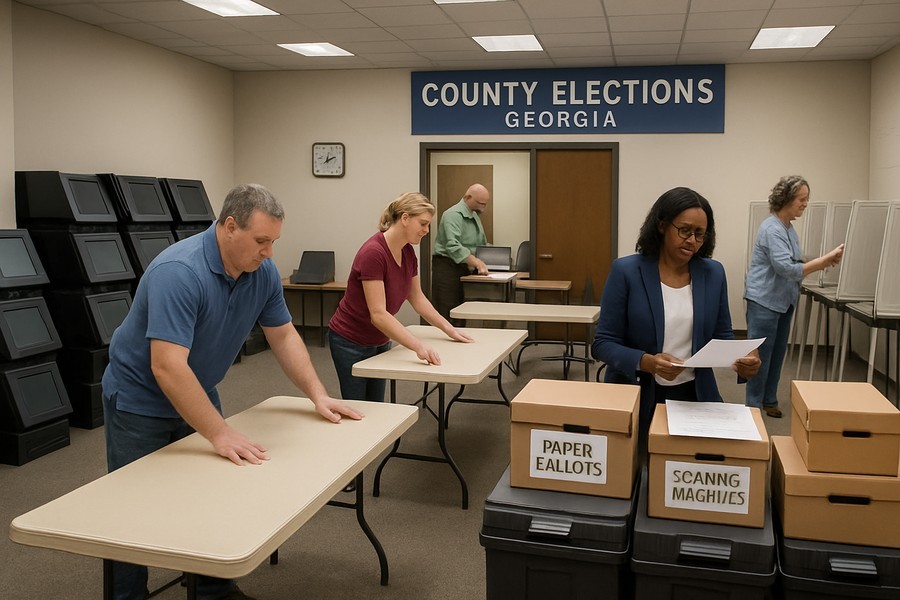
Georgia is facing a tight deadline to switch its voting system from digital touchscreen machines to paper ballots. This comes after a legislative session ended without a vote on a bill that would have extended the transition period until 2028.
The race to transition could trigger a series of challenges, including jeopardizing the security of elections, causing a delay in ballot counting, and causing widespread confusion among voters and election administrators.
Touchscreen to Paper: A Rapid Shift
The state's existing touchscreen voting system uses QR codes for counting votes. However, in 2024, lawmakers decided to phase out these machines by July 1 of the current year, rendering it illegal to use them after that date. A bill was passed last week to transition to a completely hand-marked paper ballot system.
Local election officials had pleaded with the lawmakers to push the transition until 2028. This would have given them sufficient time to implement the new system, which includes the mammoth task of pre-printing millions of ballots and retraining election staff.
Missed Opportunity to Delay Transition
An opportunity to extend this transition period appeared when the state House passed a bipartisan bill that would have allowed a two-year grace period. However, the state Senate, under the leadership of Lt. Gov. Burt Jones, who is also vying for the governor's candidacy, chose not to bring it to a vote on the final day of the legislative session.
As a result, election officials are now pressed for time and must develop a system that allows voters to cast their votes by filling in oval bubbles on the ballot paper before July 1.
The Challenges Ahead
The sudden shift to a new election system so close to the 2026 general election is being deemed as a logistical nightmare by election officials. They have voiced concerns about the potential confusion among Georgia's voters and election officials.
The transition also brings with it a host of issues. Firstly, the bill provides no funding for the implementation of the new system or any technology that could facilitate the transition. Secondly, with little time to train staff and develop protective measures, the security of the millions of pre-printed ballots required by law before Election Day could be compromised.
Election officials have also warned that the new reporting requirements stipulated by the law could slow down ballot counting and result in delayed results. This could lead to chaos, breeding ground for controversies and conspiracy theories, similar to the aftermath of the 2020 election ballot count in Fulton County, which is still under investigation.
Seeking Solutions
Leaders from both political spectrums are now in a frantic race against time to explore possible modifications or revive the delayed deadline through a special emergency session. The transition from touchscreen to paper, amidst all these challenges, promises a turbulent time for the state's voting system.