
Realigning Social Agreement for AI Infrastructure Development in the US
There's a growing concern among people from different political backgrounds. The rapid expansion of infrastructure meant for artificial intelligence, cloud computing, and other digital services is outpacing the capacity of our energy systems. This is not just a logistical concern but a structural one, causing economic and environmental stress that could jeopardize the sustainability of American technological leadership.
The Strain of Infrastructure Growth
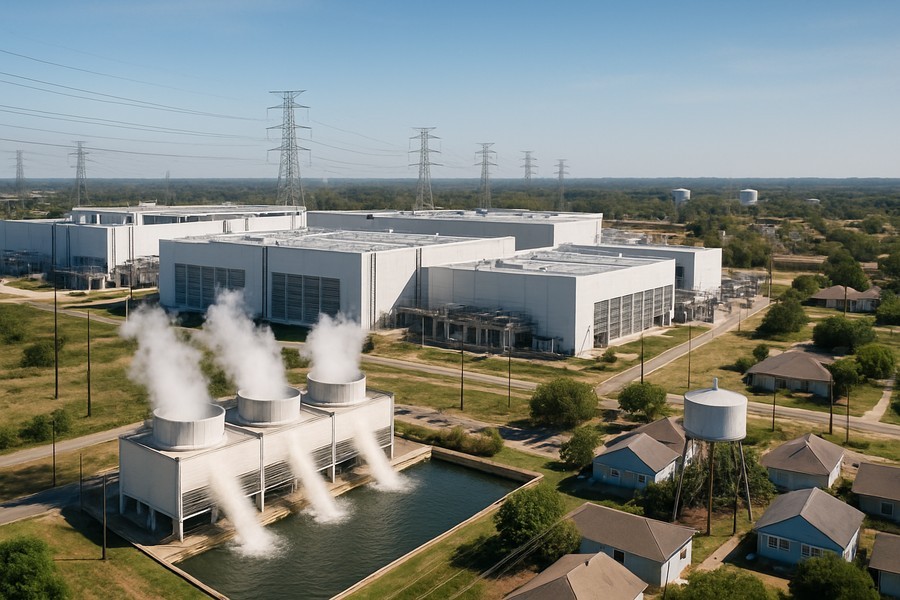
Increased demand for data centers is causing stress on local resources. Large data centers that are springing up in various parts of the country put a significant burden on local energy grids, water supply, and physical infrastructure. This leads to a rise in the cost of these resources and creates a negative view of these projects as it seems that the risks are shared by everyone, but the benefits are enjoyed by a few.
The US grid system, which was not designed to handle such massive growth, adds to this sentiment. Traditional transmission structures are not equipped to manage the high-speed growth of load clusters that function like heavy industrial plants but require quick deployment like software. This results in long lead times for generator interconnections and often triggers system-impact studies that highlight the need for costly upgrades.
Public Frustration and Cost Allocation
Public annoyance is further fueled by unclear cost distribution. As electricity prices rise across the country, people living in areas hosting data centers feel the pinch even more. They believe that they are subsidizing the grid improvements needed by tech giants. To address this issue, those who benefit from the infrastructure should bear the cost of its development and maintenance.
However, it's important to remember that data centers are not just consumers of energy; they can also contribute to grid stability through demand response, on-site energy storage, and frequency regulation. Therefore, utilities and regulators should devise rates that discourage grid stress while incentivizing flexibility.
Environmental Concerns and Community Resistance
The environmental impact of digital growth is also causing community resistance. Data centers are resource-intensive, consuming large amounts of electricity and cooling water. This has led to strong opposition against new data center projects in resource-constrained cities, particularly when the potential local benefits are seen as negligible.
Strategies for Social and Systemic Integration
A shift in planning is required to realign AI infrastructure growth with the capacity of our energy systems. This involves regionally coordinated planning that aligns the growth of large-scale facilities with the development of power generation and transmission.
Utilities also need to modernize their rate designs to protect customers from the financial impacts of massive infrastructure builds. Transparency in electricity usage and billing should become standard, allowing communities to track consumption and assess the impact of digital growth on their local economy.
To ensure reliability and fair allocation of upgrade costs, grid operators and regulators must design markets that can handle growing digital demand. They should also advise large-scale facilities on generation and storage opportunities to mitigate grid imbalances that can lead to outages and increased costs.
Building Trust through Community Engagement and Reciprocity
To maintain social acceptance, developers should prioritize transparency and community benefits. This means disclosing information about water usage, energy consumption, and potential tax revenues before a project gets the green light, and ensuring that local communities see direct benefits from the project.
Long-term investment in the host community is essential. If a data center project requires upgrading a substation, that upgrade should also enhance the reliability of the local distribution network. Moreover, by funding specialized apprenticeships, large-scale facilities can create high-skilled job opportunities for the local population, turning the facility into a source of wealth for the community rather than just a large, mysterious structure.
By prioritizing long-term planning, ensuring fair cost-sharing, and committing to community benefits, digital infrastructure can become a valuable asset rather than a source of friction. The success of a large data center must be shared by everyone, from the engineers operating it to the neighbors living next to it. This is the cornerstone of building public trust in the AI era.