
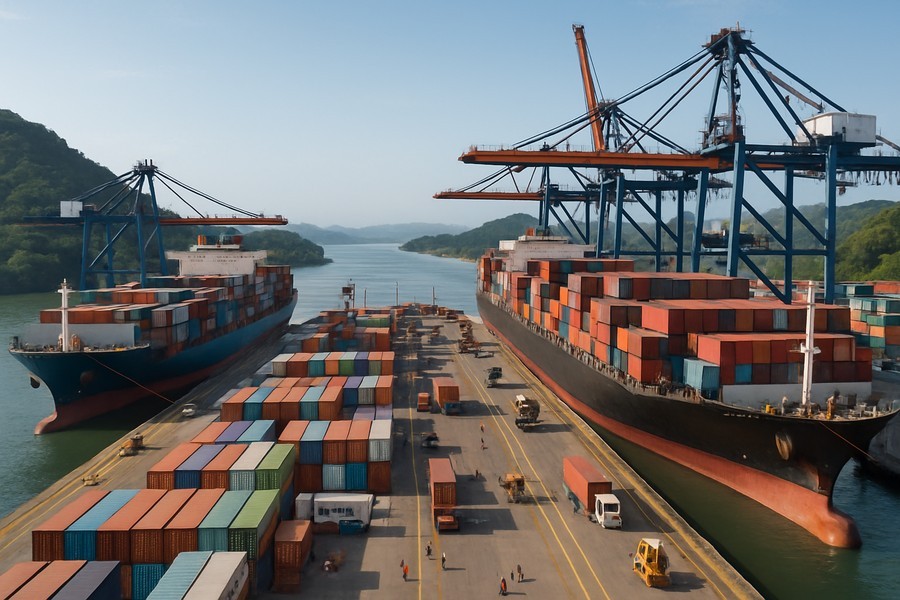
Key Ports at Panama Canal to Remain Operational Despite Legal Battle
The President of Panama has assured citizens that essential ports at both ends of the Panama Canal will continue to function without interruption. This comes after a Supreme Court ruling deemed the concession held by a Hong Kong-based company to be unconstitutional. The president was keen to stress that the ruling would not disrupt port operations.
This legal decision aligns with American interests to limit China's influence over the vital waterway, a move that has been met with strong objections from Beijing.
Transitional Operations and Future Plans
President José Raúl Mulino stated that until the court's ruling is put into effect, Panama's Maritime Authority would collaborate with the Hong Kong-based company to ensure the ports' ongoing operations. He did not specify how long this would take.
Once the concession is officially terminated, a subsidiary of a Danish logistics company will manage the ports during a transitional period. Following this, a new concession will be bid on and awarded, according to Mulino.
"Panama moves forward, its ports will continue operating without interruption, and we will continue serving the world at the logistics center of excellence that we are," Mulino said in a recorded video address.
Controversy and Audit Findings
The court's decision was a result of an audit by Panama's comptroller, which claimed irregularities in the 25-year extension of the concession, granted in 2021. The previous U.S. administration had made it a priority to limit China's influence over the Panama Canal.
Despite reassurances from Panama's government and the canal authority that China has no control over its operations, U.S. officials have stated that they view the operation of the ports as a national security issue.
Reactions and Repercussions
The Hong Kong-based company has not yet been notified about the decision but insisted that its concession resulted from a transparent international bidding process. The company expressed concerns about the ruling's implications not only for its contract but also for the well-being and stability of thousands of Panamanian families who rely on port activities.
The company's statement indicated that it would pursue all legal options in Panama or elsewhere, but did not provide further details. The Hong Kong government also firmly rejected the ruling, expressing opposition to any foreign government using coercive or unreasonable means to harm the business interests of Hong Kong enterprises.
Meanwhile, a political analyst suggested that the issue of what to do with the ports now lies with Panama's executive branch, specifically the Panama Maritime Authority. He expressed confidence that the operation of the ports would not cease.
Dispute Over Sale Deal
The Hong Kong company had announced a deal to sell its majority stake in the Panamanian ports and others globally to an international consortium. However, the deal seemed to have been stalled by objections from the Chinese government. The company was reportedly considering seeking a Chinese investor to join the consortium, a move interpreted as an attempt to appease Beijing.
The situation highlights the difficulties faced by Hong Kong businesses in balancing Beijing's expectations of national loyalty, particularly in the context of strained U.S.-China relations.
Audit Findings and Financial Implications
An audit of the concession to the Hong Kong-based company, which had been operating the ports since 1997, was conducted last year. The audit found accounting errors and unpaid payments, which the company denied. The audit estimated that these irregularities had cost the government approximately $1.2 billion during the original 25-year contract and about $300 million since the concession was extended.