
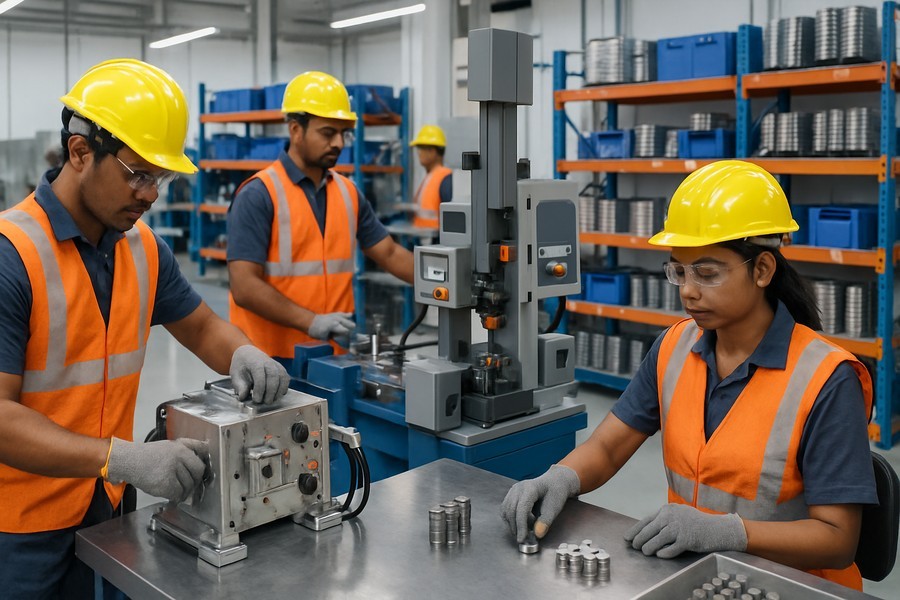
The Future of India's Rare Earth Magnets
The Indian government recently approved a plan worth billions of rupees aimed at reducing the nation's reliance on China for rare earth magnets. Rare earth magnets are crucial components in a wide variety of products, ranging from electric vehicles and wind turbines to smartphones, medical scanners, and defense equipment.
India’s Big Ambition
Creating a full-fledged rare earths ecosystem is a challenging and time-consuming task. India, however, is taking a different approach. The country is focusing on magnets, one of the most commonly used rare-earth products, with the goal of becoming self-sufficient more quickly. Success, however, will hinge on how quickly India can master the necessary technology, access materials, and scale up its operations.
Under the new plan, chosen manufacturers will receive incentives linked to capital and sales to produce 6,000 tons of permanent magnets annually within seven years. The goal is to meet the increasing domestic demand, which is expected to double in five years.
The Challenges Ahead
Despite the clear benefits, it's important to note that money alone won't guarantee success. Currently, India imports between 80-90% of its magnets and related materials from China, which holds over 90% control of global rare earth processing. This dependency was highlighted last year when a trade dispute led China to restrict exports, impacting Indian carmakers and electronics companies and forcing the electric vehicle industry to seek alternatives to rare earth magnets.
This incident served as a wake-up call, revealing that without a domestic strategy for rare earths, entire industries could be left vulnerable. India is not the only country seeking alternatives. Other nations, such as the European Union and Australia, are also striving to lessen their dependence on China's rare earth supply.
India's situation, however, is more complex due to its lack of industrial expertise. Countries like Japan, South Korea, and Germany have spent years perfecting magnet-manufacturing technology. In contrast, India has barely any experience with commercial-scale production.
Strategic Partnerships are Key
Experts agree that this initiative is a step in the right direction, but it's just the beginning. For this plan to succeed, India will need to forge strategic partnerships to import technology, train its workforce, and build its own capabilities.
There are a number of research centers in India that could be tasked with this effort. However, the country still has a long way to go. Despite having the world's third-largest reserves of rare earths, India accounts for less than 1% of global mining. There's also the question of raw materials. India has an abundance of lighter rare earths, but it lacks significant quantities of heavier elements necessary for high-performance magnets.
Scaling Up Operations
Another concern is the scale of production. Currently, India consumes an estimated 7,000 tons of magnets annually. Producing 6,000 tons by the early 2030s may still leave the country in a vulnerable position as demand continues to grow. Additionally, there's the challenge of pricing domestically produced magnets competitively so they aren't undercut by cheaper imports.
Some suggest the solution may lie in providing incentives not just to manufacturers, but also to buyers. Despite these hurdles, the introduction of the plan is a testament to India's ambition to strengthen its own rare earth ecosystem.
In conclusion, taking this step is certainly better than not taking any action at all. The road ahead may be challenging, but the benefits of reducing reliance on foreign rare earth supplies are well worth the effort.