
The Journey of the Cravat: From Warfields to Wardrobes
As many of us return to work after the holiday season, we once again find ourselves dressing up in suits and ties. This everyday office attire has a rich history, tracing its roots back to a fancier garment—the cravat. This luxurious neckscarf, often associated with lavish dinners on a Mediterranean yacht, has been sported by many notable figures, including President Abraham Lincoln and the legendary actor Cary Grant.
In recent years, celebrities like Madonna and Diane Keaton have helped bring cravats into the mainstream. But where did this fashionable accessory come from? The cravat's journey begins on the warfields of 17th-century Europe.
The Origin of the Cravat
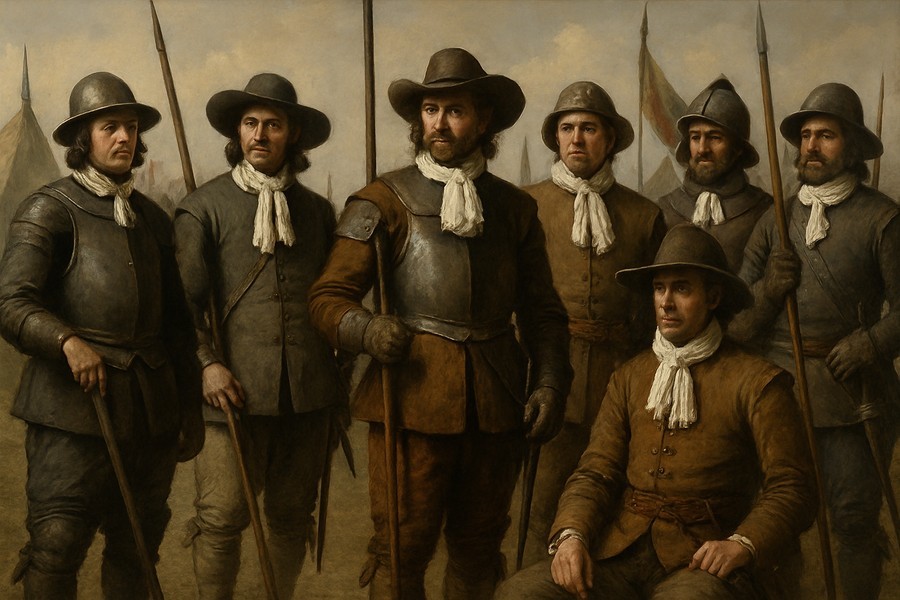
The cravat, a term borrowed from French, has its origins in military attire. While scarves worn around the neck have existed for a long time, the cravat gained wider recognition during the Thirty Years' War. This was a conflict between Catholics and Protestants, often considered the last religious war in Europe.
The term "cravat" was first used in the French language to refer to the attire worn by Croatian mercenaries. These soldiers were known for their fierce fighting skills and their distinctive red scarves. Made from silk or cotton, these scarves were not just fashionable, but functional. They protected the soldiers from cold weather, smoke, and even served as bandages for injuries.
It's also believed that these scarves carried a symbolic meaning. Legends suggest that the wives and young women of these soldiers would tie these scarves around their necks as a symbol of their love and trust, promising to wait for their return.
From Battlefield to Fashion Statement
The French army, impressed by the Croatian soldiers' fighting prowess and sense of fashion, began recruiting them into elite cavalry units known as the Royal Cravates. The scarves, which began to be referred to as "cravats", were tied in a distinct Croatian style.
It was King Louis XIV who brought the cravat into French fashion, and from there, it began to spread across Europe. The King himself was a great fan of the cravat and would have his pages bring him a selection of cravats every morning. His influence over the French nobility and other European rulers played a significant role in popularizing the cravat.
The term "cravat" was first recorded in English in 1656 by Thomas Blount, an English antiquary and lexicographer.
The Birth of the Modern Necktie
Fast forward to the 19th century, the Industrial Revolution saw the rise of the bourgeois society and the introduction of the necktie. This accessory quickly became a symbol of professionalism and social discipline, particularly in men's clothing. By the 20th century, it had become a staple of business, diplomatic, and political culture, offering a means for personal expression.
In many European languages, the term for "necktie" still has a link to the term "Cravat". For instance, it's "Krawatte" in German, "corbata" in Spanish, "cravatta" in Italian, and "gravata" in Greek.
Evolution of the Necktie
The necktie, as we know it today, was patented in New York in the early 1920s. The design allowed the tie to maintain its shape while offering the softness of a silk scarf. Since then, new patterns, colors, and fabrics have been introduced, reflecting changing fashion trends and socio-economic shifts. The post-World War II era saw the introduction of polyester, which made neckties more affordable and led to brighter, more colorful designs.
The way neckties are produced has remained largely unchanged for over a century. They have come to symbolize success, sophistication, and status, while also being criticized as symbols of power, control, and oppression. In a way, this dichotomy reflects the complex origins of the necktie's ancestor, the cravat.