
International Disaster Drill Tests Collaboration Skills in Thailand
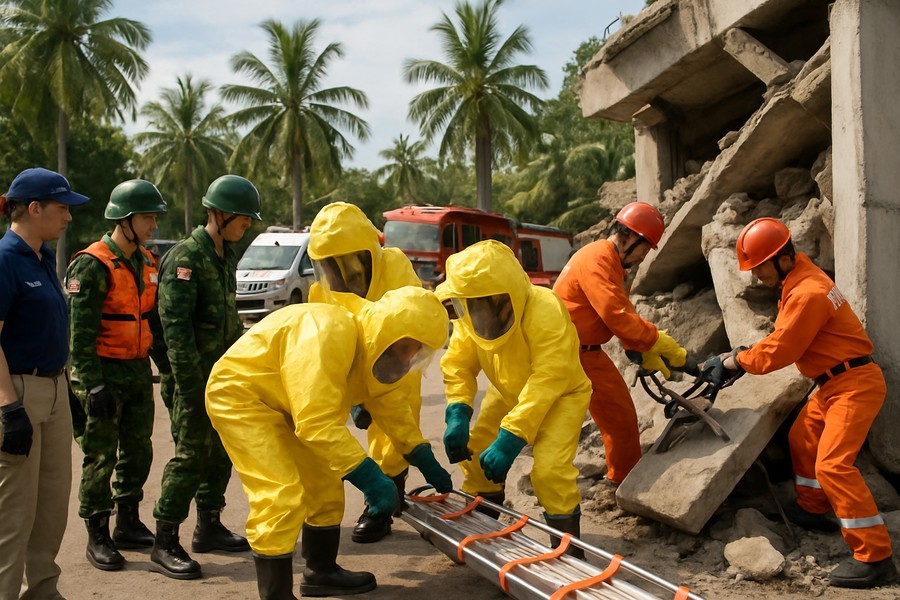
In the heart of Thailand, a unique disaster response drill recently took place. It brought together military personnel and civilian first responders from several countries. They were tasked with overcoming language barriers and working as a team to handle a variety of simulated crisis situations.
Understanding the Drill
The drill was part of an ongoing annual event in Thailand, co-hosted by the United States and Thailand. It's designed to test and improve the Humanitarian Aid and Disaster Relief (HADR) skills of all participants. The testing ground, located in Chachoengsao province, was a hive of activity with various scenarios unfolding.
From tackling a simulated building collapse to dealing with a fictional chemical hazard, the challenges were varied and demanding. Participants had to work in heavy gear, full biohazard suits, and under hot, humid conditions, adding another layer of difficulty to the exercise.
Unique Challenges and Teamwork
One unique situation involved a multi-national team of firefighters who had to use both traditional equipment and advanced tools, such as a drone, to tackle a simulated fuel line fire. In another scenario, teams had to sift through rubble, searching for survivors after a mock building collapse.
Nine countries were represented in the training, including the U.S., Thailand, Singapore, and South Korea. Teams were typically comprised of personnel from more than one country, leading to a rich blend of cultures, languages, and experiences. Despite the language differences, shared training and common understanding of disaster response allowed for effective coordination.
Building Connections and Familiarity
The HADR training has now been part of this annual event for nine years. This year, civilian participation was significantly increased, and 36 U.S. participants from the Army, Marine Corps, and Air Force took part.
The drill's coordinators emphasized the importance of such exercises in building relationships and familiarity among international partners. One participant highlighted that you don't want to meet people for the first time at a disaster; these drills provide an opportunity to build understanding and coordination well in advance.
For example, a member of the Washington National Guard’s 10th Civil Support Team worked alongside a Thai counterpart to handle a simulated ammonia leak following a vehicle crash. This exercise required the use of hazmat suits, and helped build familiarity between the two responders.
Reflecting the Need for International Cooperation
While the annual event has been running for 45 years, the inclusion of disaster-relief training is a relatively new addition. This reflects a growing emphasis on multinational cooperation in times of natural disasters and emergencies.
As one coordinator stated, the strength of the United States is in its alliances and partnerships. By establishing these connections early on and working with international partners regularly, responding to real-world disasters becomes a smoother, more coordinated effort.