
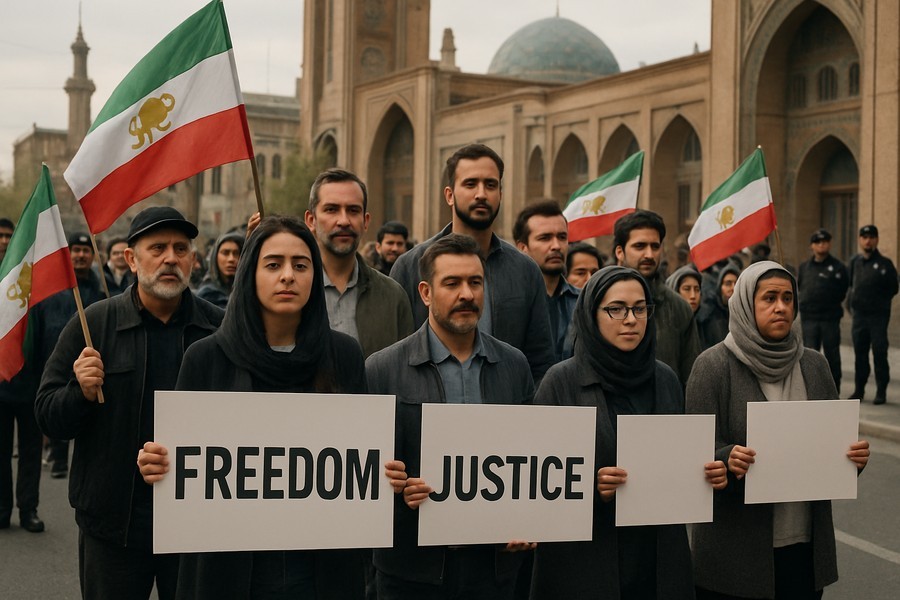
Examining the Opposition Movements in Iran
With escalating protests in Iran, which have taken a turn from economic concerns to a broader challenge to the country's religious rulers, the nation's security forces are under immense pressure. While there are claims that the death toll from these protests includes dozens of civilians, no official figures can be confirmed.
The uprisings have led to a closer examination of the fragmented opposition groups in Iran, which are putting increased pressure on the establishment. These groups are a mix of local and exiled entities, with some leaders living in exile or being part of the Iranian diaspora. Several of these groups have found support in other countries, like the United Kingdom and Germany, where street rallies are being held in solidarity with Iranian protesters.
Why the Protests Lack Clear Leadership
One of the most notable aspects of the protests in Iran is the lack of a single, unified opposition group that could potentially form a government. It appears that opposition groups both within and outside Iran are disjointed, with varying aims and leadership structures. No individual has emerged as a clear opposition leader during the ongoing protests. The likely reason for this lack of leadership is the fear amongst opposition members of potential backlash if they were to identify leaders.
Iran's 2009 "Green Movement" was a mass demonstration against the affirmed victory of Mahmoud Ahmadinejad in a highly contested presidential election. This movement, which was largely spontaneous, was led by white-collar workers, women's rights activists, and civil society activists. The protests resulted in Ahmadinejad staging an official demonstration in support of his declared victory, serving as president until 2013.
Opposition to Ahmadinejad's presidency was led by former Prime Minister Mir-Hossein Mousavi, who became a symbolic leader of the Green Movement. However, since 2011, he has been under strict house arrest for rejecting the official election results. Another key figure, Mehdi Karroubi, a reformist Muslim scholar, and former parliament speaker also took a leading role in challenging the election results. He was placed under house arrest in 2011 but was officially released by Iranian authorities the following year.
While neither man is currently a focus of the ongoing protests, their examples have led to a general tendency amongst Iranian protesters to avoid rallying around a single, identifiable leader. Instead, protesters are increasingly relying on networked organizing, mobilization through student groups, social media platforms, and neighborhood networks. This approach has resulted in numerous local groups and leaders instead of centralized figureheads.
Understanding the Various Opposition Groups
Beyond the mass movements happening within Iran, there are several other opposition groups based both inside and outside the country.
- Reza Pahlavi and the monarchists: As the son of the deposed shah of Iran, Mohammad Reza Pahlavi, and heir to the former Pahlavi monarchy, Reza Pahlavi leads a significant monarchist movement. He currently lives in exile in the US and advocates for a secular, democratic system to be decided by a referendum. However, his support base includes groups that back the return of a monarchy, making the opposition fragmented.
- Mujahideen-e Khalq Organisation (MEK): This powerful leftist group, which carried out bombing campaigns against the shah's government and US targets in the 1970s, is now led by Maryam Rajavi and has a presence in many Western countries. However, it has shown little sign of an active presence in Iran for years.
- Solidarity for a Secular Democratic Republic in Iran: A coalition of groups outside Iran advocating for a democratic republic, separation of religion and state, free elections, and an independent judiciary and media. However, it has not gained much traction within Iran itself.
- Kurdish and Baluch minorities: These mostly Sunni Muslim minority groups have often clashed with the Persian-speaking, Shia Muslim government in Tehran. Major protests in Iran are often strongest in Kurdish and Baluch areas, but neither region has a single, unified opposition movement.
In summary, Iran's opposition movements are a complex network of local and exiled entities with diverse aims and leadership structures. Their influence on the ongoing protests and potential future developments in the country remains uncertain.