
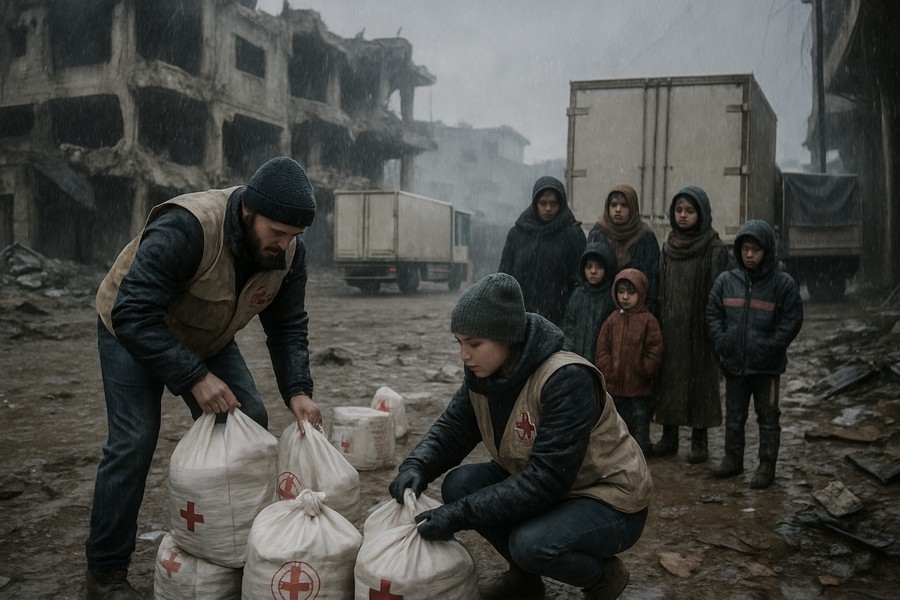
Humanitarian Crisis Looms in Gaza as Aid Groups Face Suspension of Operations
A number of global aid organizations could soon be prevented from offering their services in Gaza. These groups are at risk of being shut out due to non-compliance with recent restrictions imposed by Israel. These new rules demand that organizations working in Gaza disclose personal details about their team members.
These requirements have sparked concerns among the aid agencies, who believe their staff's safety may be compromised.
Impending Deterioration of Humanitarian Conditions in Gaza
This decision comes in the wake of warnings from ten countries indicating a potential degradation of Gaza's already critical humanitarian situation. With living conditions described as "catastrophic", Gaza, currently in ruins, is grappling with a harsh winter. Intense rain and freezing temperatures are exacerbating the dire living conditions.
Heavy rain and powerful winds have decimated the makeshift, water-drenched tents that many Palestinians are compelled to live in. Tragically, at least 20 individuals have lost their lives due to building collapses as they sought shelter from the harsh weather conditions, as reported by the Government Media Office in Gaza.
"The citizens of Gaza are facing grim conditions as winter sets in, with heavy rainfall and plummeting temperatures," according to a statement by the foreign ministers of several countries including Canada, the United Kingdom, Denmark, Finland, France, Iceland, Japan, Norway, Sweden and Switzerland.
The Impact of Suspending Aid Organizations
Aid organizations fear that more than two dozen groups will be affected by Israel's decision. They argue that halting their operations in Gaza could lead to loss of Palestinian lives.
"Removing these humanitarian organizations now will result in increased exposure to the elements, illnesses, and preventable deaths. This is a pretext to further limit aid to Gaza while attempting to silence independent aid organizations," was the statement from Refugees International.
Furthermore, the European Union has cautioned that the new registration rules could prevent vital aid from reaching the residents of Gaza. "The NGO registration law cannot be implemented in its current form. All barriers to humanitarian access must be removed," a high-ranking EU official advised.
Israel argues that its registration rules are designed to stop Hamas from misusing international aid. This assertion has been dismissed by both the United Nations and numerous aid groups. A review conducted by the US government earlier this year found no proof of widespread theft by Hamas, a claim made by both Israel and the US State Department.
Controversy Surrounding Israel's Registration Rules
Israel's registration rules have been a cause of concern for many United Nations agencies and aid groups. Israel had reportedly notified international organizations in March that they needed to comply with the new requirements. Those who did not renew their registration were informed that their authorization would end at the start of the year, and they would be required to withdraw two months after that.
Many aid organizations have protested against the new requirements by Israel. They claim that the system is based on vague, arbitrary, and highly politicized criteria and imposes requirements that humanitarian organizations cannot meet without violating international legal obligations or compromising core humanitarian principles.
One of the most significant medical operations in Gaza, warned that losing access "would be a disaster for Palestinians." "If we lose access to Gaza due to Israeli authorities, a large portion of people in Gaza will lose access to vital medical care, water, and life-saving support," the medical agency said in a recent statement.
Worsening Conditions and Pleas for Help
At present, at least 1.3 million people still require urgent shelter, while more than half of Gaza's health facilities are only partially functioning due to shortages of essential medical supplies. The collapse of sanitation infrastructure has left around 740,000 people vulnerable to toxic flooding.
Over a recent weekend, severe weather contributed to further deaths. Gaza's civil defense reported two people, including a seven-year-old child, were killed when a wall collapsed due to the cold conditions.
Amidst the escalating winter aid crisis, ten foreign ministers have urged the Israeli government to take "urgent and essential steps." These include ensuring international NGOs can continue operating in the strip and allowing the UN and its partners to carry out their humanitarian work. They also called on Israel to "open crossings and increase the flow of humanitarian aid into Gaza."
Israel's foreign ministry dismissed the joint statement, labelling it "false but unsurprising." They criticized it for overlooking the "significant improvement in the humanitarian situation in the Gaza Strip since the ceasefire," attributing the progress to Israel's efforts alongside the United States.
Meanwhile, calls for disarmament have been rejected by Hamas. Their new spokesperson stated that "our people are defending themselves and will not give up their weapons as long as the occupation remains."
