
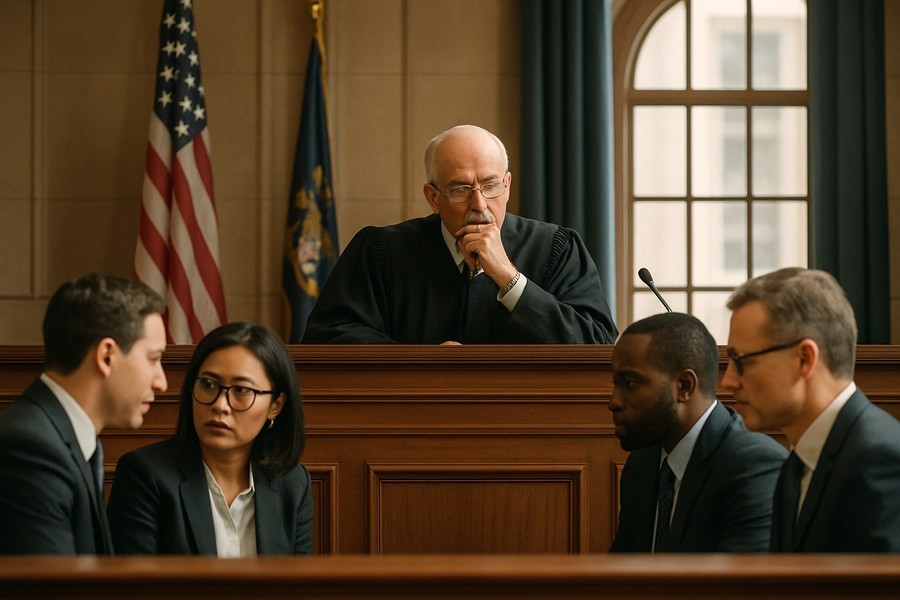
A Temporary Halt to Federal Actions Against a Tech Company
A federal judge based in San Francisco has temporarily put a hold on a decision by the Pentagon to classify a certain tech firm as a "supply chain risk", which could have devastating consequences for the company. The company is currently embroiled in a disagreement with the Pentagon over the use of its artificial intelligence model, Claude.
In addition, the judge also put a temporary stop to a directive from the President that required all federal agencies to cease utilizing the technology provided by this company.
This action temporarily suspends the government's ban, until a decision can be made regarding the merits of the actual case.
A Controversial Designation
In her order, the judge stated that the label of "supply chain risk" is typically applied to foreign intelligence agencies and terrorist groups, rather than American businesses. She voiced her concerns that these measures did not seem to be aimed at the government's expressed national security interests. She suggested that if the integrity of the operational chain of command was the issue, the Department of War could simply stop using Claude.
The judge further noted that these measures seemed to be more about punishing the tech company.
The Root of the Dispute
The preliminary injunction comes from a contractual disagreement between the tech company and the Pentagon that became public knowledge in February and has since escalated.
The CEO of this tech company has made it clear that he will not permit Claude to be used for autonomous weapons or for the surveillance of American citizens. The Pentagon, however, holds the view that it is up to the military, not the companies, to decide how to use the tools they purchase.
The President escalated the situation further by ordering all federal agencies to stop using Claude.
A Serious Allegation
The Pentagon classified the tech company as a "supply chain risk" earlier this month, citing national security reasons. At the time, they stated that they would not allow a vendor to interfere with the chain of command by restricting the use of a critical capability, thus putting their warfighters at risk.
In response, the tech company lodged two federal court cases, alleging that this label is an illegal act of retaliation due to their stance on AI safety. They claim that this label will result in the loss of customers and revenue as it will prevent Pentagon contractors from doing business with them. They further allege that the administration has violated their First Amendment rights to free speech.
Numerous organizations, including prominent tech companies, civil rights organizations and retired military leaders, have submitted amicus briefs in support of the tech company.
Implications for the Future
At a recent hearing, the judge seemed inclined to grant the preliminary injunction, stating that the ban on the tech company appeared to be more of a punishment for publicly disagreeing with the government's stance.
In court, the Pentagon's attorneys argued that the actions of the tech company made it untrustworthy. They stated that the "supply chain risk" label came from the company's attempt to limit the military's use of its AI models, rather than from publicly opposing the Pentagon's position.
They also suggested that the company could potentially update Claude in a way that could pose a threat to national security.
In her order, the judge stated that the "supply chain risk" label was likely both against the law and arbitrary. She argued that nothing in the law supports the idea that an American company can be considered a potential enemy and saboteur of the U.S. for openly disagreeing with the government.
The tech company welcomed the judge's decision, stating they were grateful for the swift action and pleased with the indication that they are likely to succeed on the merits. They emphasized their commitment to working productively with the government to ensure all Americans benefit from safe, reliable AI.
The Pentagon did not immediately respond to a request for comment, but they have previously stated that they do not comment on ongoing litigation.
A senior fellow in technology policy at a libertarian think tank, has said that the preliminary injunction seems to suggest that the judge believes the tech company is likely to succeed on the merits. She also noted that the decision has broader implications beyond just this case. She stressed that this temporary injunction raises key questions about preventing retaliation against a company or individual for exercising their First Amendment rights, and ensuring that significant decisions that could potentially cripple a business are made with due process.