
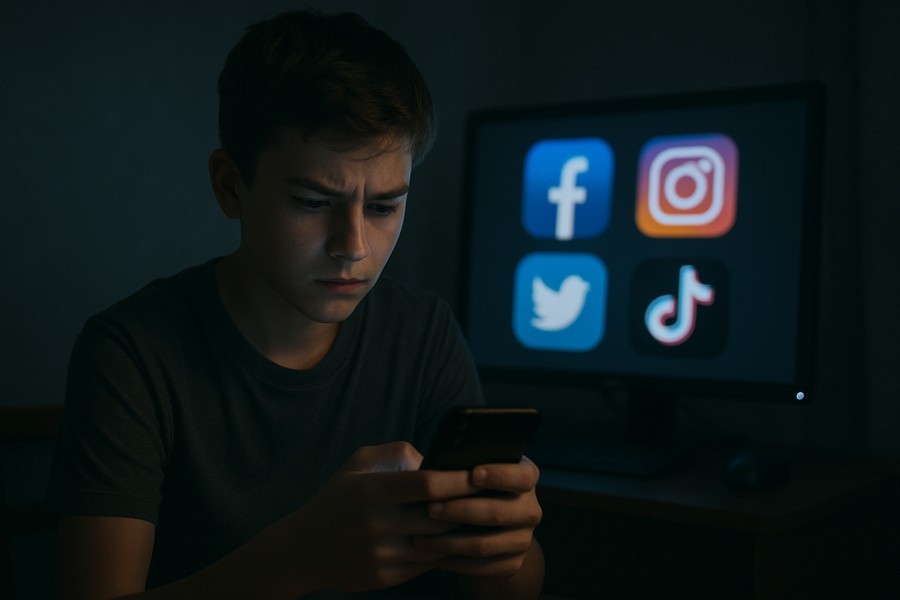
The Debate on Social Media Addiction and Its Impact on Mental Health
Legal battles are brewing against some of the biggest social media platforms, with accusations that they have fueled addiction to their sites and adversely affected users' mental well-being. The litigants, in these cases, claim that their mental health issues were exacerbated while using the platforms during their childhood.
The first lawsuit, by an anonymous woman, has been settled by two of the platforms, leaving two more to face trial. However, the trial has been postponed due to the illness of a key lawyer representing one of the platforms.
Claims and Counter Claims
The litigants are not just claiming that they became addicted to these social media platforms. They blame their addiction for leading to a host of other mental health problems, like depression, eating disorders, self-harming behavior, attempted suicide, and in one case, suicide.
However, the accused firms have firmly denied these allegations. They argue that they have always prioritized the safety and health of young users and dismiss the allegations as false. They have expressed confidence that the evidence will back their commitment to supporting youth.
The two platforms that had already settled the first case did not issue any comments.
Is Social Media Really Addictive?
There's a debate among experts about whether it's scientifically possible to prove that social media is addictive. Many in the scientific community are moving away from the term 'addiction' and are favoring phrases like 'problematic use' or 'use disorders' instead.
Two leading academics, a professor of information systems management and a clinical psychologist, agree that while social media can be harmful, they hesitate to label it as 'addictive'. They argue that the term 'addiction' is being overused and has lost its medical significance.
Social Media and Its Comparison to Slot Machines and Cigarettes
The lawsuits claim that social media platforms borrow heavily from behavioral and neurobiological techniques used by slot machines and the tobacco industry. Key features of these platforms, such as social comparison metrics, endless scrolling, and algorithmic amplification of polarizing topics, are designed to keep users engaged. However, this doesn't necessarily make them addictive.
The relationship between social media use and mental health is complex and possibly bidirectional. This means that not only can poor mental health drive social media use, but social media use can also lead to poor mental health.
Research Findings on Social Media and Mental Health
Large-scale studies have found that social media has a small negative impact on mental health at the population level. However, individual harms might be more severe. One of the platforms is even accused of trying to suppress research findings that showed a temporary pause in using their platform improved feelings of depression, loneliness, and anxiety among participants.
One professor has conducted brain-imaging research showing that excessive social media use is associated with differences in the brain similar to excessive gambling. He likens addiction to a car, where the 'reward system' is the accelerator and the 'self-control system' is the brakes. Addiction occurs when people push the accelerator without thinking, and their ability to hit the brakes is impaired.
Understanding Addiction: Substance vs Behavioral
However, unlike substance addiction, behavioral disorders like excessive social media usage don't cause irreversible damage. They can temporarily affect the 'accelerator' in the brain, but don't affect the 'brakes', and that change is reversible over time. Withdrawal symptoms in behavioral addictions are also less intense than those in substance addictions.
It's also important to note that just not being able to stop a behavior does not make it an addiction. For a behavior to be classified as an addiction, people must be unable to stop despite negative consequences.
The Road Ahead
While many remain hesitant to label excessive social media use as an addiction, it's widely acknowledged that it can be harmful, especially to minors whose brains are still developing. Many are calling for increased regulation and consequences for these platforms.
This situation parallels the lawsuits against tobacco companies, where there wasn't a scientific consensus on tobacco's harms initially. However, it's now well established that cigarettes cause not only addiction but also various types of cancer and chronic obstructive pulmonary disease.
The professor warns that social media is more than just a potential addiction machine. It has many other issues, including the spread of fake news, cyberbullying, and body image issues, and it's high time we became aware of them and tried to control them.