
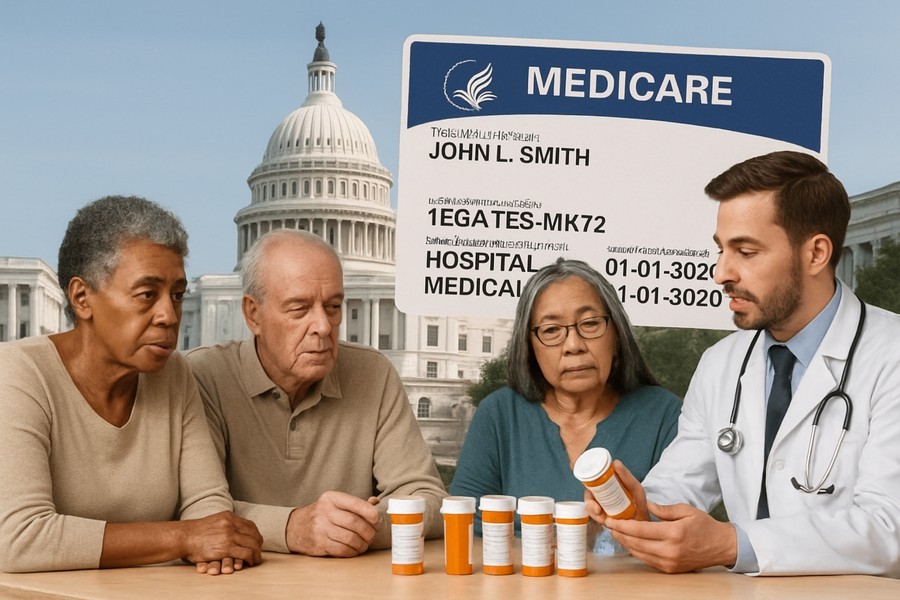
Medicare Expands Price Negotiation to Include 15 More Medications
The government is stepping up its battle against high drug prices by adding 15 more prescription medications to the list of drugs eligible for price negotiation under the Medicare program. The medications being added are used to treat a range of conditions, including Type 2 diabetes, HIV, and arthritis.
The potential for significant savings is high, as these drugs are some of the costliest for Medicare. The savings will be passed on to taxpayers when the negotiated prices take effect in the coming years.
Setting Fair Prices for Essential Medications
Medicare's goal is to ensure that patients and taxpayers aren't burdened by the rising costs of prescription drugs. This price negotiation initiative is a clear statement of intent to target expensive medications, negotiate reasonable prices, and prioritize the needs of patients over special interests.
The government had a deadline to reveal its selection of 15 drugs. This came as part of a new legislation, introduced recently, which allows Medicare to negotiate the prices of popular and costly prescription drugs commonly used by senior citizens.
Expanding the Scope of Negotiation
Previously, the government had negotiated prices for 25 prescription drugs covered by Medicare, including popular weight-loss and diabetes medications. This year's negotiations mark the third round of the program, bringing the total number of drugs with negotiated prices to 40, a welcome relief for Medicare enrollees.
This year also sees the inclusion of drugs payable under Medicare Part B in the program for the first time. Medicare Part B drugs are outpatient prescriptions like those administered at a doctor's office. Retail prescription drugs covered under Medicare Part D continue to be eligible for negotiation as they have been in the past.
New Additions to the Negotiation List
The latest drugs to be considered for price negotiation include a widely used Type 2 diabetes medication and an HIV drug. The price of Botox, often used for cosmetic purposes, will also be negotiated, but only for its medically approved uses, such as treatment of migraines or overactive bladders.
Other drugs up for negotiation include treatments for psoriasis, ulcerative colitis, chronic lung disease, depression, and various types of cancer.
In the past year, approximately 1.8 million Medicare Part B or Part D enrollees used these 15 drugs, making up about 6% of total Part B and Part D spending. In addition, one Type 2 diabetes drug, previously negotiated under the program, will be renegotiated.
Reactions to the Expansion
The expansion of the price negotiation program has been welcomed by many. Advocates for senior citizens have hailed it as a "significant step forward". They acknowledge that reducing drug prices is a priority for older Americans, and appreciate the government's efforts to protect Medicare's ability to meet this important need.
However, not everyone is happy with the initiative. The major trade association for pharmaceutical companies has criticized the legislation that introduced the program, the Inflation Reduction Act. They argue that to truly lower costs, the focus should be on controlling insurers and third-party pharmacy benefit managers, rather than setting government prices.
Recently, the government announced reduced prices for 15 drugs that will go into effect in the near future. This follows the reduced prices for the first 10 drugs negotiated by the current administration, which took effect at the beginning of this year.
The full list of new medications that will be negotiated this year under the program includes a mix of treatments for various conditions such as Anoro Ellipta, Biktarvy, Botox and Botox Cosmetic, Cimzia, Cosentyx, Entyvio, Erleada, Kisqali, Lenvima, Orencia, Rexulti, Trulicity, Verzenio, Xeljanz and Xeljanz XR and Xolair.