
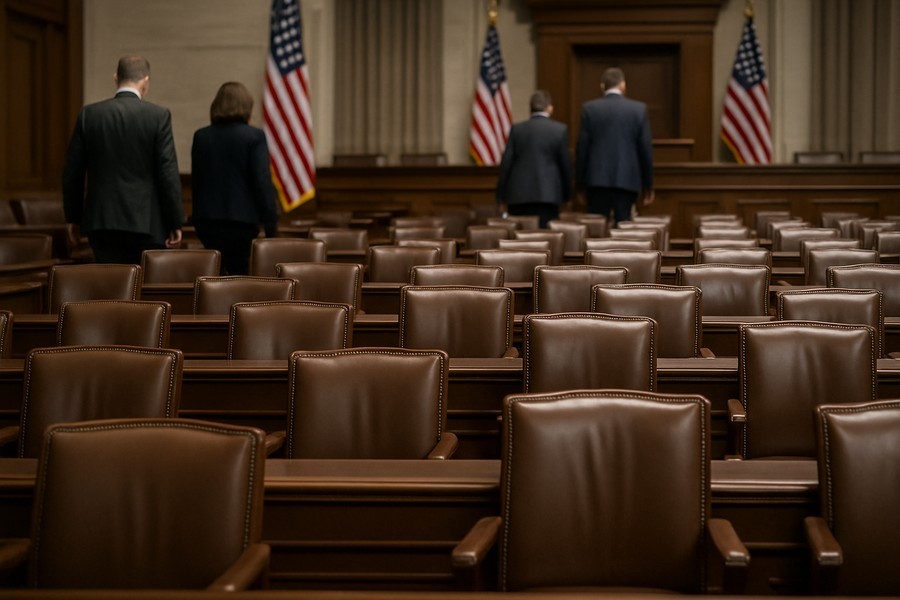
Historic Exodus of Congress Members Ahead of Midterm Elections
Whether it's due to reaching retirement age, wanting to spend more time with their families, or simply growing tired of the political atmosphere, a record-breaking number of Congress members have decided not to run for re-election ahead of the upcoming midterm elections.
Several more politicians have recently added their names to the growing list of those stepping down, including two House Republicans who announced their retirements last week.
Retirements at a Record High
These new retirements have brought the total number of Congress members not seeking re-election to 60, comprising 51 House members and nine senators. This is the highest number of retirements for both chambers seen in this century. The tally includes those who are exiting the political stage completely as well as those who are leaving their current seats to pursue other offices. However, it does not account for members who have resigned or passed away during the current Congress.
The number of House members stepping down is nearing the recent peak in 2018 when 52 lawmakers did not seek re-election. Much like in 2018, more House Republicans are choosing to leave than Democrats.
Reasons for Retirements
There are many reasons for a lawmaker to retire, from personal factors such as health issues and long commutes to political considerations like seeking higher office. The reality of possibly being relegated to the minority can also be a deterrent. Furthermore, the frustration of working in Congress can often be a significant factor in these decisions.
Seeking New Opportunities
One representative, for example, is leaving the House to run for Senate. He hopes to use this opportunity to pursue his agenda and hold the president accountable. He believes that the political environment has become increasingly toxic in recent years, which has led to disappointment for many who had different expectations when they first arrived in Congress.
Another representative, who is 81 years old, is retiring because she believes it is time for someone else to take up the mantle. Although she is optimistic about the Democrats' chances in the upcoming elections, she admits that she would find it difficult to continue serving with the current president in the White House.
Implications for the Midterm Elections
These retirements can provide insight into the upcoming midterm elections, as they can indicate the expectations of the majority party members about their future status. Recent history provides a poignant example: in the 2018 election cycle, when 34 Republicans chose not to run for re-election, the Republicans subsequently lost 40 seats and their control of the chamber.
Currently, 30 House Republicans are retiring compared to 21 Democrats. The Senate is more evenly split, with five Republicans and four Democrats stepping down. However, this number does not include those who are running for other offices and are not up for re-election this year.
Despite the high number of retirements, some believe this does not necessarily indicate a difficult environment for the Republican party. Many retiring Republicans are seeking higher office, such as governor or senator, offering them potentially better opportunities.
The Challenges of Working in Congress
For some lawmakers, the frustrations of working in Congress, characterized by narrow majorities and significant partisan divides, contribute to their decisions to leave. Concerns for their families' safety are also cited as factors influencing their choices.
Impact on Competitive Seats
While most of the open House seats are not in competitive districts, retirements have created competitive opportunities in the Senate. Both Democrats and Republicans are defending open seats. These open seats can be challenging for the incumbent's party as sitting senators are often better known and have stronger fundraising operations.
Despite the challenges, both parties remain optimistic about their chances in the upcoming elections. Some believe that the high number of retirements, particularly among Republicans, indicates a tough election year ahead. However, others argue that most of the open House seats are in districts that are not competitive, suggesting that the retirements may not significantly impact the outcome of the elections.