
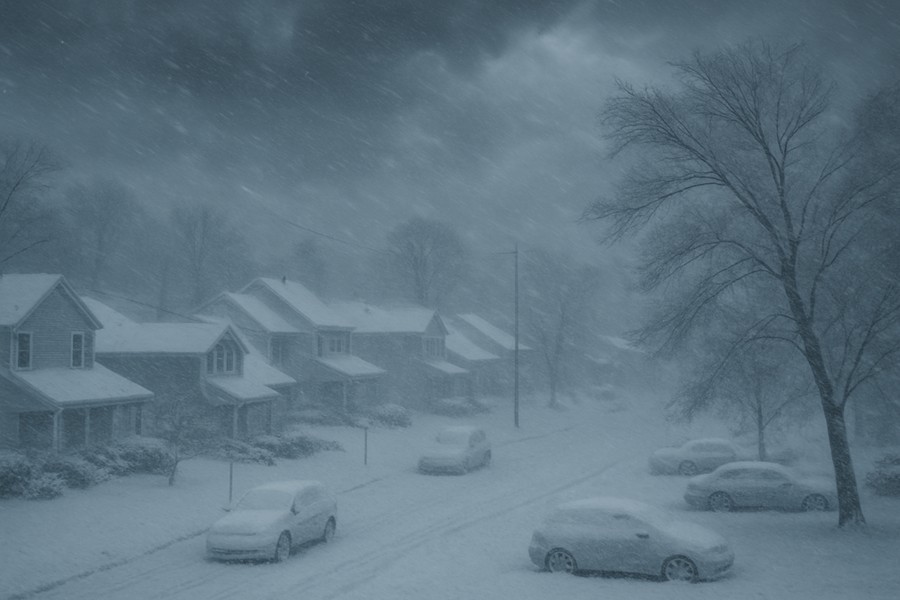
A Massive Winter Storm Brews, Threatening the Southeast with Snow and High-Speed Winds
There's a powerful winter storm brewing, often referred to as a 'bomb cyclone', that's set to bring about unusual snowfall, strong winds, and dangerous coastal flooding. The Southeast and mid-Atlantic regions are bracing themselves for this impending weather event.
The storm's impact is expected to start by the weekend, with the possibility of blizzard conditions in parts of North Carolina and Virginia due to potential hurricane-like wind gusts. Coastal New England, particularly eastern Massachusetts, might also face snow and wind, depending on how close the storm moves to the shore.
The Formation of the Storm
The storm is set to originate near the North Carolina coast before gaining strength as it moves towards the north. This process of rapid strengthening is commonly referred to as 'bombogenesis'. As the storm, or 'bomb cyclone', intensifies, it's expected to pull cold air southwards, causing snowfall in regions that seldom experience significant winter weather, particularly along the coast.
Over 27 million people residing in the Southeast, mid-Atlantic, and Appalachians have been issued winter storm warnings. This includes parts of northern Georgia, the Carolinas, southern Virginia, eastern Tennessee, and eastern Kentucky. Many of these regions are still recovering from a deadly winter storm that occurred recently, causing widespread travel disruptions and prolonged power outages due to snow and ice-covered roads.
Preparations Underway
State transportation departments in Georgia, South Carolina, North Carolina, and Virginia have begun preparing and treating roads for the upcoming storm. Airports and airlines are also warning of potential disruptions following cancellations experienced during the previous storm.
Anticipated Snow Accumulation
As the storm strengthens offshore, it's expected to cause heavy snowfall in parts of the southern Appalachians, Georgia, the Carolinas, and southern Virginia. The most impactful snow accumulation is projected in central and eastern North Carolina, central and northeastern South Carolina, and southern Virginia, with predictions of 5 to 10 inches of snow. Localized areas could see even more snow if heavier bands develop.
Cities like Columbia, South Carolina, and Wilmington, North Carolina, could witness their heaviest snowfall in years. Governor Brian Kemp has declared a state of emergency across all of Georgia to ensure resources can be distributed and staged across affected areas.
Accumulated snow is also expected in parts of western South Carolina and northern and eastern Georgia where temperatures will remain cold enough for snow. While the predicted snowfall in these areas is relatively lower, even an inch of snow can disrupt places like Atlanta that rarely experience winter weather.
The Onset of Blizzard Conditions
As the storm intensifies offshore, powerful winds are expected to exacerbate conditions across the Southeast and Mid-Atlantic. The strongest winds, with gusts potentially reaching hurricane force, are anticipated near the coast, particularly along the North Carolina and Virginia shoreline. These winds, coupled with heavy snow, could result in near-zero visibility, creating extremely dangerous travel conditions.
Inland areas will also be affected by strong, persistent winds, leading to dry, powdery snow blowing and drifting, significantly reducing visibility and making travel hazardous. Coastal New England might also experience gusty winds later in the weekend if the storm remains closer to the coast.
Coastal Flooding and High Tide Woes
Powerful onshore winds coinciding with some of the highest tides of the month could increase the risk of moderate to significant coastal flooding. This is particularly a concern for the North Carolina Outer Banks and the Virginia Tidewater region, where strong winds, high surf, and beach erosion could lead to flooding in vulnerable coastal communities.
Coastal New England could also face flooding and rough marine conditions if the storm veers closer to shore. Though there's high confidence that the storm will occur, small shifts in its track could significantly change impacts, particularly in New England.