
Netanyahu's Trip to Mar-a-Lago: Setting the Stage for Re-election?
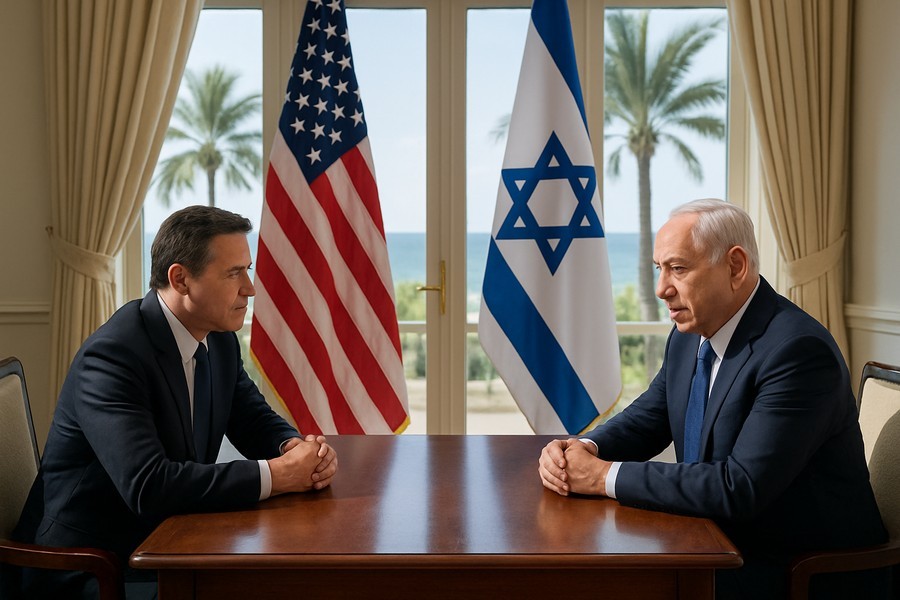
The upcoming meeting between the Israeli Prime Minister and the US President, taking place at the Mar-a-Lago estate, is more than a simple diplomatic rendezvous.
For the Prime Minister, this meeting serves as the curtain-raiser for his re-election efforts in 2026, with the US President taking on a significant role in the campaign. The election is set to happen in October 2026, but political uncertainties might lead to an earlier date.
Challenges and Opportunities
The Prime Minister's government, his sixth in 18 years, has weathered many storms. From large-scale protests in 2023 over judicial changes, a deadly attack in the same year that triggered a drawn-out war, to internal divisions and diplomatic isolation, the road has not been easy. Despite all this, the Prime Minister's coalition has lasted longer than any other Israeli government in the past six years.
However, public opinion polls since October 2023 suggest his coalition falls short of the 61-seat majority needed to rule, with predictions ranging from 49 to 54 seats. The Prime Minister's re-election strategy seems to be to distance himself from the failures of the past and rely on the US President's support to rewrite his narrative.
Role of US President
The US President is expected to play a key role in the Prime Minister's re-election strategy. This is not the first time the two leaders have shown unity during election periods. In the turbulent election cycles of 2019-2020, the Prime Minister's party used images of the two leaders together in campaign advertisements, with the US President making symbolic gestures to support the Prime Minister's campaign.
More recently, the US President has been a vocal supporter of the Prime Minister's pardon campaign, dismissing his corruption charges as trivial during a speech to the Israeli parliament.
The Campaign Trail
The Prime Minister's re-election campaign will likely focus on diplomatic achievements such as expanding peace agreements, establishing normalization with Saudi Arabia, and reshaping the Middle East. These goals align with the US President's desire to win the Nobel Peace Prize, a campaign that Jerusalem is actively promoting.
However, the vision of peace in the Middle East is fraught with challenges. The ceasefire in Gaza is unstable, and the Arab countries that were expected to join the peace agreements are still hesitant. There are also disagreements on how to handle Syria, Lebanon, and Iran.
The Road Ahead
The most politically sensitive area remains Gaza, where the US President is pushing for progress while the Prime Minister is under pressure from his right-wing coalition to resist further concessions. The Prime Minister may seek approval for a military operation in Gaza before agreeing to advance the ceasefire.
Despite these challenges, the US President's support offers an invaluable asset: attention. Each tweet, visit, or statement from the President will dominate the headlines, diverting attention from the Prime Minister's past failures and giving the Israeli public something else to talk about.
While the US President's support has helped the Prime Minister avoid defeat in past elections, it has never led to a decisive victory. The upcoming election will show whether this alliance will be enough to secure a win.