
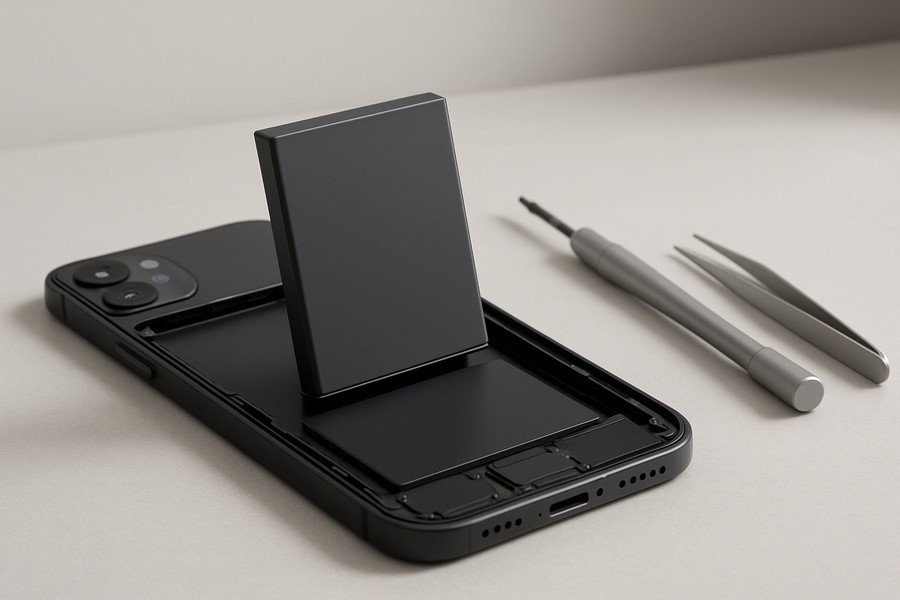
Innovative Battery Design Makes Device Repair Easier
An exciting development in the device industry is the announcement of a new battery design that could revolutionize the way our electronic devices are made. This new design aims to simplify the repair process without compromising the slimness, wireless charging capabilities, or water resistance that we've come to expect from our modern gadgets.
This fresh approach to battery design involves replacing the traditional use of heavy-duty adhesive with a solid battery assembly that securely fits into the device's frame. The potential impact of this approach is significant. It could lead to more repair-friendly device designs, making the life of your favorite gadget longer and more sustainable.
The Future of Device Design
The forthcoming battery design is a potential game-changer in the realm of phones and other electronic devices. It could allow batteries to be safely and easily removed or replaced. What makes this design even more remarkable is its ability to maintain the sleek and sealed build that we associate with high-end smartphones and tablets.
Presently, our devices, particularly high-end phones and tablets, have batteries that are firmly sealed with adhesive to protect against dust, water, and to support wireless charging while maintaining a slim form. This design can make device repair a complicated process, whether it's done by the user or a professional service center.
Revolutionizing Device Repair
This new design proposal, which is gaining interest in the tech world, involves a new method for a removable battery subassembly. To put it simply, the battery isn't adhered with glue, rather, it sits inside a robust metal frame. This design provides the battery with extra protection against stress in case the device is twisted, bent, or dropped. It also allows for easier battery removal or replacement, making repairs more cost-effective and less wasteful.
However, this innovation doesn't mean that we'll be going back to the old days of easily removable battery covers. The proposed design indicates that the battery assembly would remain securely locked within the device.
Optimizing Battery Security
To make this possible, the design includes features like mechanical interlocks, shear stops, and guided load paths that help keep the battery firmly in place. From a technical perspective, these features could make the battery more secure and easier to remove during repairs compared to glued-in batteries.
What's more, this design wouldn't compromise essential features that users have come to expect from their devices, such as wireless charging, water resistance, and a sleek design.
Design Applications Beyond Phones
The conceptual diagrams and descriptions suggest that this new design could apply not only to regular and foldable phones but also to other electronic devices like tablets, laptops, wearables, and more.
It's important to remember that while patents represent ideas, they aren't product announcements. Many ideas never make it into the final product. Nevertheless, this new approach offers an intriguing glimpse into the potential future of device design and repairability.