
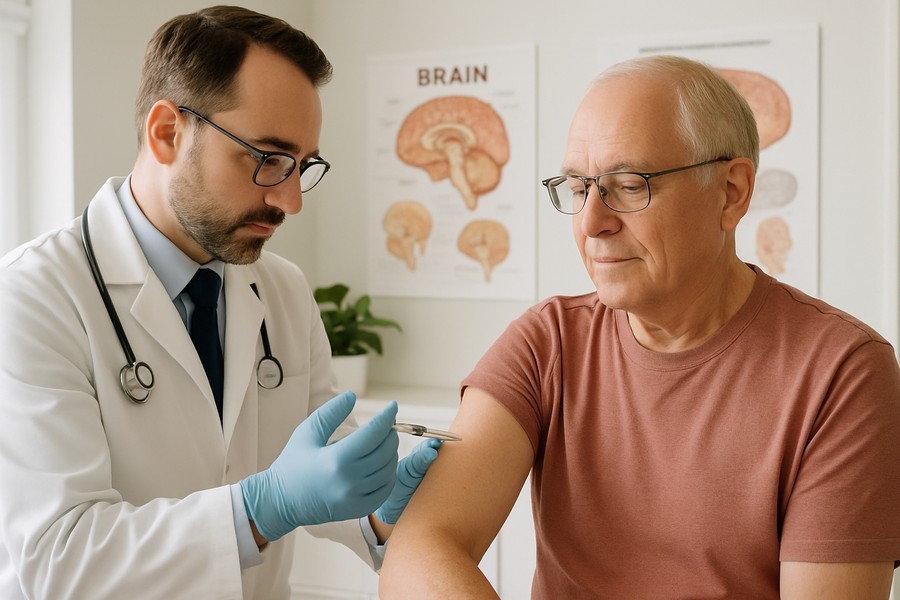
Can a Vaccine Help Ward Off Dementia? All Signs Point to Yes
It seems that science is painting a mesmerizing picture of a world where vaccines could play a surprising role in our battle against dementia, including Alzheimer's disease, and even the process of aging itself. Researchers have been noticing for some time that older adults who received a vaccine against shingles appeared to have a lower risk of developing dementia. In fact, recent research suggests that this vaccine might even slow down the process of biological aging by reducing inflammation markers.
More Than Just a Shield Against Shingles
These findings have added to the growing body of evidence that vaccines could play a role beyond just preventing acute illnesses. They could be a part of our strategy for healthy aging. More research done recently suggests that these positive results against dementia might even be underestimates of the vaccine's potential. It turns out, a more recent vaccine for shingles might offer even more protection.
The irony of all this is that if the vaccine does indeed offer protection against dementia, it wasn't designed to do that. Its purpose was entirely different – to keep the varicella-zoster virus, the culprit behind chickenpox, from reactivating and causing a painful rash known as shingles.
Understanding Shingles
Shingles, also known as herpes zoster, is not a pleasant experience. Those who had chickenpox when they were young carry the virus with them for the rest of their lives, mostly dormant in their nerve cells. When this virus awakens, it causes a painful, itchy rash that develops fluid-filled blisters which then crust over, lasting for days or even weeks. In some cases, the pain persists for months or even years after the rash has faded. If the rash occurs near the eye, it can cause permanent damage to vision. If it's near the ear, it could result in permanent hearing and balance problems.
Shingles is believed to be triggered by a fault in the immune response that keeps the latent virus under control. This is often due to an age-related decline in the immune system. This is where a vaccine can step in to help. The first of its kind, released in 2006, delivered a hefty dose of a live but weakened version of the varicella-zoster virus. This provoked the immune system to bolster its defenses and prevent the virus from reactivating. Studies found that this vaccine reduced the risk of shingles by 51 percent.
The Evolution of the Shingles Vaccine
In 2017, a new vaccine was introduced. Unlike its predecessor, this vaccine only delivered a key protein found on the outside of the varicella-zoster virus particle. This protein helped to re-prime the immune system. The vaccine also contained an adjuvant, an extra ingredient that stimulates the immune system, to ensure a vigorous response. Clinical trials found that this vaccine was 90 to 97 percent effective at preventing shingles in adults aged 50 and above.
With its superior efficacy, the new vaccine became the recommended choice for protection against shingles. Around the same time, researchers noted that adults who were vaccinated against shingles seemed to have a lower risk of dementia than their unvaccinated counterparts. However, this raised the question of whether the data was simply highlighting a background difference between the two groups. This is referred to as a healthy-user bias, where perhaps those who sought vaccination were generally healthier to begin with.
Addressing the Healthy-User Bias
In recent years, researchers have been putting this concern to rest. Instead of comparing vaccinated individuals to unvaccinated ones, they took advantage of vaccine rollouts in different countries. This created clear cutoffs for those who were suddenly eligible for the vaccine and those who were permanently ineligible. This effectively reduced the possibility of individuals being able to self-select their group.
The results from these studies consistently showed that shingles vaccination was associated with a lower risk of dementia. In fact, one study found that vaccination reduced the relative rate of dementia cases by 20 percent compared to the ineligible group.
The New Vaccine and Its Potential
Interestingly, the protective effect against dementia might be even larger with the newer, more effective vaccine. A study comparing dementia rates among people vaccinated before or after the switch from the old vaccine to the new one found that the newer vaccine was associated with a 17 percent relative increase in dementia-free time.
Another study compared dementia rates among people who received the new vaccine and unvaccinated individuals. The researchers found that the vaccinated group had a 51 percent lower risk of dementia compared to the unvaccinated group.
Unanswered Questions
Despite these promising findings, researchers are still uncertain about how the vaccine is preventing dementia. One theory is that by boosting immune responses against the varicella-zoster virus and preventing reactivation, the vaccine reduces overall brain inflammation that could contribute to the development of dementia.
There are also some intriguing patterns in the data. For example, several studies have found that women seem to benefit more from the vaccine in terms of dementia risk than men. It's unclear why this would be the case, but researchers have noted some potentially related associations. Women are more likely to develop dementia than men, and they're also more likely to get shingles.
As we continue to explore these questions and confirm these findings, the results could be even better than what we currently know. With the newer, more effective vaccine, the potential for preventing dementia might be even greater.