
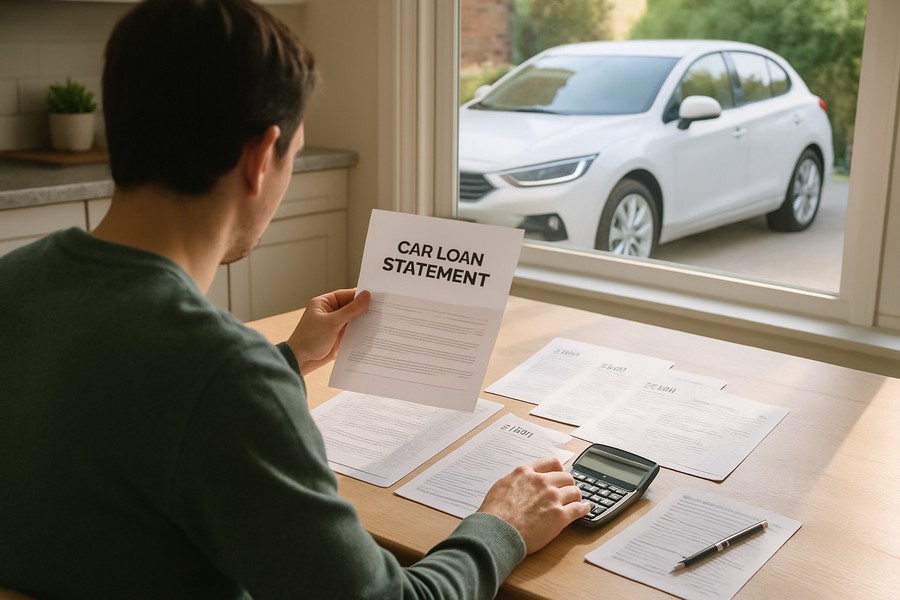
Unearthing a New Tax Break for Car Loan Interest
Recently, an innovative tax break has been introduced. If you acquired a brand-new vehicle in the previous year, you might be eligible to deduct some of the interest on your car loan in certain circumstances.
This tax break was part of a larger tax bill enacted, which also abolished taxes on overtime and tips for some workers. It's crucial to mention that the bill also scrapped a tax credit for purchasing electric vehicles, which might be of interest to those considering buying a new car.
Who Can Benefit From This Deduction?
There are some key points to keep in mind to determine whether you qualify for this tax break or not.
- The deduction is only applicable to new cars bought after the end of the previous year.
- Unfortunately, if you purchased a used car or your car loan dates back before the said period, this deduction won't be of benefit to you.
- If you bought a new car this year, this could be applicable to you.
Income Thresholds
Not everyone will be eligible for this deduction. It starts to phase out for single taxpayers with a modified adjusted gross income (MAGI) above $100,000, while for a couple filing jointly, the threshold is $200,000.
However, if your income is in the six-figure range, you might still be able to benefit. Your MAGI is calculated after certain deductions from your gross income, such as tax-deductible retirement contributions. And because the deduction is phased out gradually, if you're near the cutoff, you might still be able to deduct some of the interest you paid.
Vehicle Assembly Location Matters
To be eligible for the deduction, the vehicle must have been assembled in the United States. This can be confirmed using your vehicle identification number (VIN).
It's important to note that having a car "made in the U.S." is not the same as purchasing a car from an "American" brand. For instance, you might own a car from a Japanese, Korean, or German manufacturer that was assembled in the U.S. Always verify the VIN for confirmation.
The vehicle also must be for personal use and not for business purposes.
Deduction Amount
If you meet the criteria, you can deduct up to $10,000 in interest paid per year. You'll need to check your auto loan paperwork to see how much interest you paid in total.
It's important to remember that a deduction is not the same as a tax credit. While a tax credit decreases your tax liability on a dollar-for-dollar basis, a deduction reduces the amount of your income that is taxable. So, the actual savings are less than the deduction. For example, if you paid $1,000 in interest and can deduct all of it, that doesn't mean you get $1,000 back. Instead, the deduction could be worth $220 if you're in the 22% tax bracket.
Standard Deduction
Unlike many tax deductions, including the mortgage interest tax deduction, this one is available to taxpayers who take the standard deduction and do not itemize their deductions. This is a nice bonus, and it increases the number of people who might benefit.
Impact on Domestic Manufacturing
Despite the federal government's efforts to incentivize domestic manufacturing, particularly of electric vehicles, through tax policy, this new tax break is unlikely to significantly boost domestic production. Although it applies specifically to U.S.-built cars, it is not a significant enough incentive to sway buyers' decisions or motivate automakers to shift production to the U.S.
However, it does provide a modest financial boost to some buyers. And, as the saying goes, "It's not bad for anybody." Even if you don't qualify, you're not in a worse position than you were before.