
An Icon of Luxury Experiences a Financial Downfall
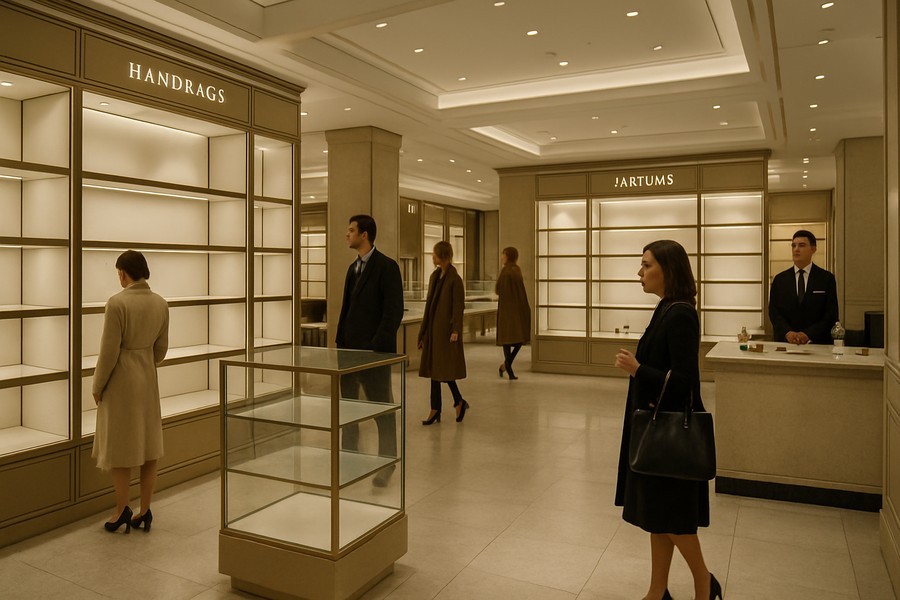
On a typical morning, visitors would be seen admiring the display of high-end handbags at a famous luxury store in the heart of Manhattan. But a recent conversation hints at some deep-rooted financial issues the store is facing.
A consistent patron, who usually divides her time between New York and Boston, approached the fragrance counter for a product she had usually found in the store. She was surprised when she couldn't find it in Boston's branch just after the holiday season, and was hoping the New York store would prove more fruitful.
"Are there any Berries fragrances available?" she asked a staff member. "We're out of stock - candles, diffusers, everything," came the reply.
Financial Struggles and Looming Bankruptcy
The company, which also owns a renowned Texas-based department store, is rumoured to be filing for bankruptcy protection soon. It's grappling with financial difficulties, which leaves customers, suppliers, and investors questioning its future.
The luxury store's financial issues have been escalating since its parent company acquired the Texas-based store in 2024, hoping to reduce costs and fortify the brands. The company had already been facing a growing debt burden and changing shopping trends favoring online retail. Sales began to decline drastically in 2023.
Unfortunately, the acquisition did not bring the anticipated benefits. The company failed to make a $100m interest payment due in late December, related to the $2.2bn debt it had incurred to finance the merger.
Vendor Frustrations and Leadership Changes
The missed payment deadline has only added to the growing discontent among vendors, who have been facing delayed payments for months and have stopped supplying their products.
Adding to the turmoil, the company's former CEO resigned unexpectedly in early January. His replacement is the executive chairman who spearheaded the Texas store's acquisition deal.
While restructuring does not necessarily mean the store will close its doors, retail analysts and long-term vendors are skeptical about the company's ability to bounce back after the missteps following the acquisition.
"This company has all the traits of a train wreck," says a former retail studies head at a prestigious business school.
Attempts to Salvage the Situation
In recent months, the company has been trying to raise funds by selling off assets, including a property in Beverly Hills. Nonetheless, the distress continues.
Some of the company's problems can be traced back to the takeover more than a decade ago, at which point business integrity was put aside in favor of striking new deals that ultimately caused harm.
The merger two years ago only exacerbated pre-existing financial issues. The company took on billions in debt to finance the deal, adding to the money it already owed its vendors.
"Right from the start, they stopped paying their bills," says the former retail studies head.
"You can't maintain as a retailer, whether you're a discount or luxury store, without a reliable, consistent financial relationship with your suppliers."
The Impact on Shoppers
For customers, the financial turmoil has resulted in less stock on shelves and online, and recently, cancelled orders.
A long-time customer, who has been buying men's clothing from the online catalogue for five years, was attracted by the "good quality clothing at decent prices". However, last summer, he noticed that several items were marked as out of stock. Despite this, he still placed an order for a pair of jeans at a discounted price of $77. The next day, he was informed that the jeans were sold out and his order was cancelled.
"It was just frustrating that I had spent the time to find an order, and then they said, 'We're sorry, tough luck'," says the disappointed customer. He is now less likely to shop at the store again.
Falling Sales and Vendor Tensions
In October, the company reduced its full-year financial outlook, pointing out falling sales partly due to inventory challenges.
Tensions with vendors have escalated since the 2024 merger, which was supposed to resolve cash flow issues. Last February, the former CEO sent a letter to vendors promising that overdue payments would be made in 12 instalments. But this did little to reassure brands.
Some vendors have continued to work with the company out of fear of breaking a business relationship with a leading player in the luxury market. Others have recently cut ties with the company. A finance firm which guarantees orders for about 130 brands that work with the store, announced in November it would stop approving new orders.
"We had no choice," says the firm's CEO. All orders remain on hold.
One vendor who still hasn't received payment for shipments from last year feels the company's decision to cancel orders appears to be a desperate measure. "Nothing they do makes any sense," he says.