
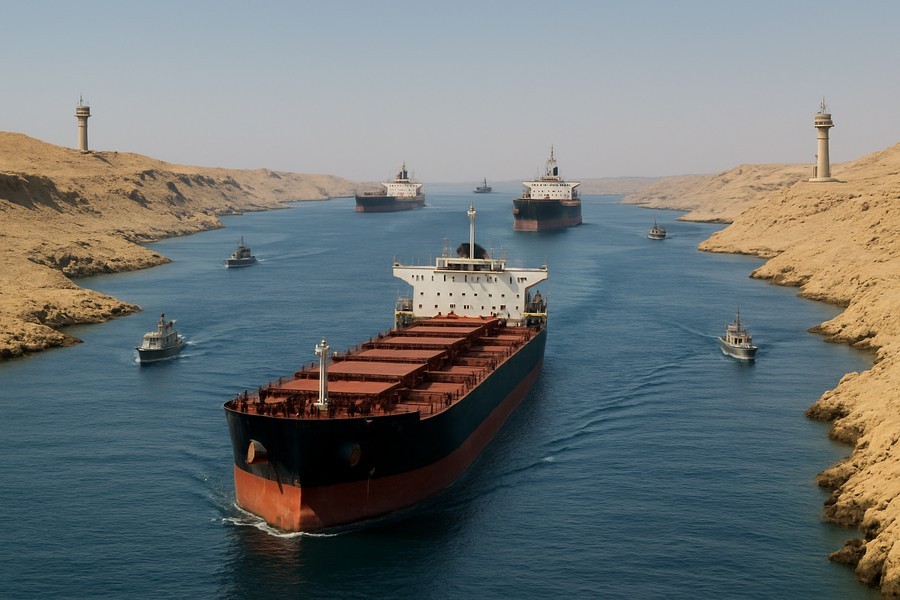
Maritime Struggles in the Strait of Hormuz
The Strait of Hormuz, a vital maritime passage, has been practically shut down due to ongoing conflict. The closure has significantly disrupted global oil and gas supplies, causing a spike in energy prices.
Under normal circumstances, this narrow waterway sees about one-fifth of the world's oil and gas supplies transported through it. Additionally, approximately one-third of global fertilizers essential for half of the world's food production are transported through this strait.
Impact on Vessel Traffic
Before the conflict erupted, an average of 138 ships would cross this channel each day. This number has significantly dropped since the outbreak of hostilities. In a single month, only a similar number of ships made it through the passage.
This considerable drop in traffic is due to the increased risks. More than 20 ships have been targeted during the conflict, with some experiencing near misses and minor damages, resulting in the tragic loss of several crew members.
Fear and Uncertainty Among Vessel Crews
As a result of these attacks, several ships have chosen to stay put, causing approximately 1,000 vessels and their crews to remain stationary. These vessels, most of which are oil and gas tankers, prefer to stay anchored rather than risk moving through the troubled waters. This has led to an alarming situation where about 20,000 seafarers are stranded in stressful conditions with dwindling supplies.
Alternative Route through Iranian Waters
Despite these challenges, some ships are still willing to brave the crossing. A few have even opted to take an alternative route through Iranian waters. Iran has assured that "non-hostile vessels" - those not participating in or supporting acts of aggression against them or belonging to the U.S. or Israel - will be allowed passage.
Iran has been encouraging vessels to use a "safe corridor", which is a more northern route close to the Iranian coastline, instead of the standard commercial shipping lane. This route allows Iranian authorities to visually verify vessels and give approval to proceed. However, this perceived control over strait traffic has raised concerns.
Payment for Safe Passage?
There are also uncertainties about whether Iran is requiring payment for safe passage. Some reports suggest that at least two vessels have paid to transit the strait. These payments were reportedly made in Chinese yuan, likely due to sanctions against Iran by several western governments.
However, even with Iranian approval for transit, vessel safety is not guaranteed. Different factions within Iran could still delay or even seize vessels, despite official clearance.
Recent Transit Activity in the Strait
Despite these challenges, a few vessels have managed to cross the strait recently, indicating a slight increase in transits. However, normal commercial navigation has not been restored. On a single day, four vessels were observed crossing the strait with their transmitters on. This included one tanker and two cargo vessels exiting the Gulf, and one liquefied petroleum gas tanker entering.
However, it's not clear how many other ships might have crossed with their transmitters off. Reports indicate that two cargo ships entered the Gulf, hugging the Oman coastline and sailing without reporting their position.
International Efforts to Reopen the Strait
The international community is working hard to reopen this vital maritime channel. More than 30 countries, including the United Arab Emirates, the UK, France, Germany, Canada, and Australia, have committed to working on "appropriate efforts" to safeguard the waterway. Britain has even offered to host an international security summit to create a comprehensive plan to reopen the strait.
Despite the ongoing conflict, the maritime insurance industry maintains that coverage is still available, albeit at higher prices. However, the main concern for shipowners is not a lack of insurance, but the safety of their crew and vessel.