
Major Solar Outbursts: What's Next?
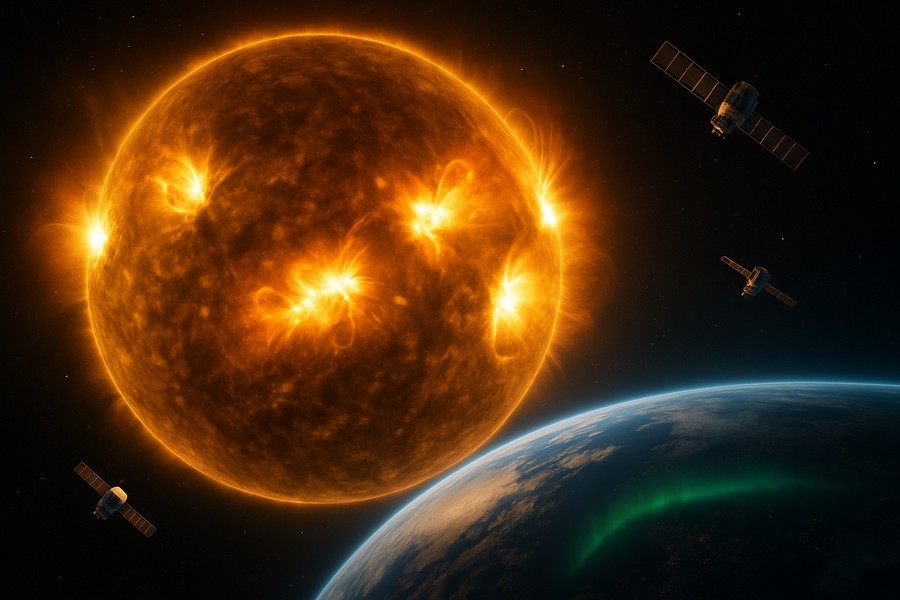
Recently, the heavenly body we rely on for daylight and warmth – our sun – has been pretty active. In the past few days, the sun has spouted not one, not two, but four powerful solar flares. This activity has caught the attention of scientists who study space weather, as it could lead to spectacular northern lights shows and potential interference with satellite technology.
What exactly is a Solar Flare?
A solar flare is essentially a huge burst of electromagnetic radiation from the sun. These bursts can last anywhere from a few minutes to a few hours. They're most likely to occur in parts of the sun that are particularly active, characterized by the presence of strong magnetic fields. These active regions are often associated with sunspots.
The four solar flares that the sun recently released fall into the category of "X-class" flares. This is a term used to describe the most intense types of solar flares. It's worth noting that flares of this magnitude are not a common occurrence.
In fact, the second flare that was released on Sunday was classified as an X8.1 flare. This makes it the strongest flare we've seen in several years.
The Impact of Solar Flares
So, what happens when a solar flare is released? Well, because the electromagnetic energy travels at the speed of light, it can cause signal loss in high frequency communication bands over much of the sunlit side of Earth. Users could notice a loss of contact or significant disruptions for a few minutes to a couple of hours in the affected areas.
Another thing to note is that solar flares often precede Coronal Mass Ejections (CME). A CME is a gigantic burst of solar material and magnetic field from the outer atmosphere of the sun.
Northern Lights and Solar Flares
One of the most exciting potential consequences of a solar flare is the possibility of northern lights displays. These occur when a solar flare interacts with the atoms and molecules in Earth's atmosphere. This interaction causes the atoms to emit a glow, creating a beautiful spectrum of light in the night sky.
Whether or not we'll actually be able to see these auroras depends on a few factors. These include how the CME arrives, the magnetic orientation of the CME's magnetic field, and local cloud cover.
Solar Activity in the Coming Years
In 2024, the sun's magnetic field reached the most active phase of its 11-year cycle, known as the solar maximum. Since then, the sun has continued to release strong solar flares and geomagnetic storms. This activity has led to an increased frequency of northern lights displays.
Scientists predict that the intense magnetic activity caused by sunspots will continue through 2026. So, we can expect more solar flares and northern lights in the coming years. As always, scientists are keeping a close eye on the sun's activity to better understand these phenomena and their potential impacts on Earth.