
From Traditional Jobs to High-Stakes Predictions: Welcome to the New Era of Betting
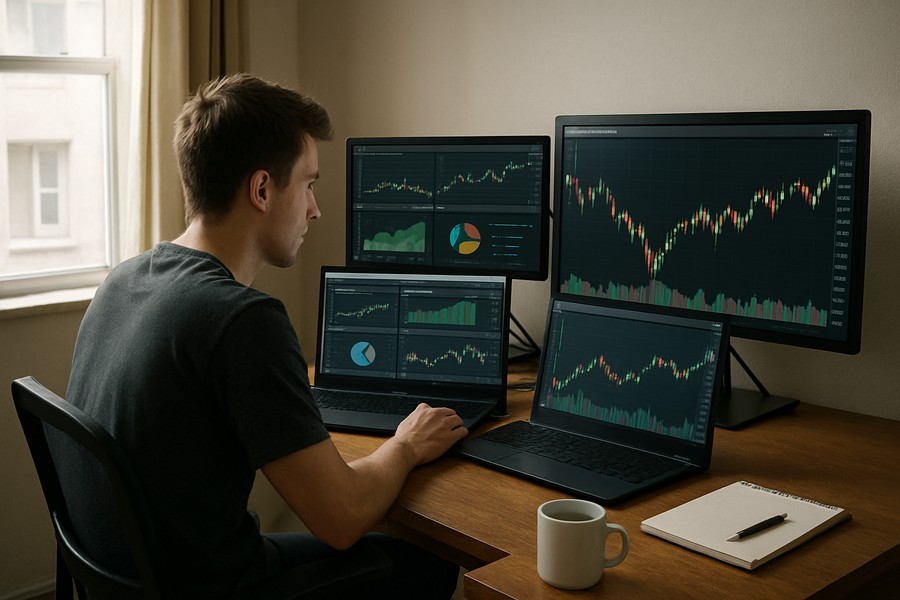
Logan Sudeith, a 25-year-old man, used to work as a financial risk analyst. But now, he invests his time and money into the unpredictable world of prediction markets, sometimes spending over 100 hours a week placing bets on various outcomes. If you ask him about his earnings, he'll proudly share that he made $100,000 last month, a figure that far exceeds his former annual salary of $75,000. He's now a full-time trader, working from his apartment in Atlanta.
Trading on the Unpredictable
Some of his recent big wins include predicting Time Magazine's person of the year ($40,236), the most-searched person on Google last year ($11,083), and the outcome of the New York City mayoral race ($7,448). However, he doesn't limit his bets to just significant events. He's also made a few thousand dollars on seemingly trivial matters like how many times a sports announcer will say "air ball" or whether President Trump will use the phrase "drill baby drill" at an upcoming press conference.
Despite his successful streak, Sudeith admits that he's not a fan of Trump. But he spends a considerable amount of his day tracking Trump's actions. In fact, his vote in the next presidential race may very well go to the candidate who supports prediction markets.
The Rise of Prediction Markets
People like Sudeith are driving the boom in online prediction markets. These platforms allow users to place bets on a wide range of events, from the outcome of an award show to the number of migrants the U.S. will deport this year. This trend has garnered the interest of mainstream entities, with several entering partnerships with prediction market platforms.
The popularity of prediction markets is partly due to the perception that they offer an alternative to the traditional establishment. Supporters believe that these platforms can reveal core truths by allowing thousands of people to express their opinions through their wallets. However, critics argue that these platforms are simply glorified gambling sites.
The Role of Market Makers
Unlike traditional gambling where players bet against "the house," prediction markets operate differently. Any user can suggest a market, and then different terms will be selected for the "yes" and "no" side of the wager. However, for the bet to take place, there must be money on both sides. This is where "market makers" come in – these are typically institutional partners or users with large portfolios who front the cash.
While this system has faced challenges in court, with lawsuits claiming that the firms involved in market making are no different from a traditional "house," prediction market platforms maintain that market makers merely price bids and asks without having a competitive advantage.
The Political Impact of Prediction Markets
Prediction markets have also made their way into the political sphere. Estimates suggest over $2 billion is now traded every week on prediction market platforms, an increase of 1,000% compared to previous years. Even the Trump family has invested in the industry, adding to the increasing acceptance of prediction markets.
However, this rapid growth and the lack of strict regulation have sparked concerns. Critics worry that turning elections and other significant events into betting opportunities could lead to manipulation and exploitation. There are also fears that the gamification of trading may contribute to gambling addiction.
The Language of Prediction Markets
Among the community of prediction market traders, a unique language has evolved, combining Gen Alpha and Gen Z slang with finance terminology and pop culture references. For instance, being "mogged" means being out-maneuvered by another trader, while a market that has "fudded" indicates that people are selling their positions due to fear, uncertainty, and doubt.
Despite the concerns and criticisms, the world of prediction markets continues to grow. With billions of dollars at stake and the potential to influence major events, it's a trend that's hard to ignore.