
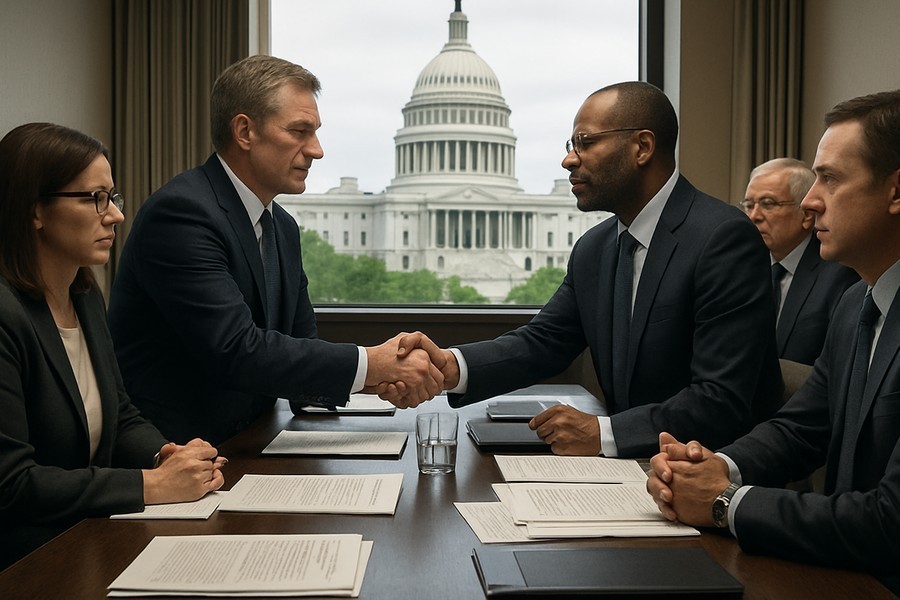
A New Era of Mergers and Acquisitions
The recent dismissal of the nation's top antitrust official, Gail Slater, signifies a victory for business supporters. Slater's departure gives way to a more permissive stance on corporate mergers, a stark contrast to the populist voices who were more skeptical of corporate consolidation, including Vice President JD Vance and adviser Steve Bannon.
Just a year ago, legal representatives were busy revising their guidance to clients to mirror the anti-big business rhetoric prevalent during the campaign period. Back then, then-candidate Trump was vocal about his disapproval of large tech, defense, and healthcare corporations, accusing them of "suppressing competition". However, the populist rhetoric has now given way to a more laissez-faire approach, a change that perhaps shouldn't surprise given Trump's background as a dealmaker. However, this shift has left both progressives and staunch populists disappointed and sparked a scramble among legal advisors to update their counsel.
A Shift in Focus
With the change in approach, companies now have an opportunity to negotiate their way to merger approval, often with the support of a growing number of lobbyists. Legal experts are advising clients that are likely to face scrutiny over their deals to come prepared with a compelling offer.
The issues dominating the tech industry have also shifted, moving from debates over online censorship and the influence of larger platforms, to concerns over advances in Artificial Intelligence (AI). On this front, the industry and the administration are more in sync. Vice President JD Vance, who once served as Slater's boss, has chosen to use his political influence elsewhere, refraining from involvement in deal disputes between the antitrust division and higher officials.
Changing Landscape
Recent data shows that merger investigations hit an all-time low in 2025. The current administration has also dropped a lawsuit initiated by the previous administration aiming to block a corporate travel merger. Furthermore, it has reached settlements with half of the 16 companies whose deals were under significant scrutiny. This is a notable departure from the previous administration, which was more skeptical of structural changes.
Those hoping for a populist realignment are becoming disillusioned. Progressive anti-merger voices continue to be present, but they are becoming increasingly underrepresented in the government. For now, these voices are confined to online group chats, where the news of Slater's dismissal caused a stir. It was described as a "catastrophe", with pessimistic remarks about who seems to be winning the debate on mergers and acquisitions.