
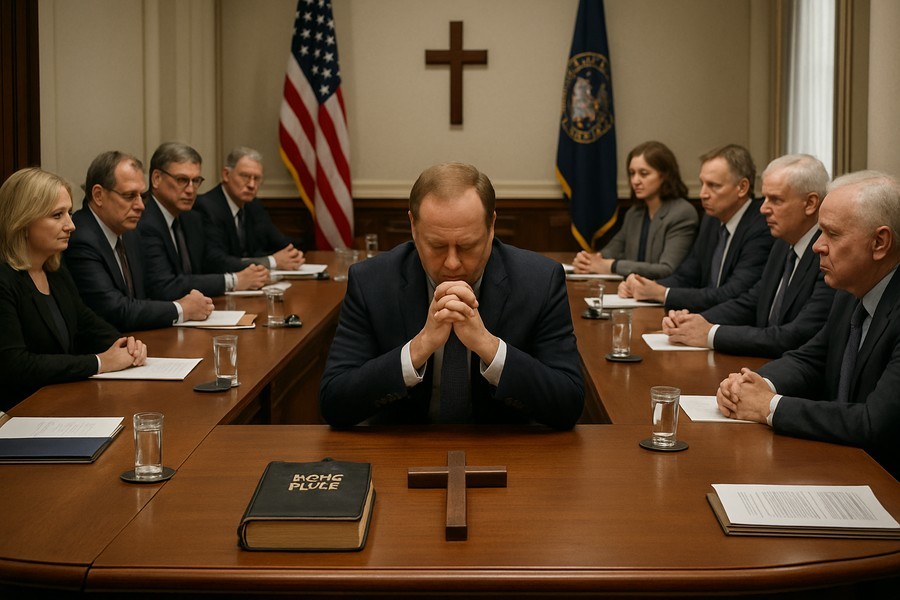
Re-imagining the Role of Faith in the Government
Government meetings usually have a routine, mundane flavor. However, a recent meeting of a lesser-known governmental panel began with an unexpected twist: a Christian prayer. This startling shift in protocol was led by a government official, who thanked Jesus for dying for human sins. This is only one instance among many where religion is increasingly finding its way into the government's activities, particularly Christianity.
There are various ways in which the government has been involving faith in its operations. This includes encouraging people to devote an hour each week for prayer. Also, several government agencies have been initiating their meetings with prayer or arranging regular faith services. Bible quotes and Christian images are becoming a common sight on official government social media profiles.
The Debate Over Faith in Government
The greater prominence of Christianity in government affairs has been welcomed by conservative groups who have long battled against a progressively secular government. However, this development has raised concerns among those who firmly believe in the separation of church and state. This shift towards religion, according to both advocates and critics, is unprecedented and may be just the beginning.
Over the past year, plans have been made for a more extensive incorporation of religion in public life by interfaith leaders, religious legal activists, and close political allies. The expectation is that by the summer, a comprehensive plan will be proposed for policy changes that could redefine the relationship between government and religion.
Efforts are being made to defend religious expression against accusations of bias or hostility, such as withholding federal funding from schools perceived to be hostile towards faith. There are also discussions about encouraging the Supreme Court to reconsider the First Amendment's establishment clause, which prohibits the government from establishing a state religion or favoring one religion over others.
Concerns about the Growing Influence of Religion
Despite the representation of various faiths, there is a concern that the current trend leans towards conservative Christian views. There have been expressions of regret about the reduced presence of the Bible in schools. Some have even described the current situation as a religious and cultural war, where everyone is a participant.
The injection of religion into the government and everyday life is not entirely new. There have been instances in the past when religion played a significant role in government activities. However, the current trend towards a widespread and deliberate effort to infuse religion into the government is a cause for concern for some. They find it problematic for a majority to dictate the behavior and beliefs of others.
Looking at the Future
The Religious Liberty Commission was established last year to identify threats to religious liberty across all faiths. The commission has heard testimonies from Americans of different faiths who believe that government institutions have infringed on their religious practices. Supporters of the commission hope that the changes they are implementing will have lasting impacts that future administrations cannot easily undo.
However, the administration's actions have raised concerns among critics who argue that these actions may risk endorsing religion. They worry that the administration appears to be emphasizing Christianity over all other religions.
There is also concern that the commission's work might privilege one faith over others. Legal shifts are happening, and the legal ground on religion in government is changing. The Supreme Court has made it easier for religious groups to seek government grants and faith-based schools to receive public funding. The court has shown support for more public expressions of faith. However, the question remains whether this trend is a threat to democratic ideals and a pluralistic workforce and nation.
