
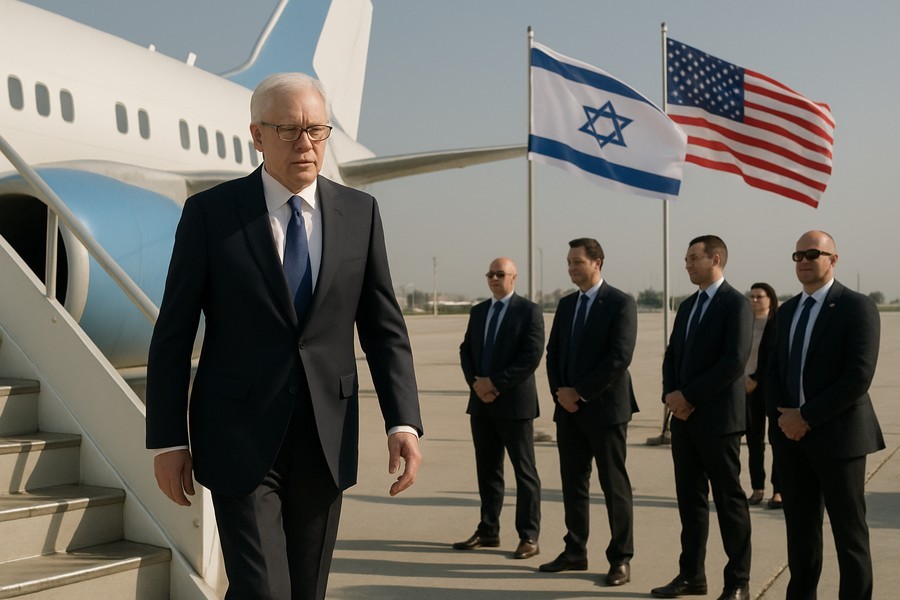
US Diplomat Heads to Israel Amidst Rough US-Iran Talks
The US Secretary of State is preparing for a trip to Israel just as the President voices dissatisfaction with the ongoing dialogue with Iran. The Secretary's journey, which is expected to center on Iran and Lebanon relations and the implementation of a 20-point plan for a war-ravaged Gaza, is set to commence soon.
Recurrent Visits and Rising Tension
This marks the Secretary's fifth official visit to Israel, America's close ally. His inaugural visit was in early 2025, followed by three more trips later the same year. Additional details about this timely diplomatic mission, set against a backdrop of tense Middle East relations, are sparse.
Recently, the US and Iran engaged in a third round of indirect negotiations in Switzerland. These discussions aim to establish an agreement restricting Iran's nuclear activities. Another round of talks is scheduled to commence in Austria soon after the Secretary's arrival in Israel.
President's Discontent
In a recent public appearance, the President expressed frustration at the slow progress of the discussions. "They're not willing to give us what we need. I’m not thrilled with that. We’ll see what happens," he commented. The President further hinted at the possibility of military intervention saying, "I’d prefer not to use it, but sometimes you have to. We’ll see what happens."
The President also shared that he would not be satisfied with Iran only reducing its uranium enrichment for civilian energy projects. “I require no enrichment,” he stated firmly, “Not 20 percent, 30 percent.” These statements raise concerns about a potential military escalation with Iran, which could destabilize the broader region.
Rising Tensions and Safety Concerns
The US Ambassador to Israel recently issued a notice allowing embassy staff to leave the country. This decision is indicative of the escalating tension in the region. The notice emphasized the need for immediate action but also stressed that there was “no need to panic”.
The US Embassy in Jerusalem issued a public announcement acknowledging the authorization to exit and citing “safety risks” due to “terrorism and civil unrest”. The notice suggested considering departure from Israel while commercial flights were still operational.
Meanwhile, the Secretary of State declared Iran a “state sponsor of wrongful detention”. He strongly advised against any travel to Iran and urged those already there to leave immediately.
Mounting Threats of Iran Attack
The threat of a US military action against Iran, a longstanding adversary of Israel and the US, is increasing. Earlier this year, the US President deployed a significant naval force near Iran, including two aircraft carriers. The President has repeatedly hinted at his readiness to launch an attack to either force a deal limiting Iran's nuclear capabilities or to intervene on behalf of Iranian protesters.
During a recent State of the Union address, the President spoke of his military threats as a successful strategy in stopping the execution of protesters. "We stopped them from hanging a lot of them with the threat of serious violence," he said. He further indicated his readiness to act. "I will never hesitate to confront threats to America wherever we must," he declared.
However, even with the President's threats, there are reports of eight protesters being sentenced to death, and 30 more are at risk of receiving the same penalty. There are also warnings against possible military action due to the risk of civilian harm.
Push for a Deal
Meanwhile, the President has indicated that military intervention may be necessary if Iran fails to agree to a nuclear deal. He recently stated that Iran had a limited time to strike a deal with US negotiators. If it fails to do so, the President suggested he would escalate his “maximum pressure” campaign, hinting at possible military action.
Iran has stated that it is “close” to the US's position on many issues but has called for the removal of what it considers “excessive demands“. Reports suggest the US government wants Iran to dismantle its nuclear program, limit its ballistic missile arsenal, and sever ties with regional allies and proxy groups.
Iran, however, has largely dismissed these demands as unrealistic. It maintains that its nuclear enrichment program aims to produce civilian energy, not weapons. Iran has also warned of retaliation if the US proceeds with another military strike.
Uncertain Future
Despite the escalating tensions, there are signs of optimism. The country mediating the talks issued a statement following a meeting between its top diplomat and the US Vice President. The statement mentioned significant, yet unprecedented progress in the negotiations, which could form the foundation of the desired agreement.
As the President prepared for a trip to Texas, he was asked about the prospect of a military strike leading to a wider, prolonged regional war with Iran. He largely dismissed the possibility, citing successes with previous military operations. However, he concluded with a note of skepticism: “They are not getting there.”