
Cuba's Government Faces Hurdles Amid Fuel Crisis
The government of Cuba, a communist-run nation, is grappling with its toughest period since the end of the Soviet Union era. This predicament is largely due to pressure from the United States, following a military action that led to the death of 32 Cuban citizens.
In a bid to further isolate Cuba, the U.S. government has cut off its access to Venezuelan oil, a crucial component of its economy, and threatened to impose tariffs on any country willing to supply it with oil. Responding to this, Cuba's President, Miguel Díaz-Canel, has not only denounced the actions but also stated that Cuba is open to dialogue with the U.S., provided there's no pressure or preconditions.
Fuel Shortage: A Blow to Cuba's Economy
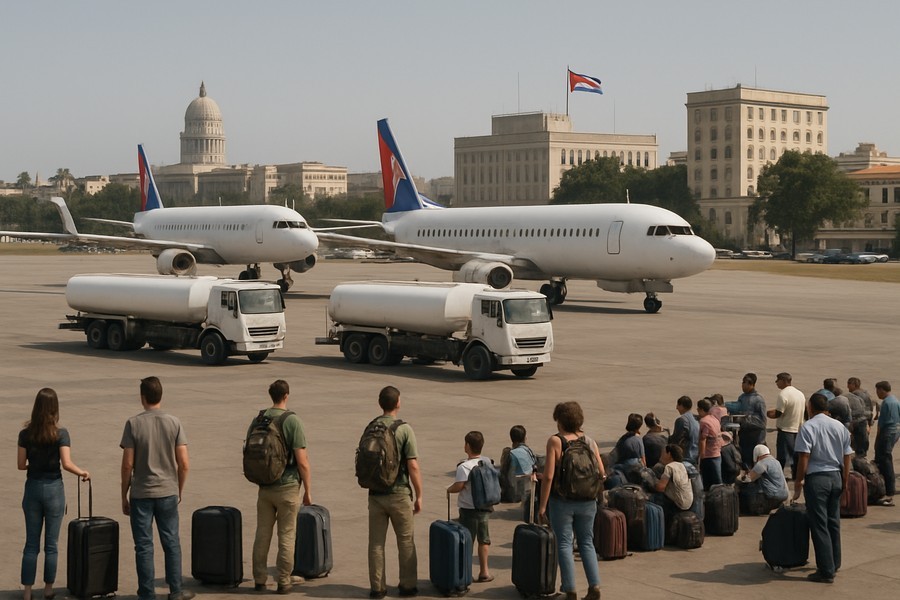
The fuel crisis has led to a series of ripple effects in the country, with the government warning that international airlines may not be able to refuel in Cuba due to the fuel shortages. This is on top of an already worsening economic situation that has prompted the government to adopt rationing measures to safeguard essential services and ration fuel supplies for key sectors.
Other measures include restrictions on fuel sales, reduced operating hours for some tourist establishments, shortened school days, and a four-day working week for state-owned companies.
The Impact of the Crisis
According to experts, the current situation in Cuba is the most critical it has been since the 90s, when the country had to fend for itself without the support of the Eastern Bloc. This has led to speculation that President Díaz-Canel might be forced to step down in the coming weeks or months. The U.S. tariff threats have also discouraged many nations from intervening.
Although Mexico sent humanitarian aid, it suspended oil shipments to avoid the tariffs. Despite the daily challenges, Cubans remain determined to defend their national sovereignty, sparking a new wave of patriotism.
Tourism Takes a Hit
One of the significant casualties of the fuel shortage is tourism, a primary revenue source for the cash-strapped government. Many flights to Cuba have been canceled, although airlines are trying to fly out the tourists already in the country. With the absence of foreign partners willing to assist, Cuba faces an uphill battle.
The Future of Cuba
Experts indicate that the government's commitment to boost the use of limited renewable energy sources might be inadequate and too late. There could be potential civil unrest due to the domestic energy production falling short of the nation's needs.
Additionally, the United Nations warned about a possible humanitarian "collapse" due to Cuba's dwindling oil supplies. This scenario will further worsen if Cuba's oil needs go unmet.
Cuba and the BRICS Bloc
These emergency measures serve as a crucial test for the BRICS bloc of developing nations. As a "partner country" of the BRICS group, Cuba has strengthened its relationships with Brazil, Russia, and China. Each of these countries has tried to offer support to Cuba in recent times.
China has voiced its opposition against the actions depriving the Cuban people of their right to subsistence and development. Russia has also described Cuba's fuel situation as "truly critical" and criticized the U.S. for causing numerous problems. Despite the challenges, Cuba's government remains resilient and continues to resist, even at the cost of unnecessary suffering.
Analysts point out the parallels between the current situation and the early 1990s, where Cuba managed to survive against all odds. Only time will tell whether history will repeat itself.