
Prisoner Release in Venezuela Continues Amidst Government's Promise of Leniency
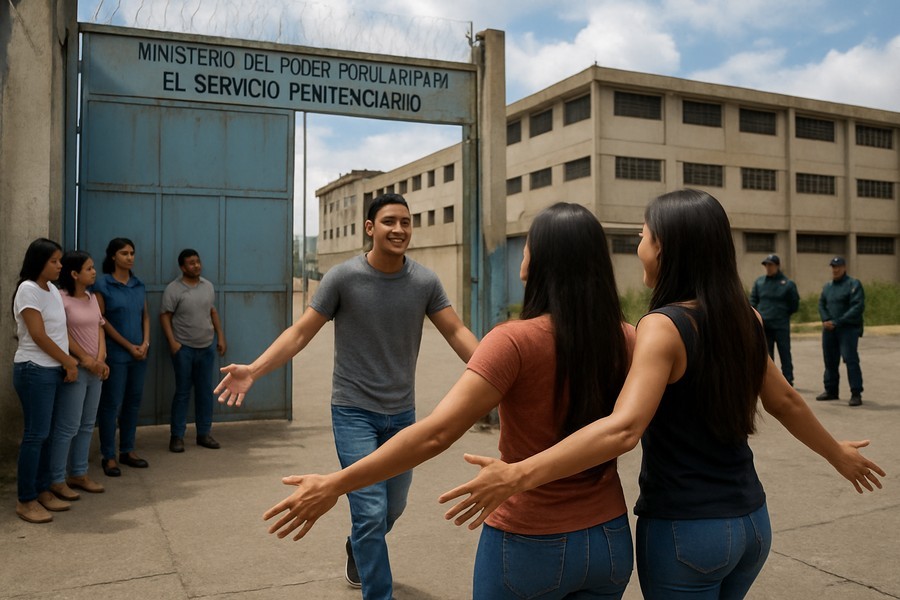
On the third day of a series of prisoner releases in Venezuela, Diógenes Angulo, who had been behind bars for a year and five months, was finally set free. His mother and aunt, overwhelmed with emotion, could hardly find the words to express their joy. Simultaneously, numerous other families waited anxiously, hoping for similar moments of reunion.
Angulo's release was part of a wave of releases promised by the Venezuelan government. The detainees include political opponents, activists, journalists, and military personnel, and their release has been eagerly awaited by their families.
Details of Angulo's Detainment
Angulo was arrested two days before the 2024 presidential elections for sharing a video of a protest by opposition groups in Barinas, the birthplace of the late President Hugo Chávez. Angulo was only 17 years old at the time of his arrest.
"Thank God, I'm going to enjoy my family again," he said shortly after his release. Angulo also mentioned his fellow detainees and expressed hope for their imminent release. He credited his faith as the source of his resilience during his time in prison.
Upon his release, Angulo discovered that former President Nicolás Maduro had been apprehended by U.S. forces during a nighttime operation in Caracas.
Uncertainty Around Prisoner Release
The Venezuelan government has not released any details about the number of prisoners to be released, leaving human rights groups and families in the dark. As hours turn into days, the anticipation and uncertainty continue to grow.
Meanwhile, the release of detainees has been applauded by international figures, including President Donald Trump, who claimed that it happened at the request of Washington.
The Venezuelan government had previously promised to release a significant number of prisoners. However, according to a prisoners' advocacy group based in Caracas, fewer than 20 people have been released so far, while 809 remain in detention.
Continuing Political Struggle
Some high-profile members of the Venezuelan political opposition remain in prison, including former lawmaker Freddy Superlano, former governor Juan Pablo Guanipa, and Perkins Rocha, lawyer for opposition leader María Corina Machado.
One week after the U.S. military intervention in Caracas, supporters of the former government took to the streets in numerous cities in Venezuela, demanding the return of Maduro and his wife Cilia Flores. The duo was captured and transferred to the United States, where they face multiple charges.
Protests were held in various cities including Caracas, Trujillo, Nueva Esparta, and Miranda, with many demonstrators waving Venezuelan flags. The crowds chanted slogans of support for Maduro.
In Caracas, acting president Delcy Rodríguez reiterated her condemnation of the U.S. military action, vowing to fight on until the return of Maduro.
International Relations
Following the dramatic overthrow of Maduro, the United States announced plans to govern the South American nation and requested access to its oil resources for the benefit of both nations.
Venezuela and the United States are currently discussing the restoration of diplomatic relations, which were severed in 2019, and the reopening of their respective diplomatic missions. A delegation from the United States arrived in Venezuela on Friday, according to the State Department.
In response to a plea for peace and respect for the Venezuelan people from Pope Leo XIV, Venezuelan Foreign Minister Yván Gil extended an invitation to the Pope to visit Venezuela and better understand the situation.