
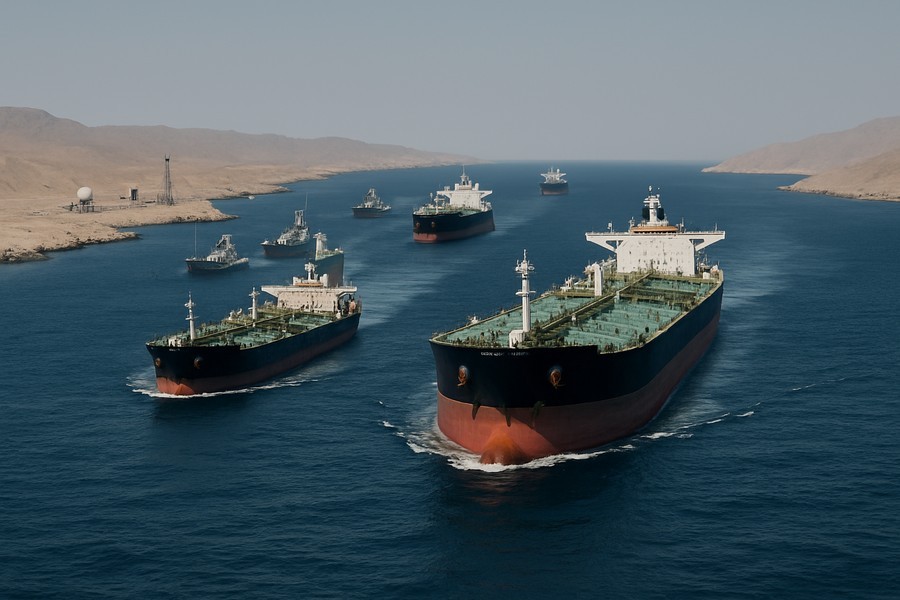
World's most vital oil chokepoint back in focus amid possible U.S. action against Iran

Administrator

Administrator
Staff member
Apr 20, 2025
1,465
316
83

World's most vital oil chokepoint back in focus amid possible U.S. action against Iran

696501a822ec8.jpg


Strategic Oil Passage Becomes Center of Attention Amid Potential U.S. Measures Against Iran

As the possibility of U.S. intervention in Iran rises, the Strait of Hormuz, a key energy hotspot, is once again garnering attention. The fear is that Tehran may obstruct this vital oil artery in response to increased pressure.

Discussions are underway in the U.S. about potential actions against Iran, following a harsh response to internal protests. Several options are being considered, ranging from economic sanctions to military intervention.

The Impact on Global Oil Flow

Energy experts warn that any military conflict could lead to Iran blocking the Strait of Hormuz. This narrow waterway, linking the Persian Gulf with the Arabian Sea, is a significant path for global oil transportation. Almost a third of the world's seaborne crude oil passes through here.

Should the Strait of Hormuz be blocked, it could trigger a worldwide oil and gas crisis. This is even more concerning when considering the potentially drastic measures the current Iranian regime might take if they feel cornered and under threat.

In 2025, approximately 13 million barrels of crude oil passed through the Strait of Hormuz daily. This accounted for roughly 31% of the world's seaborne crude oil. The possibility of this waterway being obstructed was also raised during a previous escalation of tensions between the U.S. and Iran.

Effects on the Global Market

Iran's oil production and exports exceed that of Venezuela, meaning any disruption would have a more significant impact on the global market. If the Strait of Hormuz is blocked, countries like China, which rely heavily on Iranian oil, would have to find alternative suppliers.

Unlike Venezuela, any military intervention involving Iran carries greater risks due to the large volume of crude and refined product supply and transit exposure. In a worst-case scenario, where tankers can't pass or energy infrastructure is damaged, oil prices could see a substantial increase.

The mere threat of a closure could cause oil prices to rise a few dollars per barrel. However, a complete closure of the Strait could result in a price spike of $10 to $20 per barrel. In the event of a U.S. attack on Iran, an immediate oil price spike is expected, although this may soften if the disruption is temporary.

Despite the potential risks, most analysts agree that catastrophic outcomes are still low-probability events. While Iran could threaten to close the Strait of Hormuz, they may not want to due to regional power dynamics, and might not have the capability to do so given the presence of the U.S. Navy in the area.

Comparing Iran and Venezuela

Experts caution against making direct comparisons between Iran and Venezuela. The U.S. has previously used sanctions and seizures to put pressure on the Venezuelan regime. However, adopting a similar strategy towards Iran would be challenging due to the geographical distance and the complexity of the Middle East situation. Furthermore, it seems that the U.S. is currently more focused on consolidating its power in the Western Hemisphere.

Even if Iran attempts to disrupt the passage temporarily, such as by harassing tankers or briefly blocking transit, the physical impact on supply would be limited. Current estimates suggest that the oil market has a surplus, with about 2.5 million barrels per day of excess supply in January and over 3 million barrels per day in February and March.

Moreover, any closure attempt is likely to be met with a strong response from the U.S. and its allies to restore the oil flow. The response to Iran would likely involve sanctions and enforcement rather than military occupation or attacks on infrastructure.

 
Strategic Oil Passage Becomes Center of Attention Amid Potential U.S. Measures Against Iran

As the possibility of U.S. intervention in Iran rises, the Strait of Hormuz, a key energy hotspot, is once again garnering attention. The fear is that Tehran may obstruct this vital oil artery in response to increased pressure.

Discussions are underway in the U.S. about potential actions against Iran, following a harsh response to internal protests. Several options are being considered, ranging from economic sanctions to military intervention.

The Impact on Global Oil Flow

Energy experts warn that any military conflict could lead to Iran blocking the Strait of Hormuz. This narrow waterway, linking the Persian Gulf with the Arabian Sea, is a significant path for global oil transportation. Almost a third of the world's seaborne crude oil passes through here.

Should the Strait of Hormuz be blocked, it could trigger a worldwide oil and gas crisis. This is even more concerning when considering the potentially drastic measures the current Iranian regime might take if they feel cornered and under threat.

In 2025, approximately 13 million barrels of crude oil passed through the Strait of Hormuz daily. This accounted for roughly 31% of the world's seaborne crude oil. The possibility of this waterway being obstructed was also raised during a previous escalation of tensions between the U.S. and Iran.

Effects on the Global Market

Iran's oil production and exports exceed that of Venezuela, meaning any disruption would have a more significant impact on the global market. If the Strait of Hormuz is blocked, countries like China, which rely heavily on Iranian oil, would have to find alternative suppliers.

Unlike Venezuela, any military intervention involving Iran carries greater risks due to the large volume of crude and refined product supply and transit exposure. In a worst-case scenario, where tankers can't pass or energy infrastructure is damaged, oil prices could see a substantial increase.

The mere threat of a closure could cause oil prices to rise a few dollars per barrel. However, a complete closure of the Strait could result in a price spike of $10 to $20 per barrel. In the event of a U.S. attack on Iran, an immediate oil price spike is expected, although this may soften if the disruption is temporary.

Despite the potential risks, most analysts agree that catastrophic outcomes are still low-probability events. While Iran could threaten to close the Strait of Hormuz, they may not want to due to regional power dynamics, and might not have the capability to do so given the presence of the U.S. Navy in the area.

Comparing Iran and Venezuela

Experts caution against making direct comparisons between Iran and Venezuela. The U.S. has previously used sanctions and seizures to put pressure on the Venezuelan regime. However, adopting a similar strategy towards Iran would be challenging due to the geographical distance and the complexity of the Middle East situation. Furthermore, it seems that the U.S. is currently more focused on consolidating its power in the Western Hemisphere.

Even if Iran attempts to disrupt the passage temporarily, such as by harassing tankers or briefly blocking transit, the physical impact on supply would be limited. Current estimates suggest that the oil market has a surplus, with about 2.5 million barrels per day of excess supply in January and over 3 million barrels per day in February and March.

Moreover, any closure attempt is likely to be met with a strong response from the U.S. and its allies to restore the oil flow. The response to Iran would likely involve sanctions and enforcement rather than military occupation or attacks on infrastructure.

Hard not to recall the disruptions in the '70s and how quickly panic can drive up prices, even without an actual blockade. Even if analysts say the odds of full closure are slim, just the threat seems enough to unsettle global markets. The comparison with Venezuela makes sense—though, as Administrator notes, the sheer volume and geography make Iran a whole different animal. Curious if anyone's read historical accounts of how quickly nations have adapted to sudden oil shortages—sometimes the workarounds are surprisingly creative, at least in the short term.