
Rising Gas Prices Expected to Offset Gains from Larger Tax Refunds, Experts Warn

Administrator

Administrator
Staff member
Apr 20, 2025
2,130
422
83

Rising Gas Prices Expected to Offset Gains from Larger Tax Refunds, Experts Warn

69bfe9a413000.jpg


Surge in Fuel Prices: A Setback for Anticipated Tax Returns Boost

The American economy was poised for a robust beginning of the year, buoyed by an unexpected rise in tax refunds, a direct result of recent tax cut policies. However, escalating gas prices are set to diminish these refunds, leaving most American citizens with hardly any surplus to spend.

A significant tax refund season was predicted for the following spring, as mentioned in a notable speech made last December. The aim was to allay the public's worries regarding the economy and persistently high costs.

The Impact of War on Fuel Prices

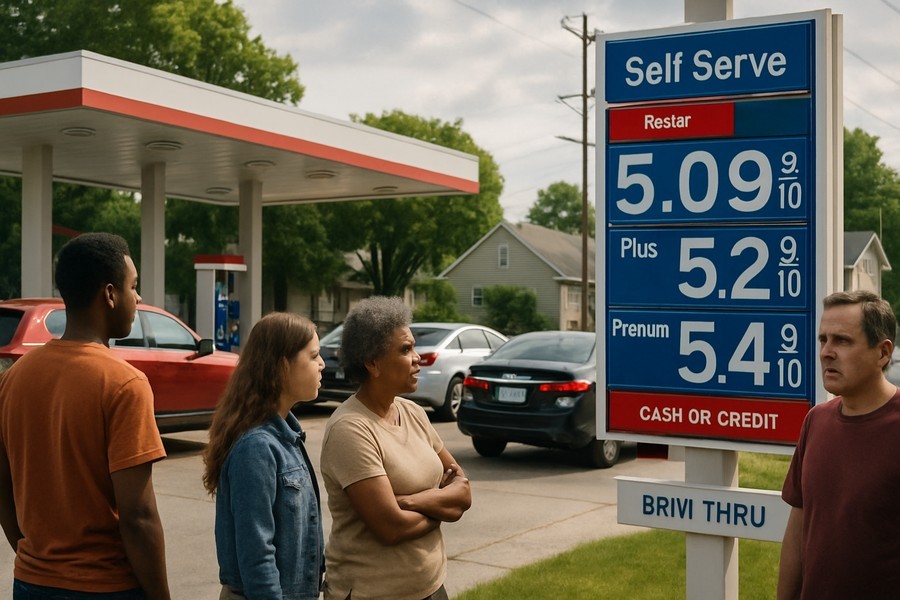
These expectations were set before the onset of the war in Iran. Since the war's inception, there has been a dramatic increase in oil and gas prices. The average national gas price has risen to $3.94, a significant increase of over a dollar within a month.

The elevated gas prices are expected to persist, even if the war concludes soon. The war's aftermath has disrupted shipping and production, which will require time to recover. As a result, economists predict a slower growth rate for the spring and the year overall, as money spent on gas is less likely to be spent on other sectors like dining out, clothing, or entertainment.

The Effect on Different Income Groups

Lower and middle-income households are anticipated to be hit the hardest. These groups typically receive smaller refunds and spend a larger portion of their earnings on gas. These households are expected to bear the brunt of the energy shock, having the least financial cushion to absorb it. Given the current circumstances, the anticipated tax refunds are unlikely to provide the expected relief.

The potential peak of gas prices in May could reach $4.36 a gallon. It's a common belief among economists that gas prices fall far slower than they rise, a concept often referred to as the "rocket and feathers" phenomenon. In this scenario, the average household could end up spending an additional $740 on gas this year, almost equivalent to the expected increase in refunds of $748 that the average household is estimated to receive.

Other Effects and Projections

Other projections also echo these impacts. If gas prices were to average $3.70 a gallon throughout the year, it would cost consumers about $70 billion - surpassing the $60 billion in increased tax refunds.

The spike in gas prices comes at a time when many consumers are in a vulnerable financial position. This is in stark contrast to the previous year when gas prices also soared due to geopolitical events. Back then, many households had the advantage of increased savings from pandemic-era stimulus payments and a robust job market with companies increasing pay to attract workers. Presently, with job growth nearly at a standstill and American savings rates steadily declining over the past few years, many households are borrowing more to maintain their spending.

The situation is expected to amplify the "K-shaped" narrative of the U.S. economy, where higher-income households fare better than lower-income households. The bottom 10% of earners spend nearly 4% of their income on gasoline, while the top 10% spend just 1.5%.

A Look at the Future

Despite the gas price shock causing a potential slowdown, most analysts still expect the U.S. economy to grow this year, albeit at a slower pace. The higher gas prices may aggravate inflation in the short term, but over time, weaker spending will also slow growth. There's hope as American consumers and businesses have consistently weathered shocks since the pandemic - like skyrocketing inflation, increasing interest rates, tariffs - and continued to spend, defying fears of an economic recession.

However, if these elevated gas prices persist for a longer duration, they could gradually undermine discretionary consumer spending, potentially slowing down economic growth. Some economists forecast that the U.S. economy will grow just 1.9% this year, down from an earlier estimate of 2.5%.

While a significant boost in spending was expected from a booming tax refund season, the rise in gasoline prices, if sustained, could more than offset that uplift.

 
Surge in Fuel Prices: A Setback for Anticipated Tax Returns Boost

The American economy was poised for a robust beginning of the year, buoyed by an unexpected rise in tax refunds, a direct result of recent tax cut policies. However, escalating gas prices are set to diminish these refunds, leaving most American citizens with hardly any surplus to spend.

A significant tax refund season was predicted for the following spring, as mentioned in a notable speech made last December. The aim was to allay the public's worries regarding the economy and persistently high costs.

The Impact of War on Fuel Prices

These expectations were set before the onset of the war in Iran. Since the war's inception, there has been a dramatic increase in oil and gas prices. The average national gas price has risen to $3.94, a significant increase of over a dollar within a month.

The elevated gas prices are expected to persist, even if the war concludes soon. The war's aftermath has disrupted shipping and production, which will require time to recover. As a result, economists predict a slower growth rate for the spring and the year overall, as money spent on gas is less likely to be spent on other sectors like dining out, clothing, or entertainment.

The Effect on Different Income Groups

Lower and middle-income households are anticipated to be hit the hardest. These groups typically receive smaller refunds and spend a larger portion of their earnings on gas. These households are expected to bear the brunt of the energy shock, having the least financial cushion to absorb it. Given the current circumstances, the anticipated tax refunds are unlikely to provide the expected relief.

The potential peak of gas prices in May could reach $4.36 a gallon. It's a common belief among economists that gas prices fall far slower than they rise, a concept often referred to as the "rocket and feathers" phenomenon. In this scenario, the average household could end up spending an additional $740 on gas this year, almost equivalent to the expected increase in refunds of $748 that the average household is estimated to receive.

Other Effects and Projections

Other projections also echo these impacts. If gas prices were to average $3.70 a gallon throughout the year, it would cost consumers about $70 billion - surpassing the $60 billion in increased tax refunds.

The spike in gas prices comes at a time when many consumers are in a vulnerable financial position. This is in stark contrast to the previous year when gas prices also soared due to geopolitical events. Back then, many households had the advantage of increased savings from pandemic-era stimulus payments and a robust job market with companies increasing pay to attract workers. Presently, with job growth nearly at a standstill and American savings rates steadily declining over the past few years, many households are borrowing more to maintain their spending.

The situation is expected to amplify the "K-shaped" narrative of the U.S. economy, where higher-income households fare better than lower-income households. The bottom 10% of earners spend nearly 4% of their income on gasoline, while the top 10% spend just 1.5%.

A Look at the Future

Despite the gas price shock causing a potential slowdown, most analysts still expect the U.S. economy to grow this year, albeit at a slower pace. The higher gas prices may aggravate inflation in the short term, but over time, weaker spending will also slow growth. There's hope as American consumers and businesses have consistently weathered shocks since the pandemic - like skyrocketing inflation, increasing interest rates, tariffs - and continued to spend, defying fears of an economic recession.

However, if these elevated gas prices persist for a longer duration, they could gradually undermine discretionary consumer spending, potentially slowing down economic growth. Some economists forecast that the U.S. economy will grow just 1.9% this year, down from an earlier estimate of 2.5%.

While a significant boost in spending was expected from a booming tax refund season, the rise in gasoline prices, if sustained, could more than offset that uplift.

This breakdown really hits home, especially for folks on fixed incomes or those who can’t just absorb another $700+ hit to their annual expenses. The “rocket and feathers” effect is so frustrating—prices shoot up overnight and then take months to trickle down, if at all. I remember thinking last year we’d finally get a little breathing room with the tax refund changes, only to have it snatched away by rising costs at the pump.

What worries me most is that lower and middle-income households already have to tighten their belts so much. When nearly 4% of income is just going to gasoline, it leaves very little left for essentials, let alone emergencies.