
Movie magic has a criminal record. It has distorted medicine, police work, science, childbirth, romance, and apartment prices so thoroughly that reality can feel like the less believable version.
Some of these myths are harmless nonsense. Others can create dangerously wrong expectations in an emergency. Either way, Hollywood deserves a very dramatic courtroom objection.
1. Sprinklers Do Not All Go Off Together
Movies love the scene where someone holds a lighter under one sprinkler and suddenly the entire building erupts in water. Real sprinkler systems are much less theatrical. They are pipe networks filled with stagnant water, with each sprinkler head sealed by a heat-sensitive plug or glass tube.
When the temperature gets high enough, that individual sprinkler opens. A small flame waved beneath it will not activate every sprinkler in the building. Your pocket lighter is not a remote control for the fire department.
2. Defibrillators Do Not Restart a Flatlined Heart
That dramatic scene where a doctor shocks a completely flatlined patient back to life is one of Hollywood’s most persistent medical lies. Defibrillators are used to correct certain dangerous irregular heart rhythms by delivering an electrical pulse.
A flatline is not an irregular rhythm. It is the absence of a useful heartbeat, so shocking it is not the solution. The machine is not a giant “restart” button, no matter how loudly the doctor shouts for it.
3. CPR Usually Does Not Wake Anyone Up
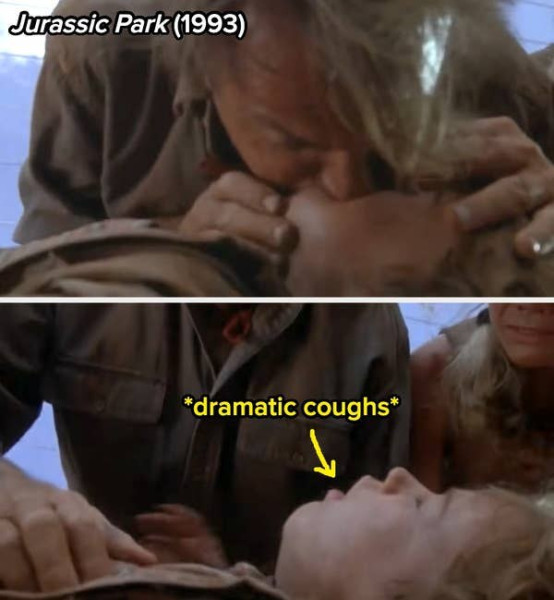
On television, a few chest compressions are followed by a cough, a gasp, and a grateful look from the formerly dead person. In real life, someone receiving CPR generally does not regain consciousness while it is happening.
That misconception can be dangerous. People may stop after a few minutes because nothing appears to be changing, even though continuing CPR could help keep the person alive until paramedics arrive. The patient usually will not sit up and announce that they are fine. Keep going until professionals take over.
4. Labor Does Not Always Begin With a Perfectly Timed Water Break
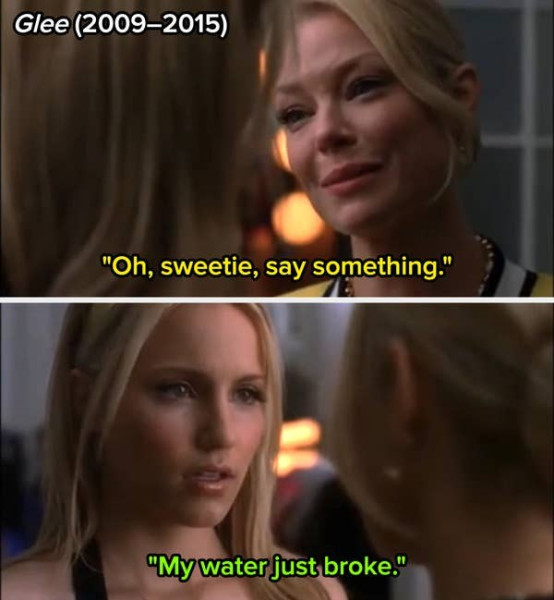
Movies often treat childbirth like a stopwatch event: the water breaks, everyone panics, and the baby arrives 30 to 60 minutes later. Real labor is rarely that neat, especially for first-time mothers.
A birth lasting less than an hour is uncommon, and it can be an intense physical trauma. The cinematic version makes childbirth look like an inconvenient appointment that got moved up. It is considerably more demanding than that.
5. Newborn Babies Are Not Supposed to Look Like Toddlers
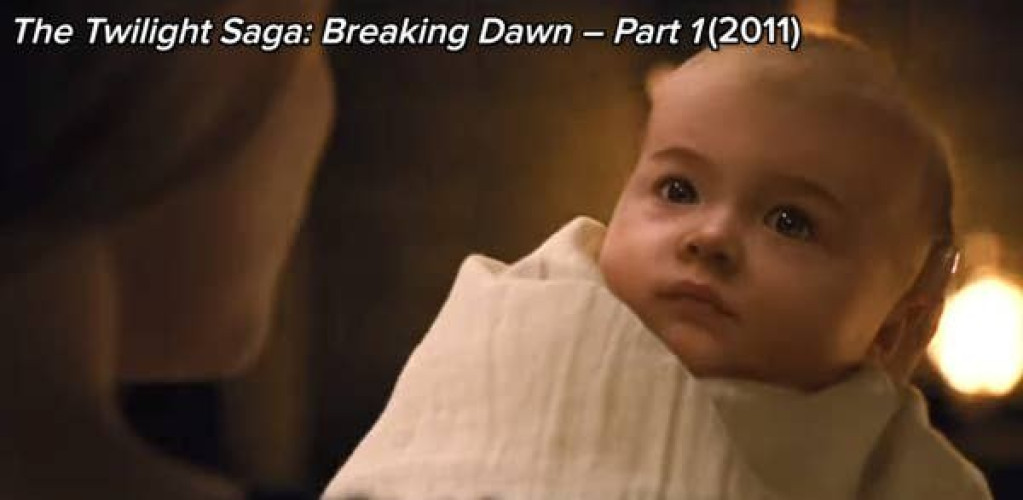
Film babies are sometimes so enormous and alert that they seem ready to ask for the Wi-Fi password. A supposed newborn may stare directly into the camera, weigh 17 pounds, and look like it has already completed kindergarten.
One commenter said she and her mother always joke about giant movie babies. Their running commentary includes, “That poor woman,” “That’s a second-grader,” and “That baby can drive.” The CGI baby Renesmee from Twilight remains difficult to forget.
6. Doctors Do Not Always Solve Every Medical Mystery
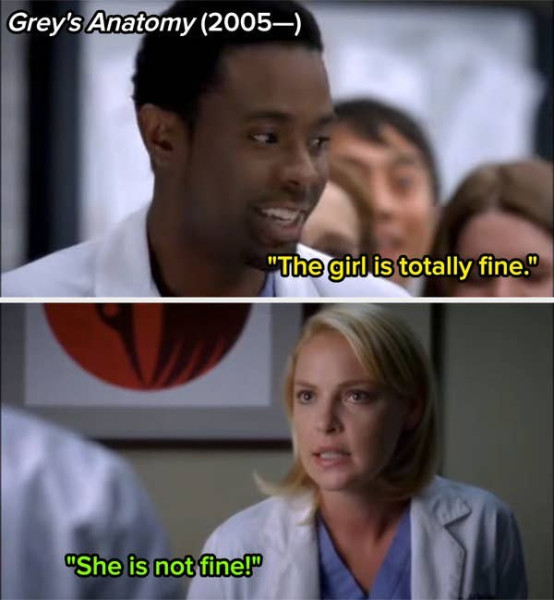
Television doctors will stay awake for three days, order one more test, and discover the rare condition just before the patient’s insurance-commercial break. People with chronic or unusual illnesses may experience something far less satisfying.
One cardiologist told a patient that the best option might be finding a doctor who enjoys puzzles, because many physicians give up when a case becomes difficult or falls outside the conditions they usually treat. That is not exactly the comforting speech from Grey’s Anatomy.
7. Police Departments Do Not Treat Every Case Like a Personal Mission
Law & Order: Special Victims Unit often portrays detectives as emotionally committed to every victim and determined to chase every lead until justice arrives. Real police departments have limited time, staff, and resources.
If a case cannot be solved in a few days, it may receive less attention, and the perpetrator may never be caught. That reality is much less satisfying than a detective staring intensely at a wall of photographs while inspirational music builds.

8. Chloroform Is Not an Instant Sleep Spell
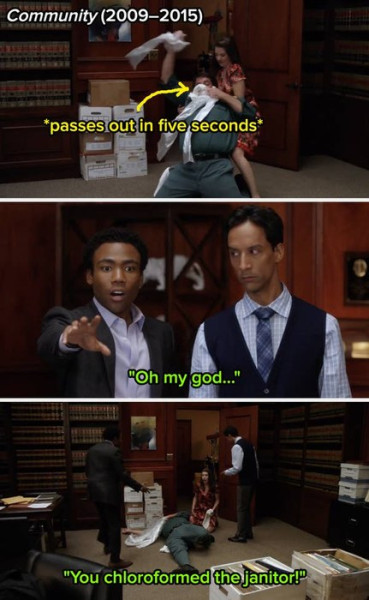
In movies, someone presses a chloroform-soaked rag over a person’s mouth and nose, and the victim collapses almost immediately. Real chloroform does not work like a magical off switch.
The cinematic version turns a complicated, dangerous substance into a convenient kidnapping prop. It is also one reason film characters should stop letting suspicious people approach them with fabric.
9. Relentless Pursuit Is Not Automatically Romantic
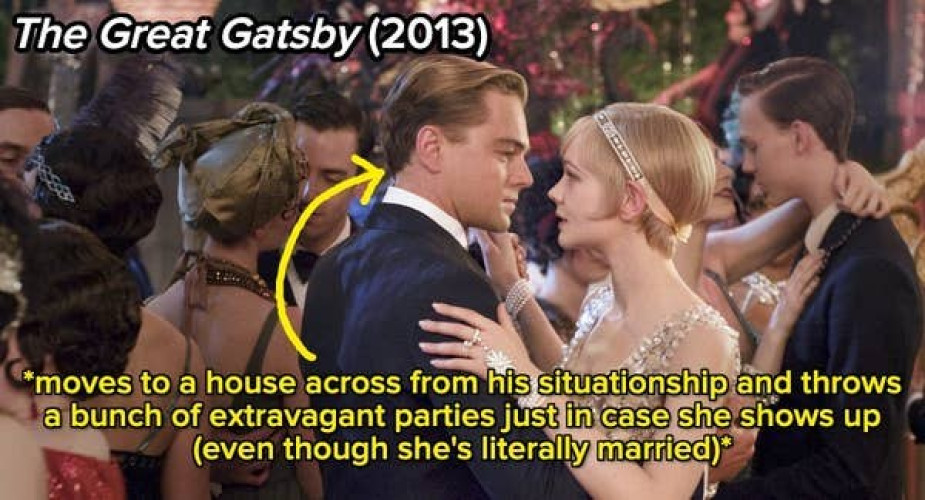
Romantic movies sometimes insist that persistence will eventually win someone over. Keep showing up at their workplace, find their home address, send flowers, and refuse to accept rejection until the person suddenly realizes you are their soulmate.
That behavior is not charming in real life. It can be stalking. The grand gesture only looks romantic because the story controls the other person’s feelings and edits out all the uncomfortable consequences.
10. Ductwork Is Not a Human-Sized Tunnel System
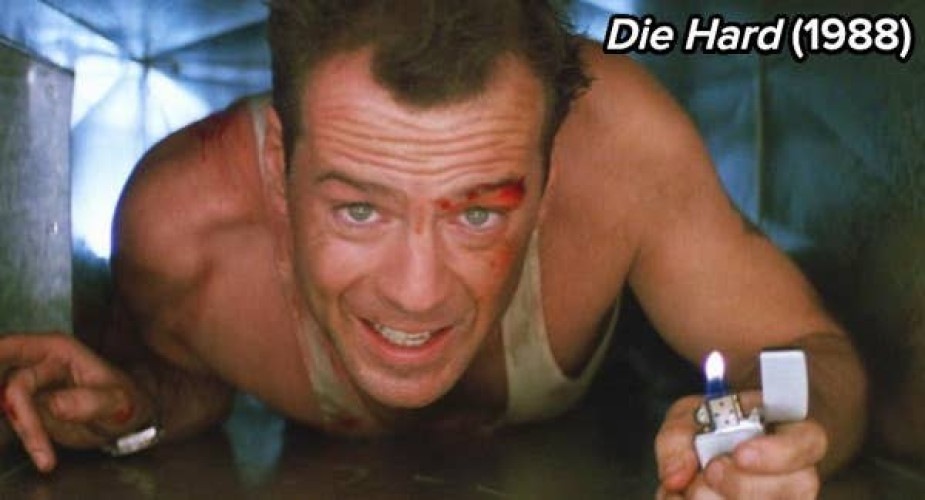
Action heroes regularly crawl through air ducts as if every building were designed with a secret hallway made from sheet metal. The ducts in many real buildings are too small, fragile, or poorly supported for an adult to travel through safely.
As one observer put it, the contractor would have had to build the system from the inside out. Die Hard gets a pass for entertainment value, but Bruce Willis probably should not have been able to make that journey.
11. Grenades Do Not Usually Create Giant Fireballs
Movies love turning grenades into miniature special-effects departments. They explode into towering fireballs, launch people through the air, and make every nearby window regret existing.
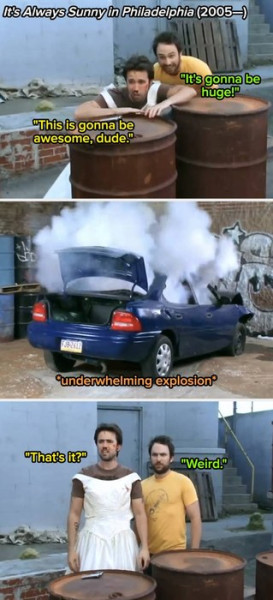
Real grenades are primarily designed to spread shrapnel. Their most dangerous effect is not necessarily a spectacular ball of flame. It’s Always Sunny in Philadelphia even joked about the anticlimax of a grenade producing a much less impressive explosion than expected.
12. Bullets Do Not Send People Flying Backward
Hollywood gunshots often launch victims across rooms as if bullets contain the force of a small car. In reality, bullets weigh only a few grams, while people weigh tens of thousands of grams.
Newton’s third law makes the movie version impossible in the way it is usually shown. A bullet can cause catastrophic injury, but it does not normally throw a full-grown adult backward like a stunt performer attached to a wire.
13. Tranquilizer Darts Do Not Knock Animals Out Instantly
A tranquilizer dart hits an animal in a movie, and the animal takes three steps before collapsing with perfect timing. Actual sedatives generally take time to work, and the animal may become confused, agitated, or unpredictable before it finally loses consciousness.
That delay is not a minor detail. Anyone trying to approach the animal too soon could be in serious danger. The dart is not an off button with a convenient countdown.
14. “Enhance” Cannot Turn Two Pixels Into Evidence
Crime dramas routinely zoom into a blurry image, press a few keys, and reveal a perfectly readable license plate from half a mile away. Real image software cannot recover details that the camera never captured.
Zooming in makes the pixels larger. It does not transform a fuzzy two-pixel shape into a crisp plate number. Somewhere, a forensic analyst is still waiting for television detectives to stop asking for impossible miracles.
15. Crime Labs Do Not Finish Every Test in an Hour
On television, investigators collect DNA, chemical residue, or another crime-scene sample in the morning and receive a complete answer before dinner. Real laboratory work can be much slower.
Some samples require days just to complete the extraction steps needed before the material can be placed on an instrument. The dramatic montage skips the waiting, preparation, documentation, and careful testing that make real results useful.
16. Humans Do Not Use Only 10% of Their Brains
The idea that people use only 10% of their brains has been around for more than a century, but it comes from a debunked theory. It is not a hidden scientific fact waiting for the right movie character to unlock.
That means the plot of Lucy is built on a myth, although the film is hardly the only one to use it. Unfortunately, there is no unused 90% waiting to turn you into a genius with excellent telekinetic timing.
17. New York Waitresses Do Not All Have Huge Apartments and Perfect Parking
Many sitcoms expect us to believe that a waitress working four hours a week can afford a suspiciously spacious New York apartment. Somehow, she also finds a parking spot directly in front of the building whenever the plot needs her to drive home.
That may be the least dangerous myth on this list, but it still asks viewers to suspend more disbelief than most science fiction. The real superpower is apparently rent control.
Which movie or TV myth did you believe for years before reality finally ruined the scene?
Some of these myths are harmless nonsense. Others can create dangerously wrong expectations in an emergency. Either way, Hollywood deserves a very dramatic courtroom objection.
1. Sprinklers Do Not All Go Off Together
Movies love the scene where someone holds a lighter under one sprinkler and suddenly the entire building erupts in water. Real sprinkler systems are much less theatrical. They are pipe networks filled with stagnant water, with each sprinkler head sealed by a heat-sensitive plug or glass tube.
When the temperature gets high enough, that individual sprinkler opens. A small flame waved beneath it will not activate every sprinkler in the building. Your pocket lighter is not a remote control for the fire department.
2. Defibrillators Do Not Restart a Flatlined Heart
That dramatic scene where a doctor shocks a completely flatlined patient back to life is one of Hollywood’s most persistent medical lies. Defibrillators are used to correct certain dangerous irregular heart rhythms by delivering an electrical pulse.
A flatline is not an irregular rhythm. It is the absence of a useful heartbeat, so shocking it is not the solution. The machine is not a giant “restart” button, no matter how loudly the doctor shouts for it.
3. CPR Usually Does Not Wake Anyone Up
On television, a few chest compressions are followed by a cough, a gasp, and a grateful look from the formerly dead person. In real life, someone receiving CPR generally does not regain consciousness while it is happening.
That misconception can be dangerous. People may stop after a few minutes because nothing appears to be changing, even though continuing CPR could help keep the person alive until paramedics arrive. The patient usually will not sit up and announce that they are fine. Keep going until professionals take over.
4. Labor Does Not Always Begin With a Perfectly Timed Water Break
Movies often treat childbirth like a stopwatch event: the water breaks, everyone panics, and the baby arrives 30 to 60 minutes later. Real labor is rarely that neat, especially for first-time mothers.
A birth lasting less than an hour is uncommon, and it can be an intense physical trauma. The cinematic version makes childbirth look like an inconvenient appointment that got moved up. It is considerably more demanding than that.
5. Newborn Babies Are Not Supposed to Look Like Toddlers
Film babies are sometimes so enormous and alert that they seem ready to ask for the Wi-Fi password. A supposed newborn may stare directly into the camera, weigh 17 pounds, and look like it has already completed kindergarten.
One commenter said she and her mother always joke about giant movie babies. Their running commentary includes, “That poor woman,” “That’s a second-grader,” and “That baby can drive.” The CGI baby Renesmee from Twilight remains difficult to forget.
6. Doctors Do Not Always Solve Every Medical Mystery
Television doctors will stay awake for three days, order one more test, and discover the rare condition just before the patient’s insurance-commercial break. People with chronic or unusual illnesses may experience something far less satisfying.
One cardiologist told a patient that the best option might be finding a doctor who enjoys puzzles, because many physicians give up when a case becomes difficult or falls outside the conditions they usually treat. That is not exactly the comforting speech from Grey’s Anatomy.
7. Police Departments Do Not Treat Every Case Like a Personal Mission
Law & Order: Special Victims Unit often portrays detectives as emotionally committed to every victim and determined to chase every lead until justice arrives. Real police departments have limited time, staff, and resources.
If a case cannot be solved in a few days, it may receive less attention, and the perpetrator may never be caught. That reality is much less satisfying than a detective staring intensely at a wall of photographs while inspirational music builds.
8. Chloroform Is Not an Instant Sleep Spell
In movies, someone presses a chloroform-soaked rag over a person’s mouth and nose, and the victim collapses almost immediately. Real chloroform does not work like a magical off switch.
The cinematic version turns a complicated, dangerous substance into a convenient kidnapping prop. It is also one reason film characters should stop letting suspicious people approach them with fabric.
9. Relentless Pursuit Is Not Automatically Romantic
Romantic movies sometimes insist that persistence will eventually win someone over. Keep showing up at their workplace, find their home address, send flowers, and refuse to accept rejection until the person suddenly realizes you are their soulmate.
That behavior is not charming in real life. It can be stalking. The grand gesture only looks romantic because the story controls the other person’s feelings and edits out all the uncomfortable consequences.
10. Ductwork Is Not a Human-Sized Tunnel System
Action heroes regularly crawl through air ducts as if every building were designed with a secret hallway made from sheet metal. The ducts in many real buildings are too small, fragile, or poorly supported for an adult to travel through safely.
As one observer put it, the contractor would have had to build the system from the inside out. Die Hard gets a pass for entertainment value, but Bruce Willis probably should not have been able to make that journey.
11. Grenades Do Not Usually Create Giant Fireballs
Movies love turning grenades into miniature special-effects departments. They explode into towering fireballs, launch people through the air, and make every nearby window regret existing.
Real grenades are primarily designed to spread shrapnel. Their most dangerous effect is not necessarily a spectacular ball of flame. It’s Always Sunny in Philadelphia even joked about the anticlimax of a grenade producing a much less impressive explosion than expected.
12. Bullets Do Not Send People Flying Backward
Hollywood gunshots often launch victims across rooms as if bullets contain the force of a small car. In reality, bullets weigh only a few grams, while people weigh tens of thousands of grams.
Newton’s third law makes the movie version impossible in the way it is usually shown. A bullet can cause catastrophic injury, but it does not normally throw a full-grown adult backward like a stunt performer attached to a wire.
13. Tranquilizer Darts Do Not Knock Animals Out Instantly
A tranquilizer dart hits an animal in a movie, and the animal takes three steps before collapsing with perfect timing. Actual sedatives generally take time to work, and the animal may become confused, agitated, or unpredictable before it finally loses consciousness.
That delay is not a minor detail. Anyone trying to approach the animal too soon could be in serious danger. The dart is not an off button with a convenient countdown.
14. “Enhance” Cannot Turn Two Pixels Into Evidence
Crime dramas routinely zoom into a blurry image, press a few keys, and reveal a perfectly readable license plate from half a mile away. Real image software cannot recover details that the camera never captured.
Zooming in makes the pixels larger. It does not transform a fuzzy two-pixel shape into a crisp plate number. Somewhere, a forensic analyst is still waiting for television detectives to stop asking for impossible miracles.
15. Crime Labs Do Not Finish Every Test in an Hour
On television, investigators collect DNA, chemical residue, or another crime-scene sample in the morning and receive a complete answer before dinner. Real laboratory work can be much slower.
Some samples require days just to complete the extraction steps needed before the material can be placed on an instrument. The dramatic montage skips the waiting, preparation, documentation, and careful testing that make real results useful.
16. Humans Do Not Use Only 10% of Their Brains
The idea that people use only 10% of their brains has been around for more than a century, but it comes from a debunked theory. It is not a hidden scientific fact waiting for the right movie character to unlock.
That means the plot of Lucy is built on a myth, although the film is hardly the only one to use it. Unfortunately, there is no unused 90% waiting to turn you into a genius with excellent telekinetic timing.
17. New York Waitresses Do Not All Have Huge Apartments and Perfect Parking
Many sitcoms expect us to believe that a waitress working four hours a week can afford a suspiciously spacious New York apartment. Somehow, she also finds a parking spot directly in front of the building whenever the plot needs her to drive home.
That may be the least dangerous myth on this list, but it still asks viewers to suspend more disbelief than most science fiction. The real superpower is apparently rent control.
Which movie or TV myth did you believe for years before reality finally ruined the scene?