
The Disappearance of a Tribute to Heroes
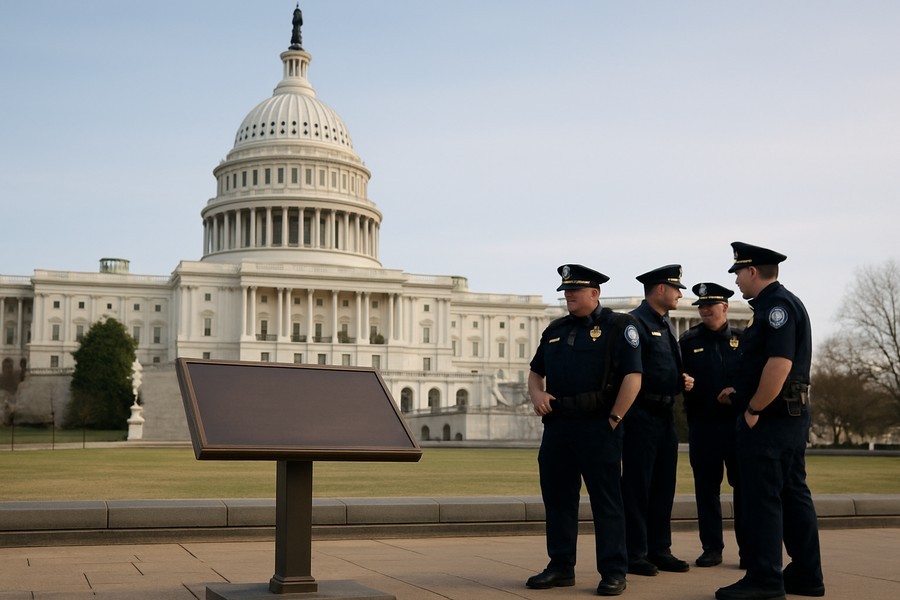
As we approach the fifth-year mark of the notorious attack on our nation's capital, the official plaque that was created to honor the brave police officers who defended democracy that day is missing.
The plaque, which by law should be displayed at the Capitol, is not in place. It's believed to be tucked away in storage, but its exact location remains a mystery.
The Unveiling That Never Happened
The responsibility for unveiling the plaque rested on the shoulders of the House Speaker, a Republican representative from Louisiana. However, he has yet to officially reveal the plaque. Furthermore, the country's legal authority is attempting to dismiss a lawsuit by police officers demanding that the plaque be exhibited as planned. The entity responsible for obtaining and displaying the plaque refrained from commenting, citing ongoing legal proceedings.
A Makeshift Memorial
About 100 congressional members, mostly from the Democratic party, have taken it upon themselves to commemorate the event. They've created and displayed replicas of the plaque outside their office doors. These faux bronze stand-ins bear the words, "On behalf of a grateful Congress, this plaque honors the extraordinary individuals who bravely protected and defended this symbol of democracy on Jan. 6, 2021. Their heroism will never be forgotten."
The Missing Piece of History
In a city filled with historical monuments, this plaque was meant to be a simple, yet enduring reminder of the violent event that took place near the Capitol's west front. The absence of the plaque, however, has led to a culture of forgetting. Visitors can walk through the halls of the Capitol without any official reminder of the day that saw a mob of supporters of the former President storm the building in an attempt to overturn the election results. This lack of a formal memory marker is allowing for the spread of revised histories and alternative narratives.
Shifting Memories and Lasting Violence
The violent event resulted in the deaths of at least five individuals, including a supporter of the former President who was shot by the police. Over 140 law enforcement officers were injured, some severely, and several died, some by suicide. A total of around 1,500 people were charged in the attack, marking one of the largest federal prosecutions in history. However, all of them were pardoned when the former President returned to power.
The Importance of Remembering
Unlike other important events in our nation's history, like the Sept. 11 attack or the Oklahoma City bombing, the failure to recognize January 6 has left a gap in our collective memory. It has also hindered the process of healing and unifying the country. As one Democratic Representative from Pennsylvania aptly put it, "That's why you put up a plaque. You respect the memory and the service of the people involved."
The Legal Battle
While the Speaker's office has suggested that they were working on installing the plaque, they have not responded to requests for further comments. The plaque was approved as part of a broader government funding package in March 2022, with instructions to list the names of officers "who responded to the violence that occurred." Two officers who battled the mob that day even filed a lawsuit over the delay in installation.
The Justice Department is seeking to dismiss their case, arguing that Congress has already publicly recognized the service of law enforcement personnel by approving the plaque. The department also pointed out the logistical challenge of including the names of all 3,600 officers involved in the response that day.
A Call to Remember
Despite the controversy, lawmakers who have installed replicas of the plaque outside their offices insist on the importance of public awareness. They emphasize the need to remember how close we came to losing our democracy that day. As the number of makeshift plaques increase, it serves as a testament to the importance of remembering that fateful day.
"We should stop this silliness of trying to whitewash history -- it's not going to happen," said a Democratic representative from New York. "I was here that day so I'll never forget. I think that Americans will not forget what happened."
So instead of one plaque, there are "now got 100."