
A two-minute video about male birth control managed to start a much bigger argument: why does reproductive care look so calm and carefully numbed for men while women are so often told to take deep breaths and endure it?
Dr. Bruce Sloane, a Philadelphia-based urologist, posted a demonstration of a vasectomy on Instagram and TikTok. The clip showed the procedure from start to finish on a training model of a scrotum—and quickly gave viewers a very clear look at who gets pain management treated as standard.
The Video Was Short. The Argument Wasn't.
The informational clip went up on Oct. 9 and eventually collected nearly 8 million views and more than 14,000 comments. People came for a medical demonstration and stayed for the reproductive-care debate waiting in the wings.
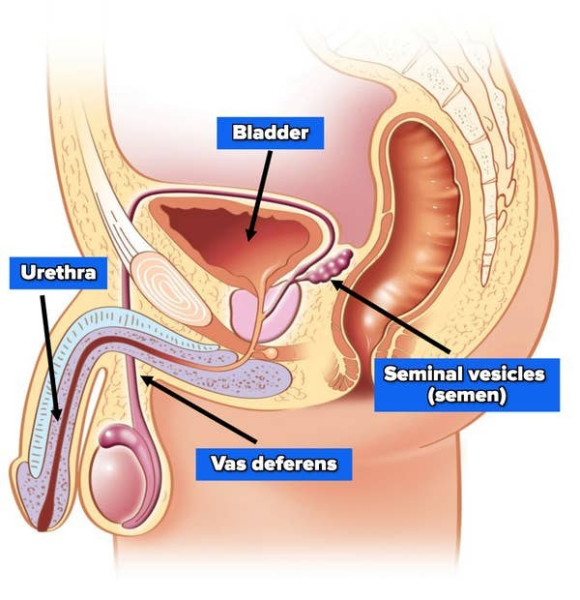
First, the basic anatomy: a vasectomy is a form of male birth control. The doctor cuts and closes the vas deferens, the tube that carries sperm away from the testicle, so sperm can no longer leave the body. Semen can still leave the body afterward; it simply does not contain sperm. The procedure usually takes about 15 minutes, is commonly performed in a doctor's office rather than a hospital, and is described as completely reversible.
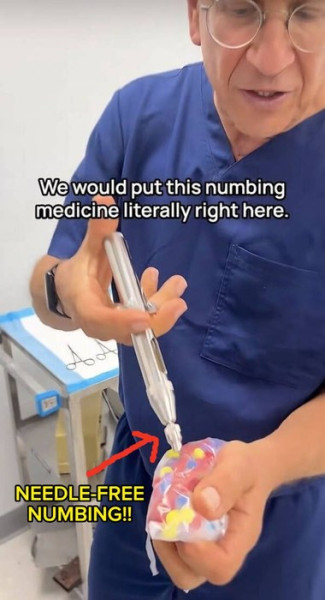
Right away, the demonstration made one detail impossible to miss: this was a no-needle, no-scalpel procedure. Instead of using a conventional needle, Dr. Sloane administered the numbing medication with a MadaJet, a specialized device that pushes anesthetic through the skin.
Once the area was numb, he used surgical scissors to make a small incision and expose the vas deferens just beneath the skin.
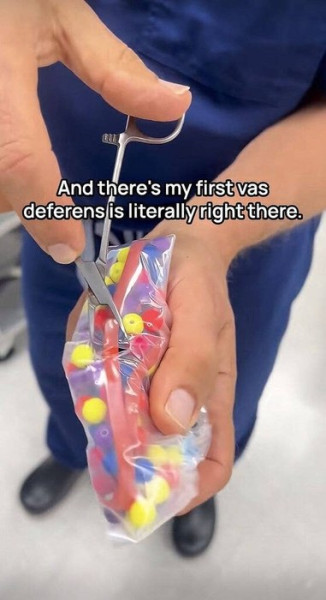
He then pulled several centimeters of the tube outward and secured it with a clamp.
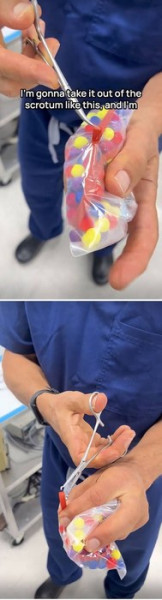
Next came the step that made viewers instinctively cross their legs: Dr. Sloane used the scissors to sever the exposed vas deferens.
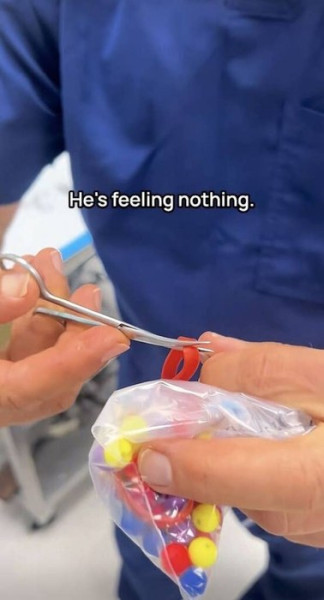
To seal the two ends, he cauterized one side and placed a surgical clip on the other. After returning both ends to the scrotum, he covered the opening with a small bandage.
Then the Comparisons Started
The video was not trying to compare vasectomies with gynecological procedures. The comment sections on Instagram and TikTok did that on their own.
Women pointed out that localized anesthesia or numbing medication is uncommon during many gynecological procedures. And when numbing is used, they said, it may involve a large syringe that hurts before the procedure even begins.
“Oh so you can give anesthesia pain relief without needles, women just aren’t allowed to get it. Got it.”
That comment took off because it captured the whole mood: sarcastic, angry, and exhausted. Watching a doctor explain each step while a reproductive procedure was performed with visible attention to comfort made many women think about how differently their own pain had been handled.
“Deep Breaths” Wasn't Going to Cut It
Many commenters described women's reproductive care as outdated and unnecessarily painful by comparison. The complaint was not that a vasectomy should hurt more. Nobody was campaigning for additional suffering. The problem was seeing comfort treated as an obvious part of one reproductive procedure while pain is still brushed aside during so many others.
Women referred to painful examinations, biopsies, insertions, and other procedures performed with little or no adequate anesthesia. Against the vasectomy demonstration, those experiences looked less like unavoidable medical realities and more like a system that had decided women could simply tolerate them.
That is why “deep breaths” became such a loaded phrase. Breathing may help with anxiety, but it is not pain relief. Telling someone to relax does not make a painful procedure painless, and it can leave patients feeling unreasonable for objecting to something that genuinely hurts.
Birth Control Made the Contrast Sharper
The reaction was also about the broader menu of birth-control options offered to men and women.
The video showed male birth control as a brief office procedure involving the vas deferens, a few instruments, cauterization, a clip, and a bandage. Female birth control often involves choosing among pills, implants, injections, intrauterine devices, or permanent procedures, each with its own possible side effects, discomforts, and decisions about how much pain a patient is expected to accept.
That does not make a vasectomy nothing. It is still surgery, and it involves cutting and sealing a body structure. But the calm, matter-of-fact presentation made viewers ask why the same assumption of comfort is not applied more consistently to women's reproductive care.
A short educational video had ended up putting medical pain management, gender, and patient credibility on trial. All it needed was a training model, a MadaJet, a pair of scissors, and a comment section full of women who had heard “deep breaths” enough times already.
Did the vasectomy demonstration change how you think pain is handled in reproductive care?
Dr. Bruce Sloane, a Philadelphia-based urologist, posted a demonstration of a vasectomy on Instagram and TikTok. The clip showed the procedure from start to finish on a training model of a scrotum—and quickly gave viewers a very clear look at who gets pain management treated as standard.
The Video Was Short. The Argument Wasn't.
The informational clip went up on Oct. 9 and eventually collected nearly 8 million views and more than 14,000 comments. People came for a medical demonstration and stayed for the reproductive-care debate waiting in the wings.
First, the basic anatomy: a vasectomy is a form of male birth control. The doctor cuts and closes the vas deferens, the tube that carries sperm away from the testicle, so sperm can no longer leave the body. Semen can still leave the body afterward; it simply does not contain sperm. The procedure usually takes about 15 minutes, is commonly performed in a doctor's office rather than a hospital, and is described as completely reversible.
Right away, the demonstration made one detail impossible to miss: this was a no-needle, no-scalpel procedure. Instead of using a conventional needle, Dr. Sloane administered the numbing medication with a MadaJet, a specialized device that pushes anesthetic through the skin.
Once the area was numb, he used surgical scissors to make a small incision and expose the vas deferens just beneath the skin.
He then pulled several centimeters of the tube outward and secured it with a clamp.
Next came the step that made viewers instinctively cross their legs: Dr. Sloane used the scissors to sever the exposed vas deferens.
To seal the two ends, he cauterized one side and placed a surgical clip on the other. After returning both ends to the scrotum, he covered the opening with a small bandage.
Then the Comparisons Started
The video was not trying to compare vasectomies with gynecological procedures. The comment sections on Instagram and TikTok did that on their own.
Women pointed out that localized anesthesia or numbing medication is uncommon during many gynecological procedures. And when numbing is used, they said, it may involve a large syringe that hurts before the procedure even begins.
“Oh so you can give anesthesia pain relief without needles, women just aren’t allowed to get it. Got it.”
That comment took off because it captured the whole mood: sarcastic, angry, and exhausted. Watching a doctor explain each step while a reproductive procedure was performed with visible attention to comfort made many women think about how differently their own pain had been handled.
“Deep Breaths” Wasn't Going to Cut It
Many commenters described women's reproductive care as outdated and unnecessarily painful by comparison. The complaint was not that a vasectomy should hurt more. Nobody was campaigning for additional suffering. The problem was seeing comfort treated as an obvious part of one reproductive procedure while pain is still brushed aside during so many others.
Women referred to painful examinations, biopsies, insertions, and other procedures performed with little or no adequate anesthesia. Against the vasectomy demonstration, those experiences looked less like unavoidable medical realities and more like a system that had decided women could simply tolerate them.
That is why “deep breaths” became such a loaded phrase. Breathing may help with anxiety, but it is not pain relief. Telling someone to relax does not make a painful procedure painless, and it can leave patients feeling unreasonable for objecting to something that genuinely hurts.
Birth Control Made the Contrast Sharper
The reaction was also about the broader menu of birth-control options offered to men and women.
The video showed male birth control as a brief office procedure involving the vas deferens, a few instruments, cauterization, a clip, and a bandage. Female birth control often involves choosing among pills, implants, injections, intrauterine devices, or permanent procedures, each with its own possible side effects, discomforts, and decisions about how much pain a patient is expected to accept.
That does not make a vasectomy nothing. It is still surgery, and it involves cutting and sealing a body structure. But the calm, matter-of-fact presentation made viewers ask why the same assumption of comfort is not applied more consistently to women's reproductive care.
A short educational video had ended up putting medical pain management, gender, and patient credibility on trial. All it needed was a training model, a MadaJet, a pair of scissors, and a comment section full of women who had heard “deep breaths” enough times already.
Did the vasectomy demonstration change how you think pain is handled in reproductive care?