
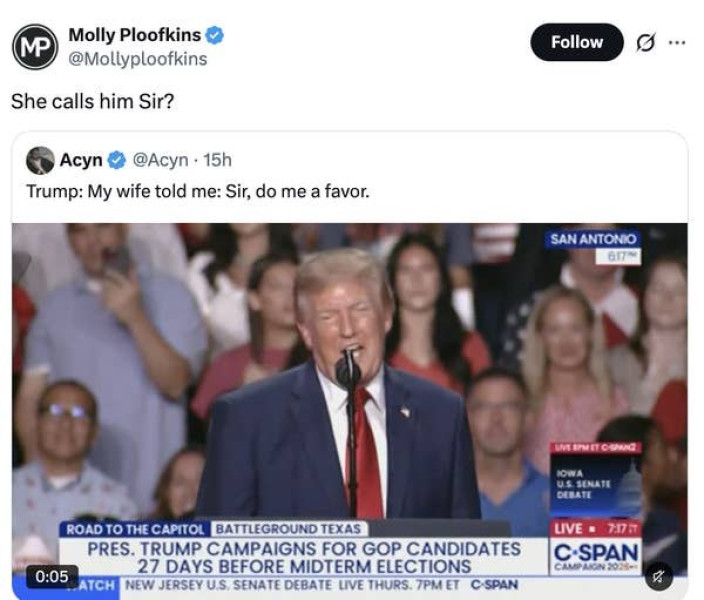
A speech about veganism took an unexpected turn when Donald Trump brought up a detail about his marriage. While speaking, he said that his wife, Melania, calls him “sir.” The remark was brief, but it stood out from the subject he had been discussing. It also left listeners wondering whether he meant it literally, whether it was a joke, or what the couple’s conversations are like in private.
An Unexpected Detail


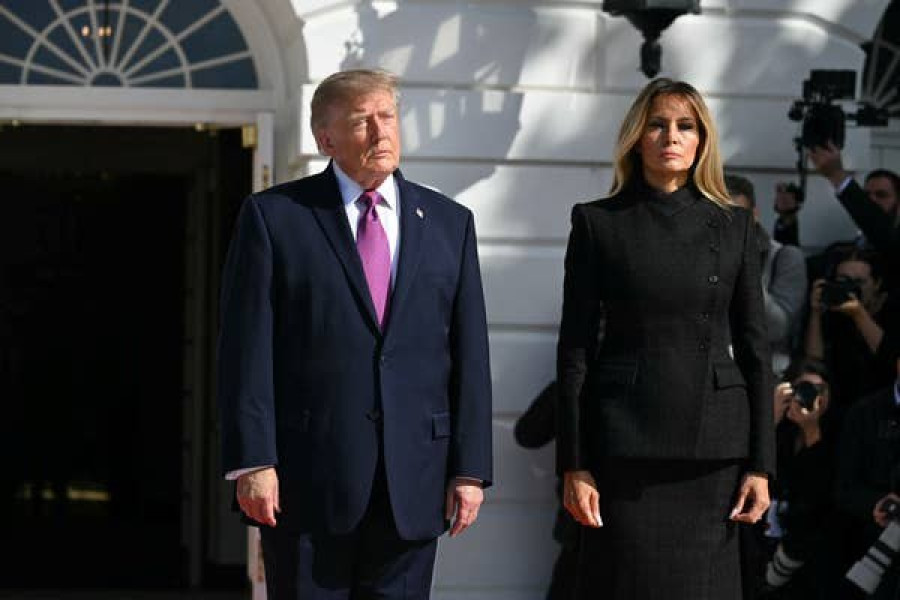
The comment was notable because it concerned the way Trump says his wife addresses him. Rather than offering a longer explanation, he shared the detail casually as part of a speech about vegans. That sudden shift in topic made the remark seem unusual to people who heard it. The contrast between the subject of the speech and the personal aside helped draw attention to the moment.
What can be taken from the account is limited: Trump said that Melania calls him “sir.” There is no additional information here about when she might use the word, how often she says it, or what tone she uses. The remark does not explain whether it is a private habit, a playful expression, or a formal way of speaking. Those details were not included, leaving room for listeners to interpret the statement in different ways.
Listeners Ask What He Meant
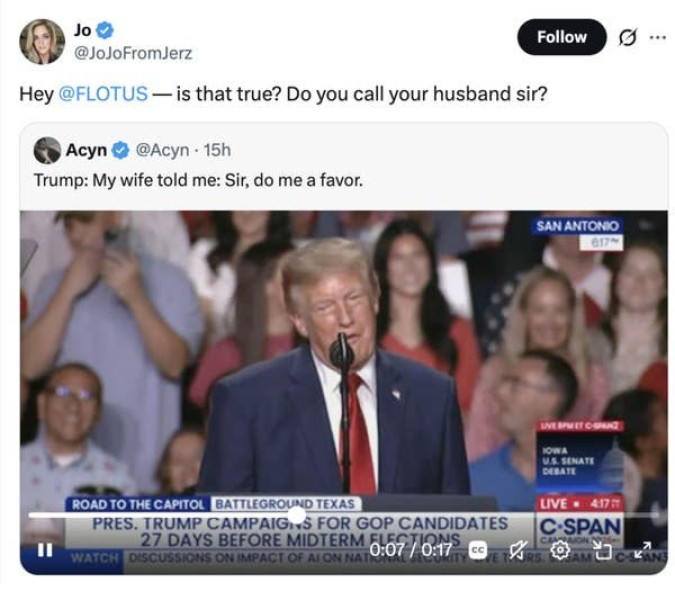
People responded with questions about the claim, focusing on whether Melania really uses that form of address. Some asked directly if she calls her husband “sir.” Others wondered when she might say it, turning the lack of context into part of the discussion. One person even addressed Melania with a question about whether the claim was true.
The responses showed that many listeners were less interested in the speech’s original subject than in the relationship detail that interrupted it. The word “sir” can sound respectful, formal, playful, or distant, depending on the situation. Without more context, no single interpretation is certain. That uncertainty helps explain why a short remark became a point of conversation.
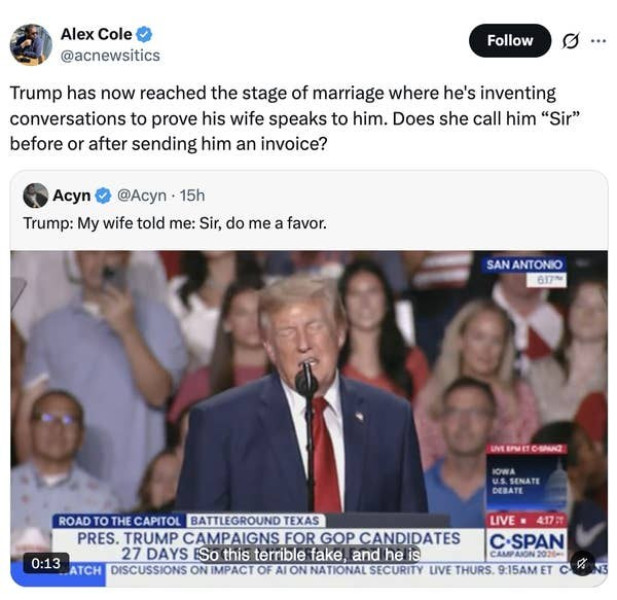
Some replies used humor to react to the idea. One joked about whether the word might be used before an invoice was sent. The joke did not establish anything about the couple’s finances or private arrangements; it was simply a comic response to the unusual phrasing. Other comments treated the remark as strange on its own, asking why a spouse would address her husband that way.
A Familiar Kind of Story
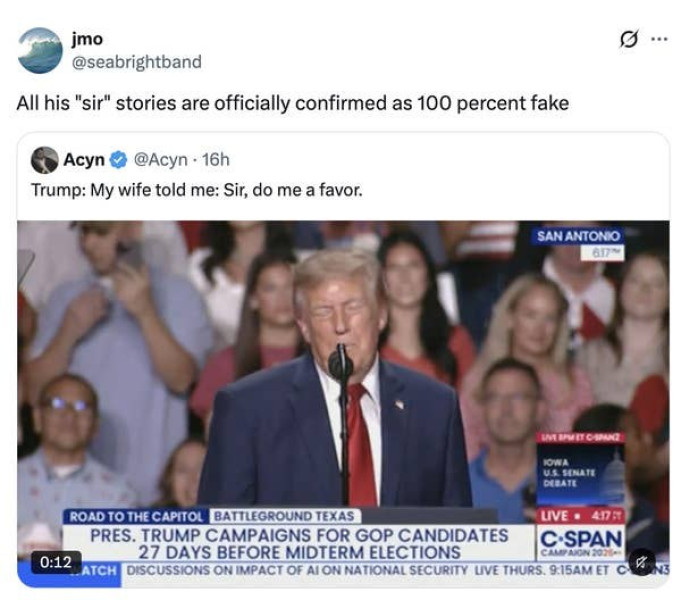
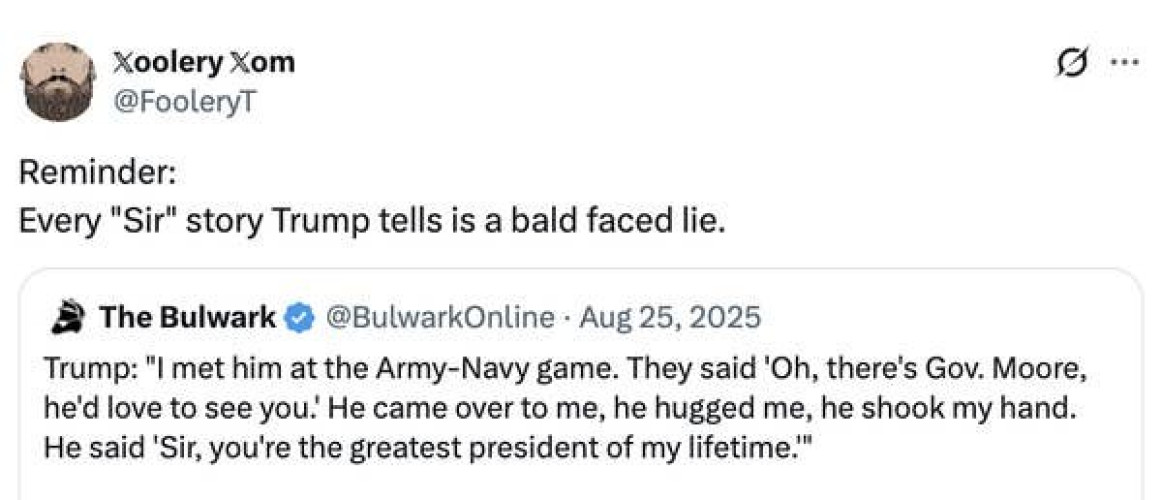
The remark also reminded some listeners of other stories Trump has told in which people supposedly call him “sir.” In the account provided, those stories are described as a recurring feature of his public remarks. The current comment therefore did not land in isolation: it fit a pattern some people already recognized.
That history shaped how some listeners responded. A commenter claimed that all of Trump’s “sir” stories had been proven false. That statement was a reaction from a member of the public, not evidence presented in the account. The available information does not confirm whether the claim about Melania is accurate, nor does it provide support for the commenter’s broader accusation. It is important to keep those separate: one is Trump’s reported statement, and the other is someone’s response to it.
Without independent details, the moment cannot establish how Melania actually addresses her husband in private. It shows what Trump said in public and how some people reacted. Whether listeners accept the remark, doubt it, or take it as a joke depends on information that is not included here. The distinction matters because a reported statement and a verified fact are not always the same thing.
Humor Becomes Part of the Reaction
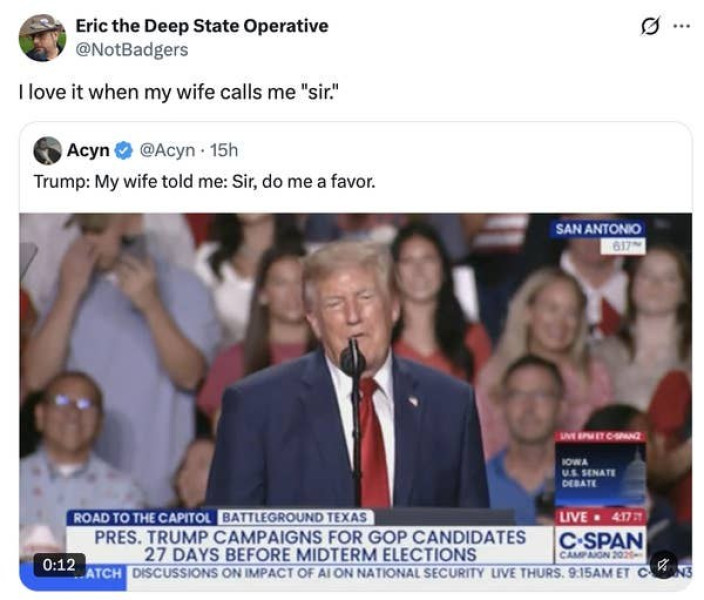
Alongside questions and skepticism, some people responded by making light of the situation. One person wrote that they enjoyed being called “sir” by their own wife. The comment shifted attention away from whether Trump’s account was true and toward the amusing image of a spouse using such a formal title at home.
That response also captured the contrast behind the conversation. “Sir” is often associated with politeness or formal respect, while marriage is usually imagined as a close and familiar relationship. Putting the two together can sound funny or awkward, especially when no explanation is offered. Still, the humor says more about how the remark struck its audience than it does about the couple’s actual habits.
Different reactions can coexist. Some listeners treated the comment as a genuine statement and wanted to know whether Melania would confirm it. Others found the wording odd, while some connected it to Trump’s earlier “sir” stories. And some chose to joke about the phrase itself. None of those responses, on its own, settles whether the account is accurate.
What the Moment Does and Does Not Show
The episode offers a small glimpse of a public speech taking an unexpected personal turn. It does not provide a detailed account of the marriage, explain the couple’s private communication, or establish how Melania feels about the expression. It also does not tell listeners whether Trump was being serious. Those gaps are central to the story: the statement attracted attention, but the information available does not answer the questions it raised.
For that reason, the most careful summary is straightforward. Trump said that Melania calls him “sir” during a speech about veganism. Listeners reacted with curiosity, disbelief, and humor. Some recognized a broader pattern in his stories involving the same form of address, while others focused on how unusual the remark sounded. Beyond those points, the account offers no confirmation from Melania and no further explanation from Trump.
A brief aside can become a conversation when it is surprising, personal, and unexplained. In this case, the word “sir” turned a speech about one topic into a discussion about a reported detail of a marriage. The reactions reveal how listeners interpreted the comment, but not whether it reflects the couple’s private life. Until more context is available, the claim remains a statement that drew questions rather than a detail that has been independently confirmed.
An Unexpected Detail
The comment was notable because it concerned the way Trump says his wife addresses him. Rather than offering a longer explanation, he shared the detail casually as part of a speech about vegans. That sudden shift in topic made the remark seem unusual to people who heard it. The contrast between the subject of the speech and the personal aside helped draw attention to the moment.
What can be taken from the account is limited: Trump said that Melania calls him “sir.” There is no additional information here about when she might use the word, how often she says it, or what tone she uses. The remark does not explain whether it is a private habit, a playful expression, or a formal way of speaking. Those details were not included, leaving room for listeners to interpret the statement in different ways.
Listeners Ask What He Meant
People responded with questions about the claim, focusing on whether Melania really uses that form of address. Some asked directly if she calls her husband “sir.” Others wondered when she might say it, turning the lack of context into part of the discussion. One person even addressed Melania with a question about whether the claim was true.
The responses showed that many listeners were less interested in the speech’s original subject than in the relationship detail that interrupted it. The word “sir” can sound respectful, formal, playful, or distant, depending on the situation. Without more context, no single interpretation is certain. That uncertainty helps explain why a short remark became a point of conversation.
Some replies used humor to react to the idea. One joked about whether the word might be used before an invoice was sent. The joke did not establish anything about the couple’s finances or private arrangements; it was simply a comic response to the unusual phrasing. Other comments treated the remark as strange on its own, asking why a spouse would address her husband that way.
A Familiar Kind of Story
The remark also reminded some listeners of other stories Trump has told in which people supposedly call him “sir.” In the account provided, those stories are described as a recurring feature of his public remarks. The current comment therefore did not land in isolation: it fit a pattern some people already recognized.
That history shaped how some listeners responded. A commenter claimed that all of Trump’s “sir” stories had been proven false. That statement was a reaction from a member of the public, not evidence presented in the account. The available information does not confirm whether the claim about Melania is accurate, nor does it provide support for the commenter’s broader accusation. It is important to keep those separate: one is Trump’s reported statement, and the other is someone’s response to it.
Without independent details, the moment cannot establish how Melania actually addresses her husband in private. It shows what Trump said in public and how some people reacted. Whether listeners accept the remark, doubt it, or take it as a joke depends on information that is not included here. The distinction matters because a reported statement and a verified fact are not always the same thing.
Humor Becomes Part of the Reaction
Alongside questions and skepticism, some people responded by making light of the situation. One person wrote that they enjoyed being called “sir” by their own wife. The comment shifted attention away from whether Trump’s account was true and toward the amusing image of a spouse using such a formal title at home.
That response also captured the contrast behind the conversation. “Sir” is often associated with politeness or formal respect, while marriage is usually imagined as a close and familiar relationship. Putting the two together can sound funny or awkward, especially when no explanation is offered. Still, the humor says more about how the remark struck its audience than it does about the couple’s actual habits.
Different reactions can coexist. Some listeners treated the comment as a genuine statement and wanted to know whether Melania would confirm it. Others found the wording odd, while some connected it to Trump’s earlier “sir” stories. And some chose to joke about the phrase itself. None of those responses, on its own, settles whether the account is accurate.
What the Moment Does and Does Not Show
The episode offers a small glimpse of a public speech taking an unexpected personal turn. It does not provide a detailed account of the marriage, explain the couple’s private communication, or establish how Melania feels about the expression. It also does not tell listeners whether Trump was being serious. Those gaps are central to the story: the statement attracted attention, but the information available does not answer the questions it raised.
For that reason, the most careful summary is straightforward. Trump said that Melania calls him “sir” during a speech about veganism. Listeners reacted with curiosity, disbelief, and humor. Some recognized a broader pattern in his stories involving the same form of address, while others focused on how unusual the remark sounded. Beyond those points, the account offers no confirmation from Melania and no further explanation from Trump.
A brief aside can become a conversation when it is surprising, personal, and unexplained. In this case, the word “sir” turned a speech about one topic into a discussion about a reported detail of a marriage. The reactions reveal how listeners interpreted the comment, but not whether it reflects the couple’s private life. Until more context is available, the claim remains a statement that drew questions rather than a detail that has been independently confirmed.