
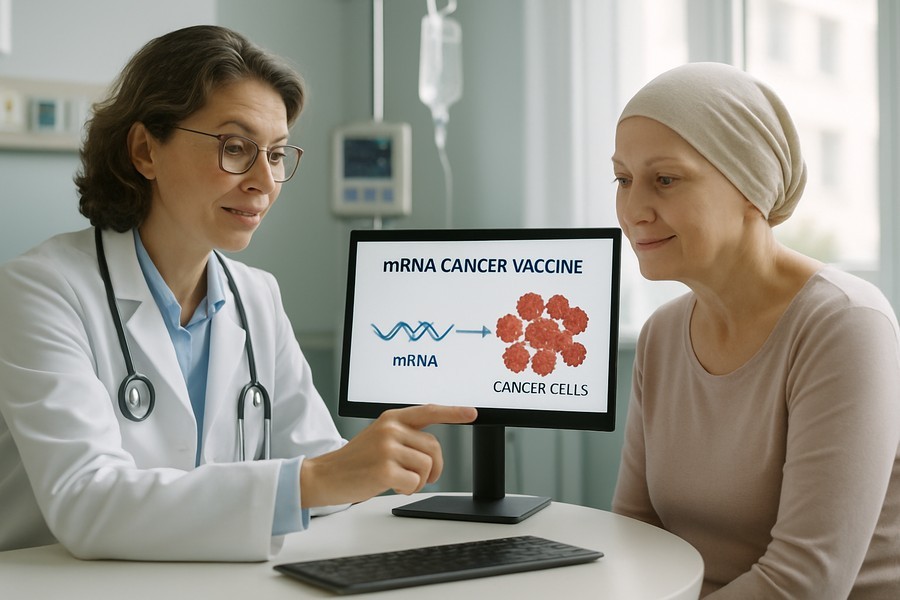
A New Hope: mRNA Vaccines Show Promise in Cancer Treatment
A school librarian's life took a sudden turn when she experienced severe back pain at her Oceanside, New York home. The pain, initially mistaken for acid reflux, led her to the emergency room where she was diagnosed with a pancreatic tumor. This marked the beginning of her journey into an innovative and often controversial field of cancer research.
The Harsh Reality of Pancreatic Cancer
Pancreatic cancer is known for its ruthlessness. Only one in four patients survives a year after their diagnosis, and a mere one in ten makes it past two years. Pancreatic cancer research has therefore been a priority for scientists. A promising area of study lies in Messenger RNA, or mRNA, a molecule that carries genetic information from DNA to direct the formation of proteins. This technology was adapted for use in the Covid vaccines by a German company and has been under investigation for cancer treatments for nearly a decade.
mRNA Vaccines: A New Frontier in Cancer Research
mRNA vaccines have been a source of hope and excitement in cancer research circles. Despite facing political backlash due to their application in Covid vaccines, which resulted in funding cuts and threats to potential cancer treatments, the mRNA technology train appears to still be on track. Scientists highlight a number of successes in early-stage trials, and the National Cancer Institute has even announced its intention to raise $200 million specifically for novel cancer vaccines, including mRNA ones.
Vaccine Development: A Complex Process
Creating a vaccine against cancer is more challenging than doing so against a virus or bacteria. This is because our immune system is hard-wired to recognize viruses and pathogens as foreign, while cancer originates from our own tissues. Scientists have been studying pancreatic tumors to develop an mRNA-based vaccine against pancreatic cancer, in combination with standard immunotherapy and chemotherapy. The idea is to teach each individual's immune system how to recognize and fight their individual cancer, thus creating a personalized vaccine.
Trials and Triumphs: One Woman's Journey
The school librarian, after having her tumor surgically removed, agreed to participate in a trial for this experimental vaccine. Her tumor was preserved and processed into a personalized vaccine. Despite severe chemotherapy side effects that led to her treatment being halted, the librarian survived and is still doing well more than six years later, showing no sign of cancer. Of the 16 patients in the trial, half showed a dramatic immune response to the mRNA-based vaccine. Seven of these eight patients are alive and well six years after the trial began. This promising result has led to a larger multisite trial.
Future Prospects: mRNA Vaccines and Cancer Treatment
Despite the small sample size, the trial provides proof of concept for the promise of mRNA-based vaccines. There are also other promising developments in pancreatic cancer treatment. For example, an experimental drug has reportedly caused tumors to shrink in a former U.S senator battling advanced pancreatic cancer. This drug nearly doubled the survival time to 13.2 months in patients whose cancer had spread.
Challenges and Controversies: The Road Ahead
Despite the promise of mRNA vaccines, the field has faced significant backlash in the wake of the pandemic due to public concerns over Covid vaccines. There has been a decrease in funding, and researchers have reported difficulty recruiting people into clinical trials due to mistrust of mRNA vaccines. However, there is still hope. Scientists are testing mRNA vaccines in combination with immunotherapy drugs as treatments for various types of cancers, including melanoma, lung cancer, bladder cancer, and renal cell carcinoma. Research continues in the hope of creating a new paradigm in cancer treatment.