
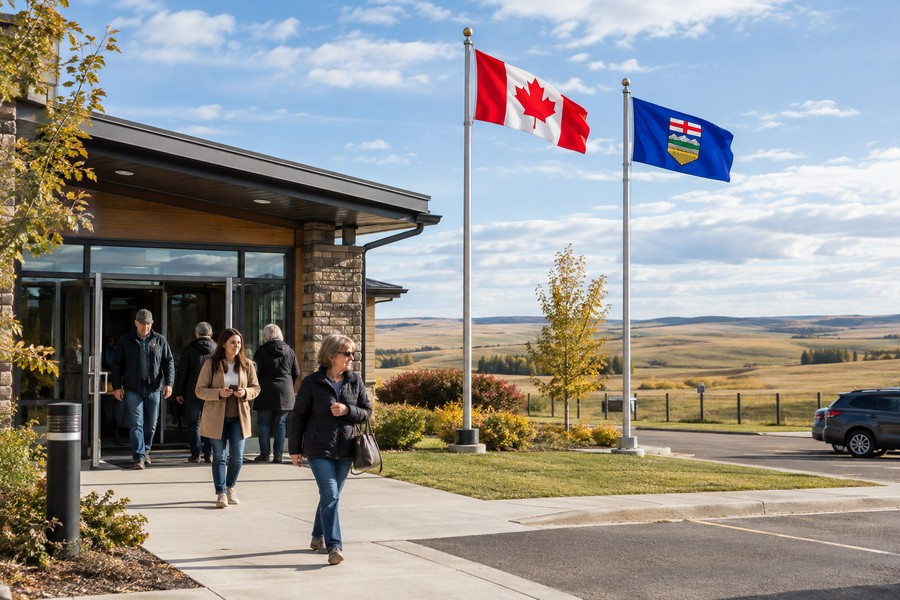
Alberta Voters Choose to Stay in Canada
A Clear Result for National Unity
Voters in Alberta have rejected a proposal to begin the process of leaving Canada. With more than one million ballots counted, about 77% supported staying in the country, while 23% favored taking steps toward separation. The results are unofficial.
The vote did not ask Albertans to decide whether to become independent right away. Instead, a “yes” result would have moved the province toward holding a later vote on leaving Canada.
Prime Minister Mark Carney said the result showed that Albertans want to build a future with the rest of the country. He said the vote gives Canada room to work together, expand trade with more countries, build major projects, and grow its role as a global energy supplier, with Alberta playing a central part.
Alberta Premier Danielle Smith also welcomed the early result. She said voters had backed a stronger Alberta within a united Canada. Smith had called the referendum while facing pressure from independence supporters in her governing party, though she does not support separation.
Separation Supporters Say Their Cause Will Continue
Leaders of the independence movement said the early count did not tell the whole story. Keith Wilson, a leader in the movement, said the totals could still change. He argued that the support for separation showed that many Albertans believe the province is not being treated fairly.
Separatist groups have traditionally drawn only a small share of voters. Former premier Jason Kenney said anger over COVID-19 rules helped bring activists together, and some later joined the independence movement. Despite the referendum result, its leaders say the cause has grown beyond a fringe position and will remain active.
Jeff Rath, an advocate for separation, had said he would be pleased if 30% of voters supported starting the process. He also called for Smith to be removed as leader of her party. Rath said the party could split, possibly leading to a new party that supports independence.
Alberta’s Longstanding Frustration
Alberta has some of the world’s largest proven oil reserves and is known for its conservative politics and western ranching culture. Many people in the province feel distant from the federal government in Ottawa. Alberta’s political identity has often seemed closer to the American West than to other parts of Canada.
That frustration has not usually meant broad support for leaving the country. But some voters who backed separation said they believe the federal government takes too much from Alberta and gives too little back.
Dustin Degenhardt, who voted in Wainwright, said he felt the province had been treated like a colony. Taylor MacIsaac, another voter from the town, supported separation and said it appealed to her as a conservative who grew up in rural Alberta.
Calls to Focus on Shared Challenges
Carney had urged voters to support unity, warning that the country’s future depended on it. He grew up in Edmonton, Alberta’s capital, and has tried to build support in a province where Liberal prime ministers have often been unpopular.
His push for unity has come as U.S. President Donald Trump has imposed a trade conflict with Canada and made threats about bringing the country under U.S. control. Those comments have helped Carney argue that Canadians should stand together.
Thomas Lukaszuk, a former Alberta deputy premier who led a campaign against separation, told supporters that Canada remains united across the country. Some voters shared that view. Jake Graham, a Calgary resident who attended a Carney rally wearing clothing decorated with Canadian symbols, said he hoped the result would quiet the independence debate for a long time.
Dave Malka, an Edmonton resident, questioned the cost of holding a referendum that could lead to another referendum. He said the money could have gone toward health care. Malka also argued that the vote came at a time when Canada should be pulling together because of the pressure from the United States.
Voting Delays and What Comes Next
The count took longer after more than 100 polling places had to keep voting open late because they opened behind schedule. Smith said she planned to speak publicly about the result and Alberta’s future.
For now, the vote has delivered a clear majority for remaining in Canada. But independence supporters say the concerns behind their movement have not gone away. The result settles the question asked in this referendum, while leaving a wider debate over Alberta’s place in Canada alive.