
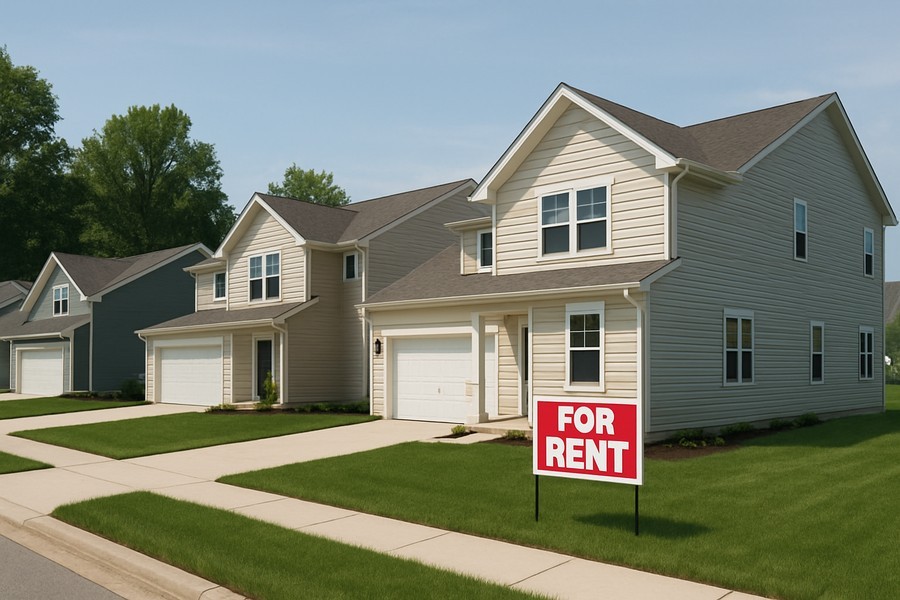
A Potential Solution to America's Housing Affordability Woes: Rental Homes
The cost of owning a home in the US has spiraled out of control, making it unaffordable for many. One possible solution to this problem is increasing the construction of rental homes.
Consider the case of Joanne LaZette, an 87-year-old resident who wanted to move but couldn't bear the thought of sharing walls with noisy neighbors in an apartment complex. She also didn't want the financial and maintenance burdens that come with homeownership. So, she chose a third option - renting a newly built home.
The Growing Trend of Build-to-Rent
LaZette's situation is not unique. In fact, about 7% of new single-family homes hitting the market are constructed for rent, not sale. The trend of 'build-to-rent' homes has seen a significant increase, with the completion rate being more than ten times higher compared to a decade ago.
These homes are often built by companies specializing in 'build-to-rent' housing, particularly in areas where population growth is high and land is plentiful. They're even popping up in locations such as Ohio and Utah.
Initially, it was thought that these homes would attract former homeowners who had experienced foreclosure and couldn't afford to buy again. However, it turns out that most tenants are young professionals. These folks want the lifestyle that comes with living in a single-family home but aren't ready or interested in owning one.
The other group that these homes attract is older individuals who don't want the responsibility of buying and maintaining a house at their stage of life.
How Build-to-Rent Helps Affordability
Supporters of the 'build-to-rent' trend argue that it helps make both renting and owning more affordable. They believe that by increasing the supply of housing, it helps drive down the cost for everyone.
It's no secret that owning a home has become increasingly out of reach for many Americans. The income required to own a typical home is around $110,000 a year, which is about 29% higher than the median household income. According to housing experts, the primary problem with the US housing market is a lack of supply. New households are forming faster than new homes are being built, creating a housing shortfall of over 4 million.
That's why proponents believe that the 'build-to-rent' trend is beneficial. These homes might not have been built otherwise, and their addition to the housing supply helps to lower prices for both renters and buyers.
The Changing Face of Homeownership and the Need for Rental Homes
Homeownership has traditionally been a cornerstone of the American dream. However, this may be changing as more people embrace long-term renting. A recent study found that only 8% of Americans living in rental homes define the American dream as owning a home.
But the supply of rental homes is also limited. Over the past decade, the US has seen a decrease of about 800,000 single-family rental houses. This is partly due to investors selling off their rental properties to homebuyers.
One of the main obstacles to building more rental properties is local resistance to apartment construction. However, 'build-to-rent' companies have found a way around this by building standalone, single-story homes that blend seamlessly into existing neighborhoods.
Renting vs. Owning: A Matter of Lifestyle Choice
While owning a home allows people to build equity, renting can also be a financially sensible choice. In fact, in the 100 largest metro areas in the US, renting is cheaper than owning. If renters invest the money they save on housing, they can build wealth as well.
Take the example of Mona Gass. She could afford to buy a home, but she prefers the convenience of renting. For her, the ability to call maintenance instead of fixing things herself is worth the rent she pays. In fact, she's so comfortable with her lifestyle choice that she says, "I'm gonna rent. That's what I do."
Overall, the 'build-to-rent' trend offers an interesting solution to the housing affordability crisis in the US. It not only increases the supply of homes but also gives people more options to suit their lifestyle and financial needs.